Feeds:
Posts
Comments

Remarks:

This was on the soundtrack of “Loving Vincent” (2017), an animated film about Vincent Van Gogh made out of paintings in the Van Gogh style. In the video you can see still pictures from that film. The man in the yellow jacket is Van Gogh himself.

The song is a cover of Don McLean’s “Vincent”, which went to #9 across the Anglosphere in 1972.

McLean:

“I was sitting on the veranda one morning, reading a biography of Van Gogh, and suddenly I knew I had to write a song arguing that he wasn’t crazy. He had an illness and so did his brother Theo. This makes it different, in my mind, to the garden variety of ‘crazy’ – because he was rejected by a woman. So I sat down with a print of Starry Night and wrote the lyrics out on a paper bag.”

To me it is a song about the tragic beauty of life, with Van Gogh himself as a Christ figure:

Now I think I know
Oh, what you tried to say to me
How you suffered for your sanity
How you tried to set them free
They would not listen, they’re not listening still
Perhaps they never will.

See also:

Lyrics: 

[Verse 1]
Starry, starry night
Paint your palette blue and gray
Look out on a summer’s day
With eyes that know the darkness in my soul
Shadows on the hills
Sketch the trees and the daffodils
Catch the breeze and the winter chills
In colours on the snowy linen land

[Chorus]
Now I understand
What you tried to say to me
How you suffered for your sanity
How you tried to set them free
They would not listen, they did not know how
Perhaps they’ll listen now

[Verse 2]
Starry, starry night
Flaming flowers that brightly blaze
Swirling clouds in violet haze
Reflect in Vincent’s eyes of China blue
Colours changing hue
Morning fields of amber grain
Weathered faces lined in pain
Are sooth beneath the artist’s loving hand

[Chorus]
Oh, now I understand
What you tried to say to me
How you suffered for your sanity
How you tried to set them free
They would not listen, they did not know how
Perhaps they’ll listen now

[Bridge]
For they could not love you, love you
But still your love was true
And when no hope was left in sight on that starry, starry night
You took your life as lovers often do
But I could have told you, Vincent
This world was never meant for one as beautiful as you

[Verse 3]
Oh, starry, starry night
Portraits hung in empty halls
Frameless heads on nameless walls
With eyes that watch the world and can’t forget
Like the strangers that you’ve met
The ragged men in ragged clothes
The silver thorn of a bloody rose
Lie crushed and broken on the virgin snow

[Chorus]
Now I think I know
Oh, what you tried to say to me
How you suffered for your sanity
How you tried to set them free
They would not listen, they’re not listening still
Perhaps they never will

Source: Genius Lyrics.

“Immigrant Children” by Rob Rogers, June 1st 2018. The Pittsburgh Post-Gazette refused to print this political cartoon. It fired Rogers two weeks later.

Separating children from parents has a history:

1855: Frederick Douglass, who was Black:

“The practice of separating children from their mother, and hiring the latter out at distances too great to admit of their meeting, except at long intervals, is a marked feature of the cruelty and barbarity of the slave system. But it is in harmony with the grand aim of slavery, which, always and everywhere, is to reduce man to a level with the brute. It is a successful method of obliterating from the mind and heart of the slave, all just ideas of the sacredness of the family, as an institution.”

1943: Anne Frank, who was Jewish:

“Dearest Kitty,

“…

“Terrible things are happening outside. At any time of night and day, poor helpless people are being dragged out of their homes. They’re allowed to take only a knapsack and a little cash with them, and even then, they’re robbed of these possessions on the
way. Families are torn apart; men, women and children are separated.”

2015: Russell Begaye, who is Native, was separated from his parents as a boy to be sent to Indian boarding school. Here he defends the Indian Welfare Child Welfare Act (ICWA) of 1978, which in 2015 was under attack in the courts by the right-wing Goldwater Institute:

“There is nothing more devastating than seeing a Navajo child being taken from their parents. …

“Imagine your identity being erased. Imagine not being able to see your mother and father. Imagine knowing you have family but not being able to see them. The separation is too much. Now imagine children who are separated from their families and cultures for the entirety of their lives. ,,,

“Native Americans are just as good as any other society on earth. We love our families and will stand with them. We need to make sure that every Navajo child in state custody or foster care doesn’t have to go through life wondering who they are or who their parents are.”

2018: CNN reporter Jim Acosta asked White House spokeswoman Sarah Huckabee Sanders about President Trump’s policy for those who cross into the south-western US without proper papers – whether they are seeking asylum (not illegal) or not (a misdemeanour):

ACOSTA: How is it a moral policy to take children away from their parents?

SANDERS: It’s a moral policy to follow and enforce the law.

ACOSTA: Can you imagine the horror these children must be going through? When they come across the border, they’re with their parents, and then suddenly they’re pulled away from their parents? Why is the government doing this?

SANDERS: Because it’s the law, and that’s what the law states.

ACOSTA: It’s not. It doesn’t have to be the law. You guys don’t have to do that.

In fact it is not the law – just a Trump policy that he can end at any time.

Jeff Sessions, head of the US Department of Justice, defended the policy by quoting Romans 13 – which used to be quoted in the US in the 1840s and 1850s to defend slavery.

– Abagond, 2018.

Sources: “My Bondage and My Freedom” (1855) by Frederick Douglass; “The Diary of a Young Girl” (1947) by Anne Frank; Native News Online (2015); Media Matters (2018); Vox (2018).

See also:

594

Razan al-Najjar

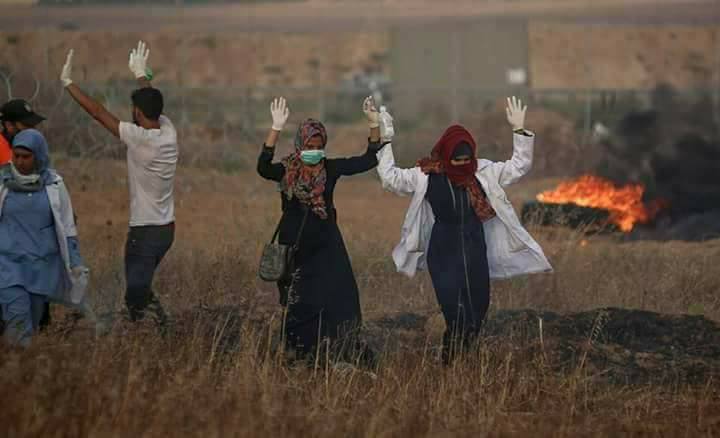
Razan al-Najjar (1996-2018), an unarmed Palestinian nurse from Gaza, was shot dead by the Israeli army on June 1st 2018. A picture taken just moments before show her with her hands in the air and wearing a white lab coat clearly marking her as a medical worker:

Al-Najjar shown at right.

She was just 21.

She was shot while approaching the border fence between Israel and Gaza to help someone wounded by the army. A sniper shot her right through the chest from over 100 metres away.

Great March of Return: The fence has been the scene of largely non-violent protests by thousands of Gazans every week since March 30th. They demand that they be allowed to return to Israel where their families were pushed out 70 years ago. Some still have the keys to their old houses. Israel has made Gaza into an open-air prison for the past 11 years.

By the numbers: Since March 30th:

  • 0 Israelis killed
  • 4 Israelis wounded

compare that to:

  • 118 Gazans killed:
  • 3,895 Gazans wounded by live ammunition (40 of which lost a limb)

Of the dead, 14 are children, 2 are journalists and 2 are medical workers.

How far gone do you have to be to shoot at children, much less medical workers?

Al-Najjar, a nurse, had been at the protests since the beginning and said she would be there till the end. She worked some 13 hourse a day, providing first aid so that the wounded could live long enough to reach a hospital.

Al-Najjar:

“people ask my dad what I’m doing here without getting a salary. He tells them, ‘I’m proud of my daughter. She provides care to the children of our country.'”

The Israeli army, just like the police in the US:

  • Says it was following proper procedures.
  • Promises to do a thorough investigation.
  • Is unaccountable: the United Nations’ attempt to condemn the violence and protect Palestinians was blocked by the US. The US gives more military aid to Israel than to any other country.
  • Smeared the character of its victim. They put out a video edited to make it seem like al-Najjar was acting as a human shield.

meanwhile the press:

  • Repeats the army’s lies without fact-checking them: the video that was taken out of context was right there on YouTube.
  • Leaves the army out of the headlines: “A Woman Dedicated to Saving Lives Loses Hers in Gaza Violence.”

And when I say “the press” I mean not the Israeli press but the New York Times!

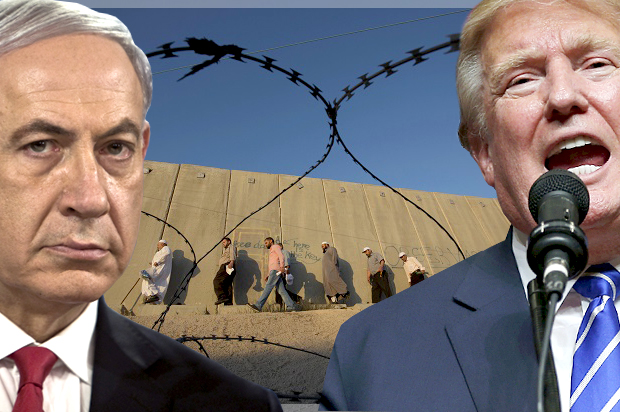
Netanyahu and Trump

The policy to use live ammunition on protesters goes straight to
the top:

  • Lt. Gen. Gadi Eizenkot,
  • Defense Minister Avigdor Lieberman, and
  • Prime Minister Benjamin Netanyahu.

International law: UN Basic Principles on the Use of Force and Firearms by Law Enforcement Officials applies here. Live ammunition is only to be used as a last resort to prevent “the imminent threat of death or serious injury” or “the perpetration of a particularly serious crime involving grave threat to life.”

Most of the world is repelled by Israel’s behaviour, but not the US, which aids and abets it.

– Abagond, 2018.

Source: mainly Google Images; Human Rights Watch; Heavy.

See also:

541

the 1960s

May 20th 1962: Diahann Carroll on “What’s My Line”

This is my master post for the 1960s. It should have all the main posts I have done – or should do – on the 1960s, especially in regard of US Black history. Add your own suggestions!

1960Nigeria, Niger, Gabon, Somalia, D.R. Congo, Cyprus, Sharpeville massacre, SNCC, SDS, neocolonialism, CFA franc, James Baldwin on the police.

1961: John Kennedy, Freedom RidersLumumba, Trujillo, Bay of Pigs, Berlin Wall, Brown Corpus.

  • book: The Wretched of the Earth (Frantz Fanon); Nobody Knows My Name (James Baldwin); Black Like Me.
  • film:
  • television:
  • music: 
  • word:
  • invention: man in space (Yuri Gagarin), UTC.

1962: Algeria, Uganda, James Meredith, Cuban Missile Crisis, Vatican II, Warhol.

  • book:
  • filmJames Bond
  • television:
  • music:
  • word:
  • invention: Telstar

1963: Lyndon Johnson, Kenya, Martin Luther King JrMalcolm X, Medgar Evers, Birmingham protests, Letter from Birmingham JailBaldwin-Kennedy meetingMarch on WashingtonThe 16th Street Baptist Church bombing.

1964Vietnam War, War on Poverty, Tanzania, Muhammad AliFannie Lou Hamer, Freedom Summer, Schwerner-Chaney-Goodman, Civil Rights ActThat Norman Rockwell painting“Racism is dead”, John Powell (killed by NYPD), gentrification.

1965SelmaVoting Rights Act, Immigration Act, Moynihan Report, Black illegitimacy argument, affirmative action, Watts riot, Northeast blackout, Asian brain drain, Indonesian mass killings, Ford LTD,

1966Black Power, Stokely Carmichael, Black Panther Party, Afros, model minority stereotype, Donyale LunaTwiggy, Cultural Revolution (China), Indira Gandhi, Peace Corps in Niger.

1967: Flower Power, Loving v Virginia, Thurgood Marshall, Biafra, Six Day War, Gaza, Holocaust denial, Huey P. Newton, H. Rap Brown, Detroit riotRiverside speech, Poor People’s Campaign, Noam ChomskyThe Responsibility of IntellectualsMcLuhanWhite ethnographic gaze.

1968: Red Power, The Southern strategy, George Wallace, RFK, MLK killedRFK killed, Kerner Commission, “Black is beautiful”, Naomi SimsJohn Carlos, Fair Housing Act, blue-eyed/brown-eyed exercise, Orangeburg Massacre, My Lai, the whole earth, Christie (Barbie’s friend), tokenism, Prague, Apollo 8.

1969: Richard Nixon, Fred HamptonCointelpro, The Occupation of Alcatraz.

– Abagond, 2018.

See also:

524

On May 24th 1963 Robert Kennedy met with James Baldwin to discuss race in the US. I already did a post on the meeting itself. This one is mainly about what Kennedy and those who knew him said about it afterwards.

Baldwin brought at least 15 people. Among them were Lorraine Hansberry, Lena Horne, Harry Belafonte, and Kenneth Clark (he of the Doll Experiment). This was just weeks after the Birmingham protests – fire hoses, police dogs, Bull Connor, King’s “Letter from Birmingham Jail”, all of that.

Enter Jerome Smith: The “cocktail-party patter” was soon swept away by the fury and anger of Jerome Smith. He was a Freedom Rider and CORE activist whose face and jaw had been badly beaten by police.

Kennedy tried to shut Smith down.

Blacks closed ranks behind Smith. Then came the flood: they spoke like it was their one chance to tell Robert Kennedy what they truly thought, their rage running free. He had never seen so much naked, Black pain before. It shook him.

Tone argument: After the meeting Kennedy was in a rage:

“They don’t know what the laws are. They don’t know what we’ve been doing or what we’re trying to do. You can’t talk to them the way you can talk to Martin Luther King or Roy Wilkins. They didn’t want to talk that way.

“It was all emotion, hysteria – they stood up and orated – they cursed – some of them wept and left the room.”

Ad hominem: Baldwin, Kennedy noted, was a homosexual (using an impolite word for that) and a “nut”. And:

“[A] number of them … I think, have complexes about the fact that they’ve been successful, they’ve done so well and this poor boy had been beaten by the police.”

Kennedy said they felt guilty that:

“they really hadn’t done their best … hadn’t done what they should have done for the Negro. So the way to show that they hadn’t forgotten where they came from was to berate me and berate the United States government.”

No ghetto pass for Kennedy: Nicholas Katzenbach, who was not at the meeting but who worked under Kennedy at the time as deputy attorney general (the Rod Rosenstein of his day), said:

“Bobby expected to be made an honorary black. [The meeting] really hurt his feelings, and it was pretty mean. But the fact that he thought he knew so much – and learned he didn’t – was important.”

From Baldwin’s FBI file, which even lists his extracurricular activities from high school. (Via MuckRock)

FBI surveillance for Baldwin and friends: Kennedy started or continued FBI surveillance on many of those who came to the meeting – even Rip Torn, who was White. Much of the 1,884 pages in Baldwin’s FBI file are from after the meeting.

In the long run, though, Robert Kennedy had enough honesty and empathy to understand that what they told him was more or less the truth:

“I guess if I were in his [Jerome Smith’s] shoes, if I had gone through what he’s gone through, I might feel differently about this country.”

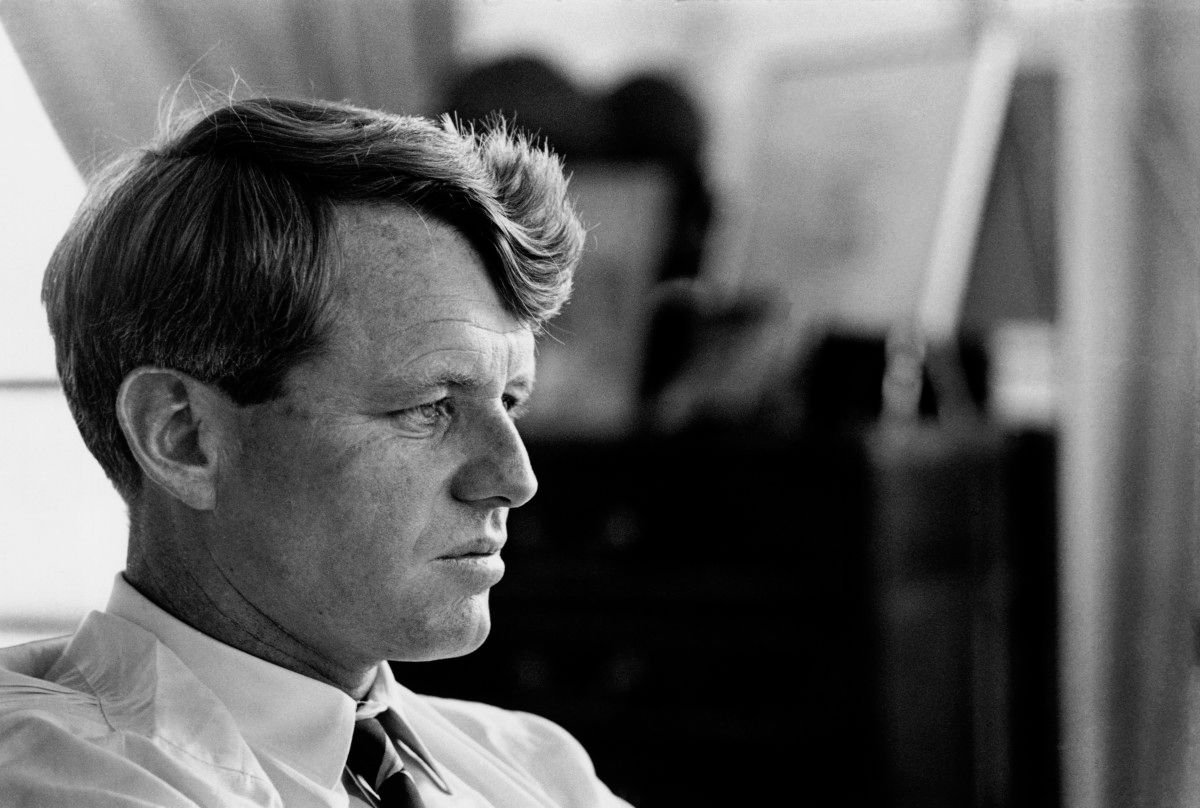
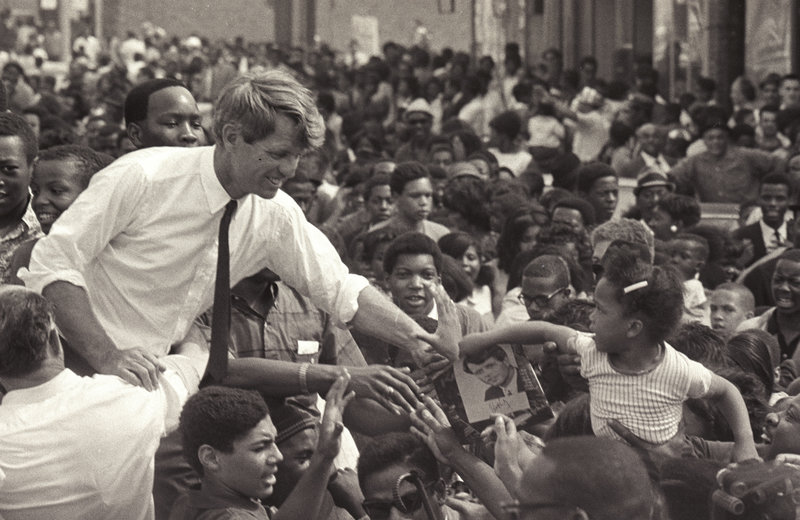
Robert Kennedy five years later: May 15th 1968 in Detroit. One month later he would be dead. (Andrew Sacks/Getty Images, via NPR)

– Abagond, 2018.

Source: Google Images; “What Truth Looks Like” (2018) by Michael Eric Dyson.

See also:

619

Leon Bridges: River

Remarks:

This was on his “Coming Home” (2015) album. The video came out a year later. The song never charted but the video was nominated for a Grammy. It lost to Beyonce’s “Formation” (2016). It was shot in Baltimore not long after the riots – a clip of which you can see playing on the motel television at the beginning.

See also:

Lyrics:

Been travelling these wide roads for so long
My heart’s been far from you
10 000 Miles gone

Oh, I wanna come near and give you
Every part of me
But there is blood on my hands
And my lips are unclean

In my darkness I remember
Momma’s word reoccur to me:
“Surrender to the good lord
And he’ll wipe your slate clean”

Take me to your river
I wanna go
Take me to your river
I wanna know

Dip me in your smooth water
I go in
As a man with many crimes
Come up for air
As my sins flow down the jordan

I wanna go wanna go wanna go
I wanna know wanna know wanna know
Wanna go wanna go wanna go
Wanna know wanna know wanna know
Wanna go wanna go wanna go
Wanna know wanna know wanna know

Take me to your river
I wanna go
Lord please let me know
Take me to your river
I wanna know

Source: letras.com.br.

Sean Hannity

Sean Hannity (1961- ) is a presenter on Fox News, a right-wing US cable television news channel. He has the ear of President Trump and has become a shameless Trump apologist who flat-out lies.

Audience: He has the most watched show on US cable news, getting 3.3 million viewers a night (February 2018). By day he is on right-wing talk radio where he runs a close second to Rush Limbaugh, getting 13.5 million listeners a day.

Ted Koppel in March 2017, interviewing Hannity:

“[You are] bad for America. … You have attracted people who are determined that ideology is more important than facts.”

Geraldo Rivera to Hannity in February 2018:

“[President] Nixon never would have been forced to resign if you existed back in 1972, ’73, ’74.”

President Trump:

“Sean Hannity is a great, great person.”

Opinion shouter: Hannity does not have a journalism degree, or any university degree for that matter. He came up through talk radio in the 1980s and 1990s. He has been with Fox News since the beginning in 1996, but laboured long in Bill O’Reilly’s shadow – till O’Reilly was felled by scandal in 2017.

Conspiracy theorist: Hannity spends more time pushing conspiracy theories than anyone else on US cable news. Fox News lets him rant on and on about conspiracy theories that even they know are false, like about Seth Rich, Uranium One, and Spygate. All that keeps Hannity from going full tin hat like Alex Jones on YouTube are the advertisers.

Fascist propaganda: Hannity places Trump above the law: Trump should be allowed to pardon himself, he should be allowed to interfere in an ongoing criminal investigation of himself, he should not have to answer questions about possible crimes, etc. Hannity undermines faith in any source of truth other than Trump: the FBI and the Department of Justice are dismissed as the “deep state”. The press is dismissed as “fake news”. The truth is whatever Trump says it is.

Racism/Nativism: And, like a Nazi propagandist, Hannity also whips up fear, hatred and prejudice against people of other races and religions, like Muslims, Latinos, and Blacks. He does that mainly by the way he talks about terrorism, immigration, and crime. Hannity is Irish Catholic.

Clinton Derangement Syndrome: Hannity is obsessed with the Clintons, both Bill and Hillary. He rehashes their scandals endlessly, even when there is nothing new to say about them. Since he makes stuff up, it is hard to know how much of it is even true. He gets most upset about the Clintons when bad news breaks about Trump.

Business model: Since March 2016 Fox News has found itself in the business of delivering ads to Trump supporters. To remain in business they have to please both advertisers and Trump supporters. Sean Hannity walks right up to that fine line between the two. He is such a full-throated Trump apologist that he defended Roy Moore, an accused paedophile – that is, until advertisers made him back away from Moore.

Net worth: Hannity was worth $80 million in 2017. Alex Jones: $10 million.

– Abagond, 2018.

See also:

550

Muslim Americans

Muslim Americans (1500s- ) are the 3.45 million people in the US who are Muslim by religion. They make up 1% of the country and were there before the Mayflower.

By the numbers:

  • By race:
    • 41% White
    • 28% Asian
    • 20% Black
    • 11% Latino, Other
  • By birthplace:
    • 42% US
    • 20% South Asia
    • 14% MENA (Middle East/North Africa)
    • 13% Other Asia/Pacific
    • 6% Black Africa
    • 5% Other
  • By citizenship:
    • 82% US citizens
    • 18% foreigners
  • By seats in Congress: 2

When they came: in three main waves:

  • 1517-1808: from West Africa as slaves
  • late 1800s-1924: mainly from Lebanon and Syria to the Midwest
  • 1965-present: mainly from Asia, some as refugees, many as part of the Asian brain drain.

Famous sons and daughters: Muhammad Ali, Malcolm X, Betty Shabazz, Akon, Busta Rhymes, Casey Kasem, DJ Khaled, Dave Chappelle, Dr Oz, Fareed Zakaria, Huma Abedin, Ice Cube, Iman, Jermaine Jackson, Kareem Abdul-Jabbar, Larry Johnson, Lupe Fiasco, Mike Tyson, Mos Def, Q-Tip, Reza Aslan, Snoop Dogg, T-Pain, Tsarnaev brothers.

Multinational: Just like the pilgrims at Mecca, Muslim Americans come from all over the world, from some 75 countries. In some places, though, most Muslims might come from one particular country. In Minneapolis, for example, most Muslims are from Somalia.

Arab Muslims: Most Arab Americans are Christian, not Muslim. Likewise, most Muslim Americans are not Arab. Foreign-born Muslims are more likely to come from South Asia than from the Middle East or North Africa. The idea that most Muslims are Arabs comes from Hollywood and US news, not from real life.

Black Muslims: Between 10% to 20% of Blacks who came as slaves were Muslim. They could only practice their faith in secret, so it largely died out. Islam made a comeback in Black America the 1960s. Many but not most are part of the Nation of Islam. About 30% are foreign-born, like Somali Americans.

No hive mind: Just like with Christians, some Muslim Americans are dangerous nutcases, some are merely devout, some practise their religion only on religious holidays (Ramadan Muslims), some are nominal or secular, and some have fallen away.

The good: One of the best things about the US is its religious freedom. As Bakri Musa, a Malaysian American doctor in California, put it:

“This is the place to be Muslim, scholarship without intervention. In Malaysia I could go to jail because I have Shiite literature in my house, and in Malaysia that’s the equivalent of being a commie in America.”

The bad: One of the worst things about the US is its rampant, violent Islamophobia, which has been growing worse and worse, first in 2001 with 9/11, and then in 2016 with the rise of Trump.

Mosque burning: Before 2015 only about ten mosques a year were bombed, burned, vandalized or threatened. Since then it has jumped to over a hundred a year.

Terrorists: Some Muslim Americans are terrorists – but so are some Christian Americans. On US television news from 2008 to 2012, 81% of terrorists were Muslim – but in FBI reports from the same period only 6% of domestic terrorist suspects were in fact Muslim.

– Abagond, 2018.

Source: mainly Google Images; “Being Muslim in America” by Leila Fadel in National Geographic (May 2018); White American terrorists (2015).

See also:

564

Composite picture by Gordon Belray of moments after the assassination. Click to enlarge.

On June 5th 1968 Robert Kennedy was shot dead. It was right after he had won the California primary, putting him in a good position for the Chicago convention where the Democratic Party would choose who to run for US president.

At 10.30pm California time, Black and Latino votes from Los Angeles came in. They went hard for Kennedy. It put him well ahead of Eugene McCarthy, enough for CBS to declare him the winner.

At 11.45pm, sure of his victory, he came down to the ballroom of the Ambassador Hotel in Los Angeles where he was staying. The television networks were about to go off the air on the east coast where it was almost three in the morning.

Kennedy in his victory speech:

“What I think is quite clear is that we can work together in the last analysis, and that is what has been going on within the United States – the division, the violence, the disenchantment with our society; the divisions, whether it’s between blacks and whites, between poor and more affluent, or between age groups or on the war in Vietnam – is that we can start to work together. We are a great country, an unselfish country, and a compassionate country.”

After thanking his campaign workers, he said:

“So my thanks to all of you, and on to Chicago and let’s win there.”

Now 12.15pm, Kennedy made a V sign for victory and then took a shortcut through the kitchen. There, as he reached out to shake hands with a busboy, Juan Romero, a man standing next to the ice machine stepped forward and pointed his ugly little .22 calibre pistol at Kennedy’s head and started shooting, shooting him right behind his right ear (1 cm off and Kennedy would have lived).

Everyone ducked as Kennedy and Paul Schrade of the UAW fell. Schrade and four others were injured – they all lived.

Rosey Grier, former defensive tackle for the LA Rams, and some other men pinned the gunman and took his gun. The gunman looked Mexican, which did not make sense.

Romero put his rosary in Kennedy’s right hand and prayed. Kennedy’s wife Ethel took his other hand and said, “I’m with you, my baby.”

Photographers and cameramen, vulture-like, were trying to get a good shot. “This is history!” one of them said.

Kennedy was in and out. From the look on his face it seemed he understood that what he had long feared had at last taken place. He asked if everyone was all right.

In the ballroom there was shrieking, fainting and crying. One woman was sobbing:

“My God, my God, what kind of country is this?”

Sirhan Sirhan was the gunman, an Arab Christian from Jerusalem who had lived in the US since age 12. He said he shot Kennedy because of his strong support for Israel.

The television networks back east in New York, Chicago and Dallas were still live on air.

Kennedy blacked out.

A few hours later the east coast woke up to the terrible news.

– Abagond, 2018.

Sources: mainly “The Last Campaign” (2008) by Thurston Clarke; “Robert Kennedy and His Times” (1978) by Arthur M. Schelesinger, Jr.; “85 Days” by Jules Witcover (1969); The New Yorker (June 15th 1968). 

See also:

579

Elton John: Rocket Man

Remarks:

In 1972 this song went to #5 across the Anglosphere (except for Australia where it did not seem to chart). I always thought the song was somehow about drugs. In 2017 it was given a much deeper, more human meaning when Majid Adin and Stephen McNally made a video for it based on Adin’s experience as a refugee. In the video the Earth is played by Iran and Mars is played by a futuristic London, “cold as hell”. Brilliant. The song, after all, can be read as being about the loneliness of a man who leaves his family to go to a faraway, alien world to make a living.

See also:

Lyrics:

She packed my bags last night, preflight
Zero hour, nine a.m
And I’m gonna be high
As a kite by then

I miss the Earth so much
I miss my wife
It’s lonely out in space
On such a timeless flight

And I think it’s gonna be a long, long, time
‘Til touchdown brings me ’round again to find
I’m not the man they think I am at home
Ah, no, no, no
I’m a rocket man
Rocket man
Burnin’ out his fuse
Up here alone

And I think it’s gonna be a long, long, time
‘Til touchdown brings me ’round again to find
I’m not the man they think I am at home
Ah, no, no, no
I’m a rocket man
Rocket man
Burnin’ out his fuse
Up here alone

Mars ain’t the kind of place
To raise your kids
In fact, it’s cold as hell
And there’s no one there to raise them
If you did

And all this science
I don’t understand
It’s just my job
Five days a week
A Rocket Man
Rocket Man

And I think it’s gonna be a long, long, time
‘Til touchdown brings me ’round again to find
I’m not the man they think I am at home
Ah, no no no
I’m a rocket man
Rocket man
Burnin’ out his fuse
Up here alone

She packed my bag last night, preflight
Zero hour, nine a.m
And I’m gonna be high
As a kite by then

I miss the Earth so much
I miss my wife
It’s lonely out in space
On such a timeless flight

And I think it’s gonna be a long, long, time
‘Til touchdown brings me ’round again to find
I’m not the man they think I am at home
Ah, no no no
I’m a rocket man
Rocket man
Burnin’ out his fuse
Up here alone

Mars ain’t the kind of place
To raise your kids
In fact, it’s cold as hell
And there’s no one there to raise them
If you did

And all this science
I don’t understand
It’s just my job
Five days a week
A Rocket Man
Rocket Man

And I think it’s gonna be a long, long, time
‘Til touchdown brings me ’round again to find
I’m not the man they think I am at home
Ah, no no no
I’m a rocket man
Rocket man
Burnin’ out his fuse
Up here alone

And I think it’s gonna be a long, long, time

Source: letras.mus.br.

William Barber

Rev. Barber in 2016.

Reverend William J. Barber II (1963- ), a US civil rights leader, is a Disciples of Christ pastor of Greenleaf Christian Church in Goldsboro, North Carolina. He is best known for the Moral Monday protests in his state (2013-17). Now in 2018 he is going nationwide, picking up where Martin Luther King Jr left off in 1968, helping to lead a new Poor People’s Campaign.

Influences:

  • political: Martin Luther King, Ella Baker, Robert F. Williams, the populist movement of the 1890s.
  • theological: Reinhold Niebuhr, Paul Tillich, James Cone.

Endorsements:

  • Cornel West: “That brother is the real thing.”
  • Bernie Sanders: “[Barber] is doing some of the most important work in the country.”

Barber’s view of US history is much like mine, informed by Howard Zinn, Nell Painter, and the Black counter-frame: a call-and-response between Black Reconstruction and White backlash. In its finer moments, the US goes through a period of multiracial reform:

  • 1860s and 1870s: Civil War and Reconstruction: Black slaves freed, given equal rights in the constitution.
  • 1950s and 1960s: Civil rights movement, Jim Crow laws overturned.

But it is two steps forward, one step back: After the First Reconstruction came Jim Crow, after the Second Reconstruction came the Southern Strategy.

The Southern Strategy is where Republicans (and some Democrats) use race and religion to get working-class and middle-class Whites to vote against their class interests. That is why the US does not have universal health care or a liveable minimum wage. For Blacks it has meant mass incarceration, resegregation of schools, the gutting of the Voting Rights Act of 1965, gerrymandering, and voter suppression.

The Third Reconstruction: Neither the politicians nor the press are much interested in a Third Reconstruction. That will have to come from grassroots movements and civil disobedience. It will have to come from Blacks and Latinos and like-minded Whites coming together. That is what Barber has been working on.

  • The rise of Obama in 2008 shows that the votes are already there for a Third Reconstruction.
  • The rise of Trump in 2016 shows that most (but not all) Whites are scared to death of such a multiracial coalition and will fight it tooth and nail – even if it means bad health care and bad education for themselves. Trump is a symptom, not a cause. Getting rid of Trump will change little.

The five interlocking evils of the US according to Barber:

  • systemic racism,
  • systemic poverty,
  • ecological devastation,
  • the war economy,
  • the false narrative of Christian nationalism and White Evangelicalism.

Each one helps keep the others in place.

White Evangelicalism: Barber is himself an Evangelical, but says the White sort, the kind in the Scofield Reference Bible, has been perverted by capitalists. That is why it says so much about abortion and homosexuality, and says so little about poverty, empathy, and justice – the opposite of what the Bible does. It is shaped by the White backlash, past and present, and gives it moral force.

Barber:

“I worry about the way that faith is cynically used by some to serve hate, fear, racism, and greed.”

– Abagond, 2018.

Sources: mainly Jelani Cobb’s piece in the New Yorker (2018), Barber’s sermon on Ezekiel 22 (2018), his appearances on Democracy Now (2016-18), his wonderful piece in the Washington Post (2016).

See also:

572

Roseanne Barr

Roseanne Barr, 2018. (ABC/Robert Trachtenberg)

Roseanne Barr (1952- ), US comedian and conspiracy theorist, is best known as the star of “Roseanne” (1988-97), a US television comedy on ABC about a White working-class family. The show made a comeback two months ago, March 2018, quickly becoming one of the most watched television shows in the nation – only to be suddenly cancelled yesterday on May 29th.

Barr destroyed her show in just 53 characters on Twitter:

“muslim brotherhood & planet of the apes had a baby=vj”

This was so racist that even Sean Hannity of Fox News found it “appalling”.

“VJ” is Valerie Jarrett, a long-time adviser to President Obama and an object of right-wing conspiracy theories. Jarrett is also a Black woman.

Blacks as apes: Barr said it was a “joke”. Ha ha. It plays on and pushes the profoundly racist idea that Black people are like apes, less than fully human. It is an idea Western science spent the 1800s trying to prove, and, in the 2010s, it makes police violence against Black people more acceptable. “Black Lives Matter” should go without saying – but in the US it does not.

Wanda Sykes, head writer on the show, is also a Black woman. She tweeted:

“I will not be returning to @RoseanneOnABC”

Channing Dungey, president of ABC Entertainment which airs “Roseanne”, is also a Black woman. She said:

“Roseanne’s Twitter statement is abhorrent, repugnant and inconsistent with our values, and we have decided to cancel the show”

And just like, in less than 12 hours, the show was gone. Poof! Viacom and Hulu pulled their reruns. Even Barr’s agent dropped her.

Excuses: Some blamed her unstable mental state. Others blamed the “tone” set for the country by President Trump. Barr herself blamed Ambien, a sleeping pill. Sanofi, the maker of Ambien, stated:

“While all pharmaceutical treatments have side effects, racism is not a known side effect of any Sanofi medication.”

Roseanne, 1989.

The “Roseanne” show of the 1990s was one of the few shows that was by and for White working-class people. That was because Barr had gained creative control from people who did not know that lunchmeat was square. Most television in the US is made by and for those who can afford new cars, making it about another world that most people only know from – television. Even “The Cosby Show” had that strange level of unreality to it.

Roseanne, 2018.  (ABC/Robert Trachtenberg)

The reboot was the same as the old boot, it seemed, only this time Barr’s character had a Black grandchild, Muslim neighbours, and, like Barr’s real life, a sister who voted against Trump, setting them at odds.

The reboot was seen as a show for Trump’s America. President Trump himself said the show “was about us.”

But then when Roseanne Barr, a real-life Trump supporter, acted like a real-life Trump supporter, ABC was shocked, simply shocked.

In 2013 Barr tweeted about Susan Rice, a Black woman who was the US ambassador to the United Nations:

“susan rice is a man with big swinging ape balls.”

That, presumably, was “consistent” with ABC’s values.

– Abagond, 2018.

Update (June 4th): President Trump, condemning Samantha Bee for calling his daughter the c-word while not condemning Roseanne’s racist remark, accuses the media of a double standard. Bee has apologized – something Trump has never done for his serial vulgar misogyny. Despite that, he wants Samantha Bee fired. 

See also:

541

Tagore

Rabindranath Tagore (1861-1941), an Indian writer, was a giant of Bengali literature. In 1913 he became the first non-European to win the Nobel Prize for Literature.

He wrote poetry, plays, stories, novels, essays, travelogues, memoirs, and an opera. He changed how people wrote in Bengali. He wrote over 2,000 songs, giving rise to Rabindra Sangeet, a style of music which lasts down to this day. He even invented festivals.

“Gitanjali” (1910) is the book he is best known for in the West. It contains 103 of his poems translated by him from Bengali and reworked in English. Yeats:

“I have carried the manuscript of these translations about with me for days, reading it in the railway trains, or on the top of omnibuses and in restaurants, and I have often had to close it lest some stranger would see how much it moved me.”

The poems sometimes seem like songs or like prayers or like scripture. Most seem to be addressed to the Hindu god Brahman, but could apply almost as well to the Christian god.

Nobel Prize: He won not in Bengali but in English translation. No mean feat: in the past 50 years only five have won writing in a non-European language – and, like Tagore, only after they had been translated into English.

Growing up: Tagore was born into a family of wealth and education, the sort that owned marble mansions in Calcutta. He studied at University College London, long enough to know British ways, not long enough to get a degree.

Tagore and Kadambari.

His soulmate: By age 20 he had met his soulmate, Kadambari – his sister-in-law! They would sit together on a hot afternoon reading the latest literary reviews from Calcutta, Kadambari fanning him. But then his father married him to an uneducated ten-year-old girl.

The cage: He grew to hate not just arranged marriages but the sexism and caste system of Indian society, a cage where you “die inch by inch”. In “The Wife’s Letter” (1914), the heroine says:

“My mother feared for this cleverness of mine, for a woman it was an impediment. … But what was I to do? God had carelessly given me much more intelligence than I needed to be a wife in your household.”

But he was contradictory, just like the characters in his books: he married off three of his daughters, indifferent to their wishes, when they were barely in their teens.

Colonized mind? He saw himself as the perfect mix of Hindu, Muslim and Western culture – what some saw as a colonized mind that was too pro-Western. He became a Booker T. Washington sort, saying stuff like this by 1909:

“The British Government is not the cause of our subjection; it is merely a symptom of a deeper subjection on our part.”

Knighthood: Yet in 1919 he gave up his knighthood after the British killed 400 in the holy city of Amritsar.

He was not a fan of Gandhi either. Nationalism could become its own cage:

“It was only necessary to cling to an unquestioning obedience, to some mantra, some unreasoned creed.”

The day the world did not implode: when Einstein and Tagore met.

– Abagond, 2018.

Sources: mainly “Gitanjali” (1910) by Tagore; “Incarnations” (2016) by Sunil Khilnani.

See also:

562

Remarks:

This Bengali song was written in 1914 by Rabindranath Tagore, a year after he won the Nobel Prize for Literature. He wrote over 2,000 songs. One became the national anthem of India. Another became the national anthem of Bangladesh. Many of the rest became a style of music called Rabindra Sangeet that lasts down to this day.

I chose this video because it is the cover of “Tomar Khola Hawa” that has the most views on YouTube. It came out 2015 and has 4.4 million views at last count. In second place is the cover by Somlata & the Aces, which has 3.5 million views. That one is done in what seems to be more of a rock music style, guitar solo and all – or what the YouTube description calls “a fusion of traditional melodies backed up by modern instruments.”

See also:

Lyrics:

the original Bengali (in Roman letters):

Tomar khola haawa lagiye pale tukro kore kachi
Ami dubte raji achi ami dubte raji achi
Sakal amar galo miche, bikel je jai tari piche go
Rekho na ar, bedho na ar kuler kachakachi
Majhir lagi achi jagi sakol ratribbela,
Dhaugulo je amai niye kare kebol khela
Jharke ami karbo mite, darbo na tar bhrukutite
Dau cheye dau, ogo ami tuphan pele bachi

an English translation:

Touch my sail with your fresh gush of wind, break my anchor –
I do not even regret if I sink.
Morning has slipped away in vain; the evening seems to follow,
Please do not restrict me near the shore.
I keep myself awake through the night looking for the boatman,
The waves toying with me every now and then.
I wish to make friends with the storm, never be terrorised with,
Leave me alone, O dear, I am comforted if I catch wind.

Source: Geetabitan.com.

Dear White People

“Dear White People” (2014) is a US film about White racism. It follows four Black students at the fictional Winchester University, a predominately White institution (PWI) where rich White people send their children. It has since become a television series on Netflix. This post is only about the film.

The film now seems dated – even though it is only three and a half years old. It came out in October 2014, just in time for Halloween. But as it showed in cinemas, protesters were marching in Ferguson, already making the film seem out-of-date and quaint. The rise of Trump in 2016 and the Neo-Nazi violence of the Charlottesville riot in 2017 have made it seem quainter still. It now seems so 2013.

It starts with Samantha White, one of the main characters, calling out White racism on the university radio station. Even that now seems dated: in the Trump Era, White racism no longer wears sheep’s clothing – it calls itself out.

Even so, you can see the Trump Era racism already starting to show through. The Halloween party at the end, despite the costumes, becomes an unmasking, showing White people as they truly are. There is a reason they want to say the N-word. That racism has always been there, of course, since at least the 1700s, covered over in politically correct noises in the late 1900s. But with the Trump Era, Whites are hiding it less and less.

The four main characters each deal with “being a black face in a white place” differently:

  • Samantha – woke: protests, calls out racism.
  • Lionel – invisible: avoids trouble or notice, does not pick sides.
  • Troy – twice as good: tries to integrate and beat Whites at their own game.
  • Coco – coon: plays to White stereotypes to gain their favour.

Except for Samantha, they are trying to get in good with White people. And, over the course of the film they see what a fool’s errand that is. Whatever few favours they gain, they are still seen as nothing but a “nigger”.

The good:

  • A film about racism where Black characters get most of the lines. It can be done!
  • Unlike most films, it does not coon – and even makes fun of that by way of Coco.
  • It shows how Black people do not all think alike.

The bad:

  • The trailer was better.
  • Seems like it would work better as a script than a film. Some of its best lines go by too quick and are not underscored by the film. Probably needs to be watched more than once.
  • The main White character is cartoonish (but, to be fair, he is a study in nuance compared to the racist trolls on the Internet).
  • It does seem like it would work better as a television series than a film.

It bills itself as a satire. It did not seem like a satire to me.

Overall, not as as good as a Spike Lee film, but it is still worth watching. Especially since Spike Lee seems to be semi-retired.

– Abagond, 2018.

See also:

569