Feeds:
Posts
Comments

“shithole countries”

New York Daily News, January 12th 2018.

“Shithole countries” is what the US president calls countries of Black and Brown people.

On January 11th 2018 President Trump said:

“Why do we want all these people from Africa here? They’re shithole countries … We should have more people from Norway.”

and:

“Why do we need more Haitians? Take them out.”

“Shithole” is a vulgar term for anus.

Trump reportedly believes all Haitians have AIDS and that most if not all Nigerians live in huts.

Nigerians returning to their huts.

The New York Times said Trump’s remarks were:

“the latest example of his penchant for racially tinged remarks denigrating immigrants”

The Daily Stormer, a racially-tinged neo-Nazi website:

“This is encouraging and refreshing, as it indicates Trump is more or less on the same page as us with regards to race and immigration.”

Twitter user Educating Liberals (@Education4Libs) said:

“Trump just has the balls to verbalize what all of us think.”

Mia Love was the only elected Republican, so far as I know, who immediately condemned Trump:

“This behavior is unacceptable from the leader of our nation … The president must apologize to both the American people and the nations he so wantonly maligned.”

She noted that his remarks were:

“unkind, divisive, elitist, and fly in the face of our nation’s values.”

Her parents come from Haiti.

Stephen Colbert on late-night television:

“Sir, they’re not [bleep] countries. For one, Donald Trump isn’t their president.”

(AP Photo/Bebeto Matthews)

The United Nations called Trump’s words “racist”. But they do not seem to be well-informed: they also called them “shocking”.

Trump, 2015.

Memory lane: Donald Trump, on the very first day of his campaign for president, said:

“When Mexico sends its people, they’re not sending their best. They’re not sending you. They’re not sending you. They’re sending people that have lots of problems, and they’re bringing those problems with us. They’re bringing drugs. They’re bringing crime. They’re rapists. And some, I assume, are good people.”

White people in the US voted for Trump by a landslide. Not just the working class, not just rednecks who frequent bars, not just racist uncles, but across the board: rich and poor, well-educated and ill-educated, aunts, uncles and cousin Joeys. They chose him as their leader with their eyes wide open. The same goes for Republicans in Congress who continue to kiss up to him, and for Fox News which continues to lie for him.

Immigration: Trump’s comments make crystal clear that his concern for immigration has little to do with “making America safe” or anything like that, and has everything to do with racism. It is a dog-whistle issue just like “law and order” and “terrorism”. It dresses itself up as some Serious National Issue but it is just raw racial bigotry.

People from those “shithole countries” built the US for little or nothing – and gave their lives to defend it. How many soldiers buried at Arlington came from “shithole countries”? Colin Powell’s parents came from a “shithole country” – and while he was fighting in Vietnam, Trump was where? Fighting chlamydia.

– Abagond, 2018.

See also:

590
Egypt: a brief history

Egypt, circa -1400.

Here is my quick overview of the history of Egypt. It is very much a work in progress.

Note that the farther back you go in time, the more uncertain dates become.

Roman numerals show when the ancient dynasties of Egypt started. I follow the dates in “The Princeton Dictionary of Ancient Egypt” (2008) by Ian Shaw and Paul Nicholson.”

  • -4000s: Nagada I culture, rivets
  • -3900s:
  • -3800s:
  • -3700s:
  • -3600s:
  • -3500s: Nagada II culture, plywood, sail
  • -3400s:
  • -3300s:
  • -3200shieroglyphics
  • -3100s: Early Dynastic: Dynasty I, Narmer, Horus
  • -3000spaper (papyrus), oven, flail, candle wick, Memphis the capital
  • -2900s:
  • 2800s: II, dam, chair, book, page numbers, 365-day calendar
  • -2700s:
  • -2600s: Old Kingdom: III, IV, Imhotep, Step Pyramid, Re-Horus, divine kingship
  • -2500s: Great Pyramid of Giza, Sphinx, clear glass, Diary of Merer
  • -2400s: V, obelisks, Palermo Stone
  • -2300s: VI, AmunPyramid Texts
  • -2200sHarkhuf
  • -2100s: First Intermediate Period: VII, VIII, IX, X, XI
  • -2000s: Middle Kingdom, XI, Thebes is the capital, bronze, alphabet, mechanical lock, saw, Coffin Texts
  • -1900s: XII, Sinuhe, Hekanakhte, Nubia colonized
  • -1800s: Sesostris, Kahun
  • -1700s: XIII, XIV, Sobekneferu
  • -1600s: Second Intermediate PeriodXV, XVI, XVII, Hyksos rule, chariots, bronze weapons, composite bow, Joseph?
  • -1500s: New Kingdom, XVIII, Amun-Re, helmet, armour,  clock (water, sun), scissors
  • -1400s: Thebes the world’s largest city, Hatshepsut, Tiye, Karnak, Cleopatra’s Needles, Valley of the Kings, Deir el-Medina, rudder
  • -1300s: Queen Tiye, Akhenaton, Nefertiti, Amarna, King Tut, Aten, Yahweh
  • -1200s: XIX, Ramses IIJews, Moses?
  • -1100s: XX, Sea Peoples, Pi-Ramses the world’s largest city, papyrus exports
  • -1000s: Third Intermediate Period, XXI (Tanite), Smendes
  • -900s: XXII (Bubastite/Libyan)
  • -800s: XXIII (Tanite/Libyan)
  • -700s: XXIV, Late Period: XXV (Nubian)
  • -600s: XXVI (Saite), Assyrian invasion, Psamtek I, Red Sea canal
  • -500s: (Persian rule), Cambyses, AramaicXXVII
  • -400s: XXVIII, Herodotus
  • -300s: XXIX, XXX, XXXI, Ptolemaic (Greek) rule, Alexandria, Greek
  • -200s: Serapis, Euclid, Manetho, Library of Alexandria, Lighthouse of Alexandria, Eratosthenes.
  • -100s: Rosetta Stone, Alexandria the world’s largest city, Sosigenes
  • -000s: Roman rule, Roman Egypt, Cleopatra, Diodorus, Strabo, Philo
  • +000s: Coptic Christianity
  • +100s: Ptolemy, latitude and longitudeGospel of Peter
  • +200s: Origen, Plotinus
  • +300s: St Antony, St Catherine, Arianism, Athanasius, the New Testament as we know it, Egeria, Serapeum closed, the last hieroglyphics written
  • +400s: Hypatia dragged from her carriage by Christians, Council of Chalcedon declares Coptic Christianity heretical
  • +500s: Justinian, last temple of Isis closed
  • +600s: Arab rule, Islam, Arabic
  • +700s:
  • +800s: Bernard the Wise
  • +900s: Fatimid Caliphate, Chinese paper arrives
  • +1000s:
  • +1100s: Ayyubids, Ben Jonah of Tudela
  • +1200s: Mamluks, Abd el-Latif
  • +1300s: Ibn Batuta
  • +1400s:
  • +1500s: Ottoman rule
  • +1600s:
  • +1700s: Napoleon invades. Rosetta Stone is found.
  • +1800s: cotton exports, Suez Canal, British rule.
  • +1900s: King Tut’s tomb found, Aswan Dam (end of annual flooding), Nasser, US vassal state, Sadat, Mubarak
  • +2000s: Arab Spring, Sisi

Western tropes I tried to avoid:

  • Spotlight History: Egypt pretty much disappears from Western accounts of history after the death of Cleopatra.
  • Non-Western cultures as timeless: Ancient Egypt is seen as all the same even though it went on for 3,000 years.
  • Archaeological lens: the history of Ancient Egypt, when it is told, is often told in terms of Westerners and their discoveries. Some of that seeps into the above timeline.

– Abagond, +2018.

Update (2023): Updated to use the dating of “The Princeton Dictionary of Ancient Egypt” (2008) by Ian Shaw and Paul Nicholson.

See also:

542


Remarks:

To round out Mermaid Appreciation Week, not appreciated by some, here is a song from the Disney film “The Little Mermaid” (1989), their sanitized version of the Hans Christian Andersen tale.

The song never charted: Disney did not release it as a single and was surprised by its success. In fact, they almost cut it from the film itself, but test audiences liked it.

It was sung by Jodi Benson, the voice of Ariel, the lead character. Howard Ashman wrote the words and Alan Menken composed the music. Menken has appeared in this space before as the composer of “Colors of the Wind”, a song from another Disney film, “Pocahontas” (1995).

Benson, Ashman, and Menken all come from the world of Broadway musicals. In that world this sort of song is known as an “I Want” song, the song where the lead character tells the audience what is going through her head, why she is unhappy, what she wants to accomplish. Disney did not understand the need for such a song when they made “The Little Mermaid”, but now they are standard, especially in their princess films.

It seems that this song resonated more strongly with gay and transgender children than with others. Ashman, the songwriter, was himself openly gay. And it has been argued that Hans Christian Andersen was himself trans. Whether Andersen was or not, the story itself is structurally trans: the lead character wants to become a real girl!

See also:

Lyrics:

Look at this stuff. Isn’t it neat?
Wouldn’t you think my collection’s complete?
Wouldn’t you think I’m the girl,
the girl who has everything?

Look at this trove, treasures untold
How many wonders can one cavern hold?
Looking around here, you’d think
Sure, she’s got everything

I’ve got gadgets and gizmos a-plenty
I’ve got whozits and whatzits galore
You want thing-a-mabobs? I’ve got twenty
But who cares? No big deal. I want more!

I wanna be where the people are
I wanna see, wanna see ’em dancin’
Walkin’ around on those…
What do you call ’em? Oh, feet

Flippin’ your fins you don’t get too far
Legs are required for jumpin’, dancin’
Strolling along down the…
What’s that word again? Street

Up where they walk
Up where they run
Up where they stay all day in the sun
Wanderin’ free,
wish I could be
part of that world

What would I give
if I could live
outta these waters?
What would I pay
to spend a day
warm on the sand?

Betcha on land
they understand
Bet they don’t reprimand their daughters
Bright young women,
sick of swimmin’
Ready to stand

And I’m ready to know what the people know
Ask ’em my questions and get some answers
What’s a fire and why does it…
What’s the word? Burn?

When’s it my turn?
Wouldn’t I love,
love to explore that shore up above?
Out of the sea,
wish I could be
part of that world

Source: FANDOM, Wikipedia.

My 2018 Book List

Inspired by Black Girl Wondering and Praying, here are the books I hope to read in 2018. This is just a bare minimum. As such it will default Black. I will do a post on each one, no matter how terrible it is, and link to it here. Posts on authors are linked here too. I have already read parts of some of these.

UNESCO: History of Africa, volume II (1990) – a history of Africa written by African scholars. Volume II goes from the rise of civilization in Egypt to the rise of Islam (-3100 to +622). The series is my main source on African history.

Chancellor WilliamsThe Destruction of Black Civilization (1974) – the history of Black civilizations from Ancient Egypt to the present. I need a good overview of African history. Recommended by Ta-Nehisi Coates and incessantly by Amazon.

Audrey and Brian D. Smedley: Race in North America (2012) – a history of North American racism from its roots in England and Spain in the 1400s and 1500s to its likely future in the 2000s. I have already done eight posts based on this book, but still need to read the part that covers 1700 to 2000.

C.L.R. James: The Black Jacobins (1938, 1963) – the classic account of the Haitian Revolution.

the-twelve-tribes_custom-6a80054024c857973e6515991a8ed02933f28957-s6-c10

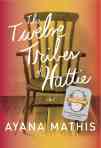
Ayana Mathis: The Twelve Tribes of Hattie (2012) – a novel about the Great Migration of Blacks in the US from the South to the North in the 1900s as told through the story of one family. An Oprah’s Book Club 2.0 selection – and a refugee from my ill-starred 2013 list!

Frantz Fanon: Wretched of the Earth (1961)  – his classic work on colonialism. Recommended to me back in my university days! Long overdue. I have already read his “Black Skin, White Masks” (1952), a hard read but worth it.

James Baldwin: Nobody Knows My Name (1961) – essays he wrote when he was in the US during the civil rights movement. One of my favourite authors.

Audre Lorde: Sister Outsider (1984) – essays. I have already read maybe 40% of this book and did a post on “Eye to Eye”, which I loved.

kolaboof

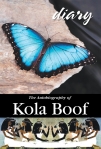
Kola Boof: Diary of a Lost Girl (2007) – growing up in Sudan, Egypt and the US in the 1900s.

Edwidge Danticat: Krik? Krak! (1996) – tales of Haitian life. I heard she was good but have yet to read any of her stuff.

108897831

Percival Everett: Erasure (2001) – a novel about Thelonius “Monk” Ellison who hates how books of stereotyped Black life succeed in the US, not serious ones. He writes a satire of Richard Wright’s “Native Son” (1940) and Sapphire’s “Push” (1996) and has a hit on his hands – but everyone misses the satire!

Janet Mock: Redefining Realness (2014) – growing up Black and transgender in the US in the 1990s and 2000s.

Octavia Butler: Parable of the Sower (1993) – a diary from the 2020s set in a US that is falling apart. I did a post on her book “Kindred” (1979): slavery meets the Grandfather Paradox!

If you want to recommend a book or warn me off from some of these, or just offer an opinion, please leave a comment below. Thanks!

– Abagond, 2018.

See also:

575

Disney’s “The Little Mermaid” (1989).

Some boys like mermaids. Some parents see it as no big deal, some see it as a “phase” they grow out of, while others are afraid it will make them gay.

In my experience, a boy can like mermaids and – brace yourself – trucks at the same time. It is parents, or at least some parents, who try to narrow their children’s interests along “gender typical” lines.

Mermaids at pool parties for children are a good example of that. Raina of Halifax Mermaids says misbehaviour towards mermaids mainly comes from boys who hear their parents say things like:

“Let the girls play with the mermaid.”

“No Billy, you’re a pirate.”

“No, don’t call yourself a mermaid.”

“Mermaids are for the girls.”

“Daddy’s not sure how he feels about that.”

Raina on the danger that mermaids present to boys:

“A boy will grow up to have a sexuality of some sort. It’s a very wide rainbow of possibility. But I assure you, when it comes to being gay, spending time with a mermaid just isn’t going to turn your kid one way or another. They either are, or they aren’t.”

In pirate times mermaids were said to lure men to their destruction.

Halifax Mermaids also has mermen – but they are viewed by parents with even greater suspicion.

The Children’s National Medical Center in Washington, DC put out the pamphlet “If You Are Concerned About Your Child’s Gender Behavior” (2003). It warned parents that boys identifying with Ariel of Disney’s “The Little Mermaid” (1989) for more than a few weeks is “gender variant” behaviour. It says that “science has yet to pinpoint the causes.” Most boys with gender-variant histories become gay. On rare occasions they may be “transgendered”.

Its advice to parents: gender-variant children were probably born that way. They cannot help it. What they need most from their parents is unconditional love to weather society’s intolerance.

What transgender women say about mermaids:

Amiyah Scott:

“With mermaids, the bottom is kind of like an unknown and I like that. I love how beautiful and magical they are.”

Isis King:

“I feel like in a past unexplained life I was a mermaid swimming the waters in search of shiny things to make into breastplates and bras. Many are shocked and terrified by their presence and beauty yet they’re undeniable. They seem to live a lone life which I identify with. The individuality, freedom, strength and beauty of mermaids have always intrigued me.”

Janet Mock:

“Like Ariel, I was told I wasn’t a real girl because of my body, and this common struggle to be seen as normal, to just belong, tethered my trans girl self to Ariel’s mermaid girl self. Plus, it didn’t hurt that my childhood heroine was gorgeous — the epitome of femininity — despite struggling to exist in an untraditional form.

“In the end, against all odds and by way of problematic compromises (she trades her voice for a shot at normality with a man), Ariel lives her dream and receives her happily ever after.”

– Abagond, 2018.

Sources: mainly Google Images, Allure (2017), Halifax Mermaids (2014), “If You Are Concerned About Your Child’s Gender Behavior” (2003, PDF).

See also:

538

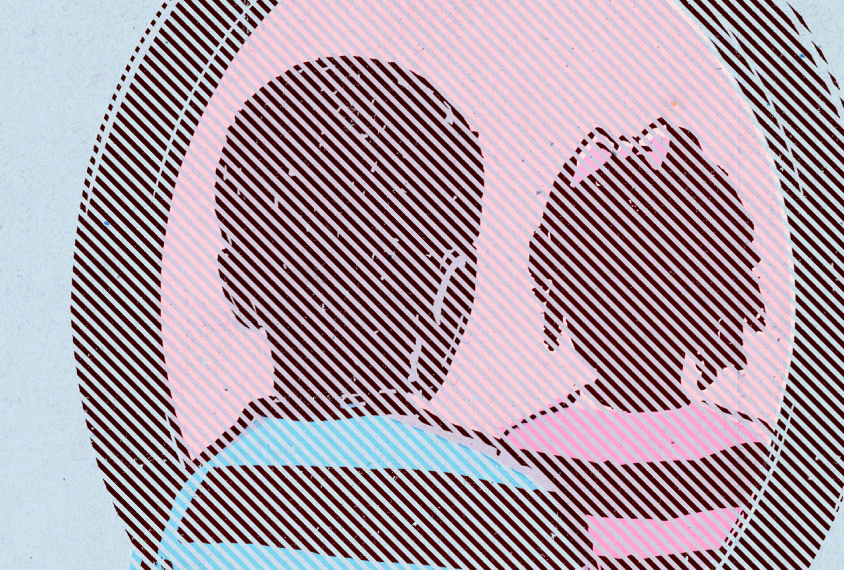
mermaid poll

Image via Docastaway.

Thank you for taking the poll! And, even if you did not, you can still leave a comment below.

– Abagond, 2018.

See also:

Disclaimer: I am not a psychologist or anything like that. This post merely presents my present, imperfect understanding of the matter.

If you are asking yourself, “Am I transgender?” you probably are. It is not the sort of question cisgender people ask. But “probably” is not proof.

There is no test you can take. Or single blog post you can read. Even a psychologist can only help you talk through the issues. And even then it could still take years.

Some say they knew since they were five. The signs of being transgender often appear early, but they are not generally understood as such till much later (that may be changing with the 2010s).

Gender dysphoria: Transgender people feel like they were born in the wrong body, what psychologists call gender dysphoria. It can be mild to severe. For those assigned male at birth it can come out in different ways. Some examples:

  1. Feeling different from other boys.
  2. Playing with Barbie dolls or playing mainly with girls (even when you have a chance to play with boys).
  3. Not liking sports.
  4. Not liking it when the teacher puts you with the boys.
  5. Trying on your mother’s or sister’s clothes – or wishing you could wear them.
  6. Wanting to be a mother, not a father, when you grow up.
  7. Wishing to be a girl, like when you make a wish on a birthday cake.
  8. Wearing a towel or T-shirt on your head to pretend you have long hair.
  9. Growing out your hair to be more like a girl.
  10. Being disgusted by your body, especially after puberty, especially by the things that make it male (hairiness, deep voice, penis, etc).
  11. Not wanting to shower with boys.
  12. Wanting to play female characters in video games.
  13. Being picked on as gay in middle school (ages 12 to 15).
  14. Wearing make-up.
  15. Going through a gay phase – which does not seem to fit even if you are attracted to boys.
  16. Going through a hypermasculine phase – like doing martial arts, wearing a beard, or joining the army.
  17. Researching about being transgender, like on Google or YouTube.
  18. In severe cases: depression, substance abuse, cutting, suicidal thoughts, etc.

These are just examples. Experiencing one, none or several of these might not mean much. The pattern is what is important: discomfort with your assigned gender at birth. That is what underlies all of the examples.

Being trans is not determined by your age, looks, family, religion or culture. That stuff might keep you in denial or in the closet, but it does not determine whether you are trans.

Sexual orientation (who you want to date) is not the same thing as gender identity (who you want to be). Just like cis people, trans people can be straight, gay, bisexual, etc.

Male transvestites (cross-dressers) like to dress in women’s clothing but still consider themselves men. Transgender women on the other hand want to wear women’s clothing full-time – as their real clothes.

My opinion: Gender expectations in the US are way too narrow and extreme. Some might be happier trading genders, but for most it would just be trading frying pans.

– Abagond, 2018.

Source: mostly YouTube, especially the experiences of trans women who grew up in the US in the 1990s, 2000s and early 2010s.

See also:

571

Remarks:

If you have ever wondered what it is like to fall in love with a dancing troll, wonder no longer. It is here expressed through the medium of British pop music circa 1970 and YouTube video circa 2016.

This would make a great song to play at the end of a boy-meets-girl movie 😉

This song was a huge hit across the English-speaking world in 1970, reaching #1 in their native Britain and #4 across the Anglosphere.

Edison Lighthouse became a one-hit wonder, but its lead singer, Tony Burrows, went on to sing on four other one-hit wonder songs:

On February 28th 1970 Burrows appeared on the “Top of the Pops” television show in Britain three times singing on three hit songs with three different bands!

Happy New Years!

See also:

Lyrics:

She ain’t got no money
Her clothes are kinda funny
Her hair is kinda wild and free
Oh, but Love grows where my Rosemary goes
And nobody knows like me

She talks kinda lazy
And people say she she’s crazy
And her life’s a mystery
Oh, but Love grows where my Rosemary goes
And nobody knows like me

There’s something about her hand holding mine
It’s a feeling that’s fine
And I just gotta say
She’s really got a magical spell
And it’s working so well
That I can’t get away

I’m a lucky fella
And I’ve just got to tell her
That I love her endlessly
Because Love grows where my Rosemary goes
And nobody knows like me

There’s something about her hand holding mine
It’s a feeling that’s fine
And I just gotta say
She’s really got a magical spell
And it’s working so well
That I can’t get away

I’m a lucky fella
And I’ve just got to tell her
That I love her endlessly
Because Love grows where my Rosemary goes
And nobody knows like me

Fadeout:
It keeps growing every place she’s been
And nobody knows like me

If you’ve met her, you’ll never forget her
And nobody knows like me

La la la- believe it when you’ve seen it
Nobody knows like me

Source: Songfacts.

2017

Some of what I know about 2017 on its second-to-last day:

The bad news: Donald Trump became the US president.

The good news: North Korea has not (yet) been wiped from the face of the earth, despite Trump’s threats.

This year’s theme: Naked greed by the top 0.5%.

Russiagate: Soon after Trump became president he was sunk in scandal. It is still unfolding, with Michael Flynn now turning state’s evidence. Through it all, 35% (half of all White people) have stuck with Trump, while some 48% (myself included) suffer from Trump Derangement Syndrome.

In 2017 Trump:

  • Put Neil Gorsuch on the Supreme Court
  • Passed the Billionaire Relief Act of 2017, aka “the middle-class tax cut”, which fewer than a fourth of voters support.
  • Got part of his Muslim travel ban to take effect.
  • Pulled the US out of the Paris climate change agreement.
  • Overturned Obama’s rules on net neutrality.
  • Ended DACA.
  • Allowed the Dakota Access Pipeline to be completed.
  • Pulled back on police reform.
  • Loosened rules on civilian slaughter.

Etc.

People:

#MeToo: sexual assault scandals felled Harvey Weinstein, Bill O’Reilly, Charlie Rose, Matt Lauer, Al Franken, Roy Moore (barely), Kevin Spacey and many others – but not Donald Trump.

Three major hurricanes hit the US: Harvey, Irma and Maria.

Make America Safe: Two of the worst mass shootings in recent US history were carried out by Stephen Paddock and Devin Patrick Kelley. Neither were Muslim. Or Black. Or Mexican.

Jihad: Over 300 were killed in a Somalia truck bombing – and at a mosque in Sinai, Egypt. ISIS lost its two main cities, Raqqa, Syria and Mosul, Iraq.

Ethnic cleansing: Over a half million Rohingyas fled Burma.

Slave trade: seems to be making a comeback in Libya.

The Doomsday Clock is now two and a half minutes to midnight, a half minute closer thanks to Trump.

Global temperature average: 14.6°C in April (NOAA), down 0.17°C from last year.

Person of the Year: The Silence Breakers (Time magazine). They forgot to put Tarana Burke on the cover.

Top US R&B song: Bruno Mars: “That’s What I Like” (Billboard).

Top Hollywood film: will almost certainly be “Star Wars 8: The Last Jedi”.

Top images (on Google Images):

the most beautiful woman:

Dutch model Doutzen Kroes

well-dressed man:

car:

2018 Hyundai Sonata

computer:

president:

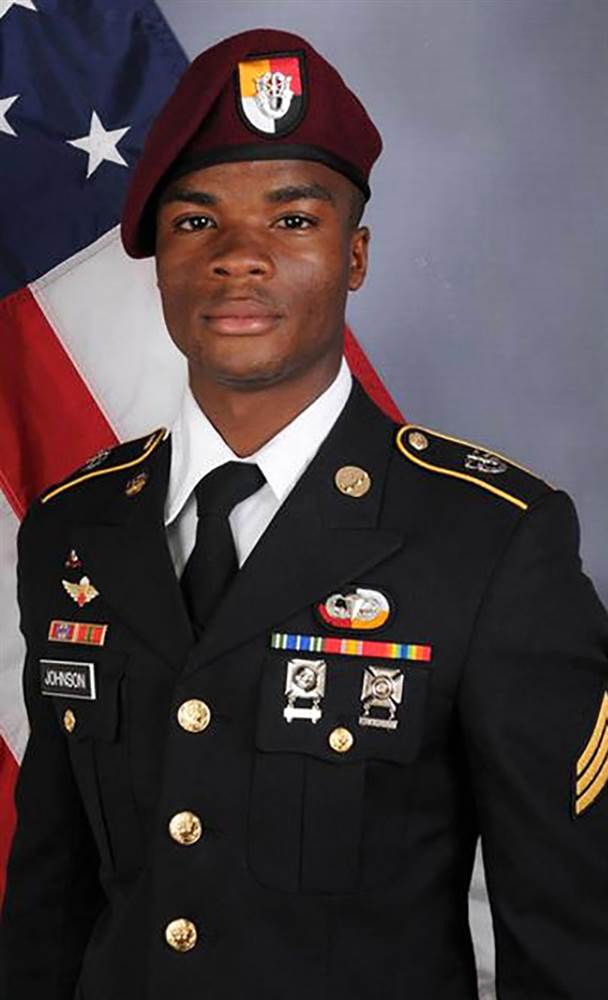
In memoriam: Erica GarnerSgt La David Johnson, Heather Heyer (Charlottesville), Jordan Edwards, Charleena Lyles, Tommy Le, Justine Damond, Patrick Harmon, Daniel Shaver, Dick Gregory, Glen Campbell, David Cassidy, Joni Sledge, Fats Domino. Chuck Berry, Chuck Barris (The Gong Show), Walter Becker (Steely Dan), Tom Petty, Roger Moore, Mary Tyler Moore, Jerry Lewis, June Foray.

– Abagond, 2017.

See also:

530

In memoriam: Erica Garner

Erica Garner in Ferguson, August 9th 2015.

Erica Garner (1990-2017), daughter of Eric Garner, passed away this morning from a heart attack. She became an activist but never saw justice for her father. She was only 27.

Requiescat in pace.

See also:

Tarana Burke

Tarana Burke (1973- ), a US activist, is the founder of the Me Too movement. She founded it back before hashtags were even a thing, back in 2006, in the days of MySpace.

On October 15th 2017, in the days of Twitter, in the wake of the Harvey Weinstein sexual assault scandal, actress Alyssa Milano tweeted:

“If you’ve been sexually harassed or assaulted write ‘me too’ as a reply to this tweet.”

In the week that followed #MeToo was tweeted 48 million times. A wave of heartbreaking stories came down on Twitter. It became clear to anyone who was paying attention that sexual assault was not just rich and famous men taking advantage of women. It was not just a few bad apples. It went much deeper than that.

Burke, unlike Milano, was not nationally known. She was an unsung hero working to help Black and Brown girls and others recover from sexual assault. But Black Twitter was quick to point out – and Milano herself acknowledged – that Burke came up with “Me Too”.

Time magazine, despite all that, did not put Burke on the cover when they made Silence Breakers their Person of the Year for 2017. Taylor Swift, a White pop singer, was there on the cover as one of “the voices that launched a movement” – but not Burke. There is a word for that: erasure.

The phrase “Me Too” is based on the two words Burke wished she had said to a 13-year-girl called Heaven. When Burke was working at a youth camp, Heaven told her about the sexual violence she had survived. Burke could have – should have – said “Me too.” Burke herself had survived sexual violence three times, starting at age six.

It is just two words, but a big thing that keeps sexual violence going while women suffer alone in silence is the shame that keeps women silent. And that shame is not even felt by the right people: the men who practise sexual violence.

Pandemic: Even Burke herself had no idea how widespread it was. In 2006 when she put up a Me Too page on MySpace she was surprised at the number of women and girls who answered it.

Burke:

“This is an epidemic, pandemic even, right? If you applied the numbers around sexual violence to any communicable disease, the World Health Organization would shut it down. There would be all kind of, you know, experiment and research around it.”

Social justice: While there is no vaccine to prevent sexual violence, no medicine to cure it, Burke thinks it can be dealt with as a social justice issue:

“We have to talk to survivors for what they need. We are the ones who have to define what justice looks like.

“And so the other part of it is around community action. We firmly believe that you can organize around ending sexual violence. People do every day. There are organizations and groups that do that, and I feel like we need to elevate this conversation to a social justice issue.”

– Abagond, 2017.

Source: mainly Democracy Now! (2017), Washington Post (2017).

See also:

525

Happy Xmas (War Is Over)

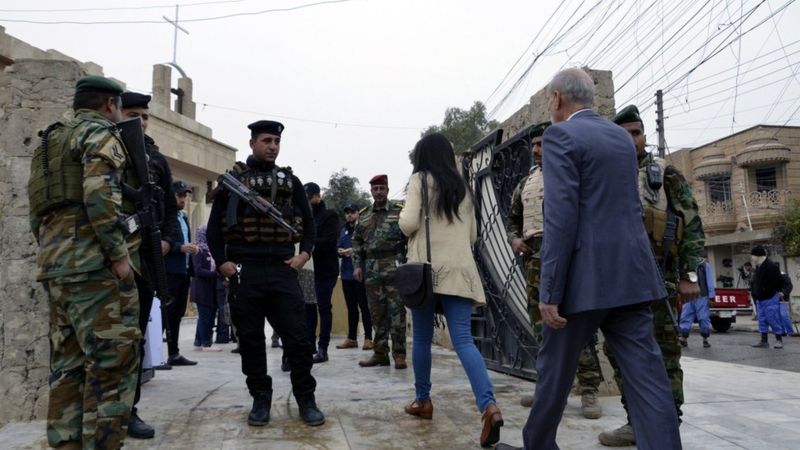
Christians and Muslims going to St Paul’s, the only functioning church in Mosul, Iraq to celebrate Christmas in 2017. Under ISIS rule the church was a prison. Via the BBC.

Remarks:

This song was written by John Lennon and Yoko Ono and is here performed in 1971 by the John & Yoko/Plastic Ono Band with the Harlem Community Choir.

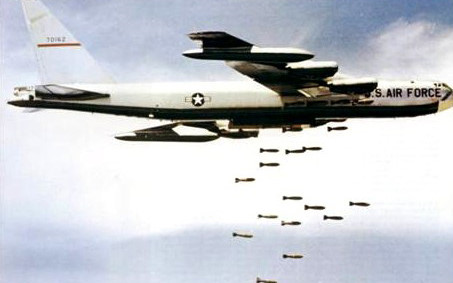
In 1972 the song went to #4 in Britain – the same year the US bombed Vietnam on Christmas.

The song never made the top ten in the US.

In 1980 the song went to #2 in Britain – the same year Lennon was shot dead in the US just 17 days before Christmas.

In 2017 I play this song in honour of Mosul, Iraq, which is publicly celebrating Christmas for the first time in four years. Under ISIS jihadist rule celebrating Christmas was dangerous.

Merry Christmas to all my commenters and lurkers!!

See also:

Lyrics:

Happy Xmas, Kyoko
Happy Xmas, Julian

So this is Xmas
And what have you done
Another year over
And a new one just begun
And so this is Xmas
I hope you have fun
The near and the dear one
The old and the young

A very Merry Xmas
And a happy New Year
Let’s hope it’s a good one
Without any fear

And so this is Xmas (war is over)
For weak and for strong (if you want it)
For rich and the poor ones (war is over)
The world is so wrong (now)
And so happy Xmas (war is over)
For black and for white (if you want it)
For yellow and red ones (war is over)
Let’s stop all the fight (now)

A very Merry Xmas
And a happy New Year
Let’s hope it’s a good one
Without any fear

And so this is Xmas (war is over)
And what have we done (if you want it)
Another year over (war is over)
A new one just begun (now)
And so happy Xmas (war is over)
We hope you have fun (if you want it)
The near and the dear one (war is over)
The old and the young (now)

A very Merry Xmas
And a happy New Year
Let’s hope it’s a good one
Without any fear

War is over, if you want it
War is over now

Happy Xmas

Source: A-Z Lyrics.

Attic Greek

Attic Greek was spoken in the pink regions in the -400s. The purple regions spoke the closely related Ionic dialect.

Attic Greek (fl. -500 to +600) was the Greek of Attica and its main city of Athens during its glory days. Plato, Sophocles and the other great writers of Athens wrote so well that later ages continued to write in their sort of Greek long after it had died out as a day-to-day language of ordinary people. It was kept so pure that Plato could have read books written a thousand years later.

It would be as if English had not just Shakespeare but a half dozen other great writers like him at the same time so that anyone who wrote in English who wanted to be taken seriously would write in Shakespearean English. Till at least the year 2600!

At university, if you take Ancient Greek, they teach you Attic Greek. Because most Ancient Greek writings that we have are in it. The main exceptions are Homer, Herodotus, the Septuagint, the New Testament, and early Christian writers. But if you know Attic they are not that hard to read.

Compared to Latin, Attic Greek it is markedly harder to learn: its words are less like English and it has more endings to remember.

Koine Greek, or what most people would call New Testament Greek, was the main rival to Attic Greek. It was based on Attic Greek but simpler, an Everyman’s Attic. Kind of like what Hollywood English is to Shakespeare. It was spread by Alexander the Great throughout his empire and became the main language of the eastern Mediterranean. The cults of Isis, Mithras and Jesus used Koine Greek to reach the masses.

Upward mobility: Early Christians like St Paul wrote in Koine Greek. The key word is “early”. Once Christianity spread to the highly educated levels of society, Christian writers began writing in Attic Greek too.

Attic Greek, circa -471.

Native speakers: Probably no more than 350,000 people at any one time ever spoke Attic Greek as their native language. By Roman times no one spoke that way naturally, not even in Attica. Koine had taken over spoken Greek.

Prestige dialect: That made Attic Greek something you learned at school, the sure sign of an expensive education, something that made your writing sound better than it probably was. Those who wrote in Attic Greek were more likely to get their books copied and therefore last through the ages.

Some Attic Greek writers (non-native speakers have their place of birth given):

  • -400s: Aeschylus, Sophocles, Euripides, Thucydides
  • -300s: Aristophanes, Lysias, Xenophon, Plato, Isocrates, Demosthenes, Aristotle (Stagira, Greece)
  • -200s:
  • -100s:
  • -000s:
  • +000s: Josephus (Jerusalem)
  • +100s: Plutarch (Chaeronea, Greece), Lucian (Turkey), Marcus Aurelius (Rome).
  • +200s: Aelian (Italy), Plotinus (Egypt)
  • +300s: Julian (Constantinople)
  • +400s:
  • +500s: Procopius (Israel)

The native speakers listed for the -400s and -300s became the model of good writing for the rest.

Atticists: By the -200s writers started to write in a mix of Attic and Koine. That led to a reaction by Atticists who wrote in a purer form of Attic. The Atticists reached their height in the +100s.

– Abagond, 2017.

See also:

539

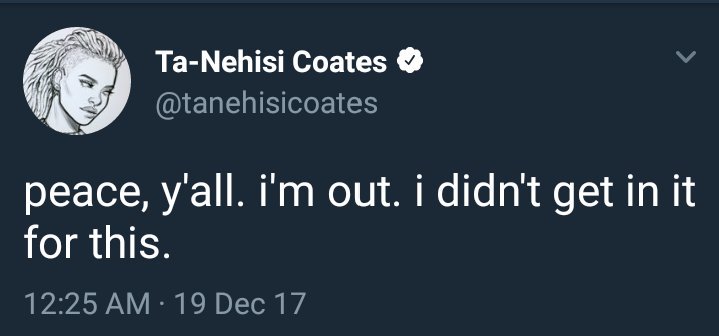
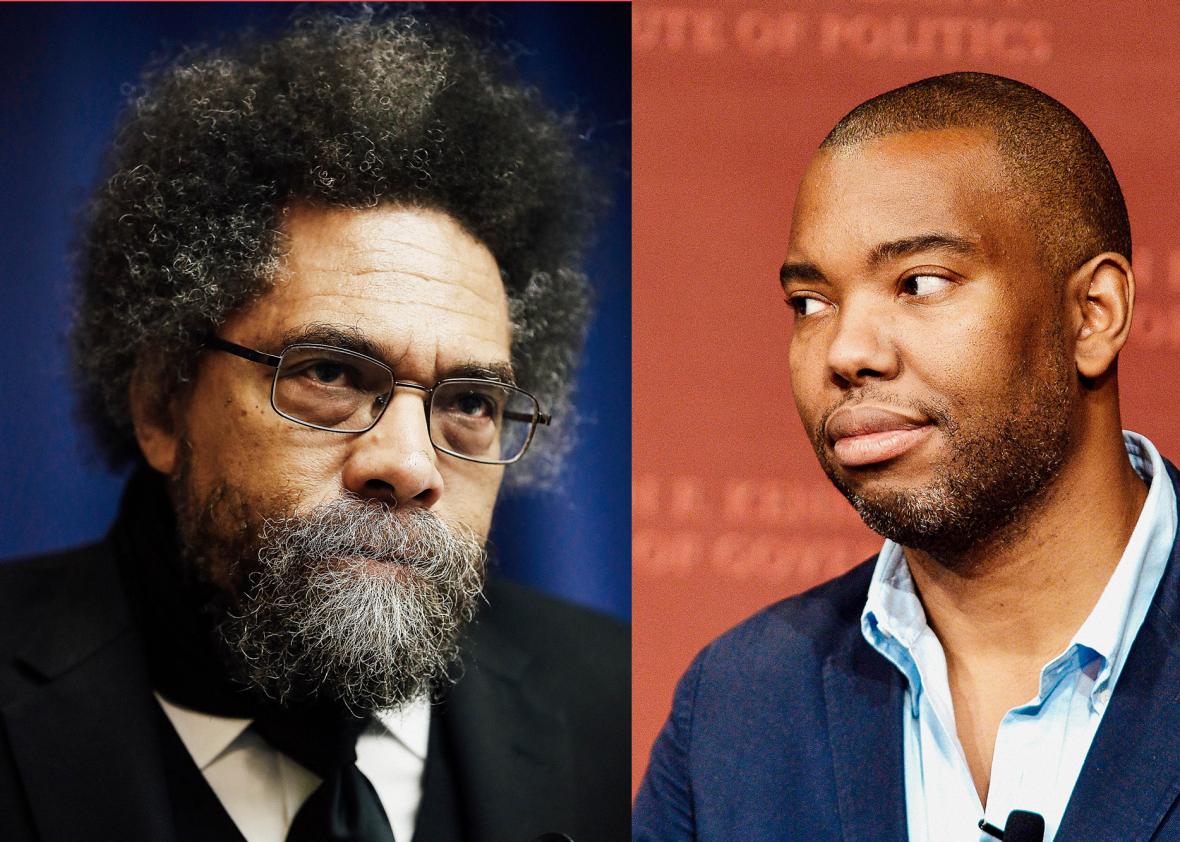
On Sunday Cornel West wrote an opinion piece about Ta-Nehisi Coates for The Guardian – and on Monday Coates deleted his Twitter account. And that was after Richard Spencer, the White nationalist, took Cornel West’s side!

Coates:

“peace, y’all. i’m out. i didn’t get in it for this.”

West calls Coates “a brilliant brother” that we have much to learn from, yet:

By 2015 West was already saying stuff like this about Coates:

“Baldwin was a great writer of profound courage who spoke truth to power. Coates is a clever wordsmith with journalistic talent who avoids any critique of the Black president in power.”

In 2017, this past Sunday, West took it up another level and wrote a piece entitled, “Ta-Nehisi Coates is the Neoliberal Face of the Black Freedom Struggle”. It was mainly in answer to Coates’s new book, “We Were Eight Years in Power”.

West’s disagreement:

“The disagreement between Coates and me is clear: any analysis or vision of our world that omits the centrality of Wall Street power, US military policies, and the complex dynamics of class, gender, and sexuality in black America is too narrow and dangerously misleading. So it is with Ta-Nehisi Coates’ worldview.”

Coates says he does not write about that stuff because he does not know enough about it.

Writing for White people: Coates writes for The Atlantic, a White Liberal magazine. He writes beautifully written, thoughtful pieces about White racism and its roots in history – but then says there is not much anyone can do about racism. West:

“There is no doubt that the marketing of Coates – like the marketing of anyone – warrants suspicion. Does the profiteering of fatalism about white supremacy and pessimism of black freedom fit well in an age of Trump – an age of neo-fascism, US style?”

Hero worship: Coates’s world view is dangerously warped by Obama:

“Unfortunately, Coates’ allegiance to Obama has produced an impoverished understanding of black history. He reveals this when he writes:

‘Ossie Davis famously eulogized Malcolm X as “our living, Black manhood” and “our own Black shining prince.” Only one man today could bear those twin honorifics: Barack Obama.’

“This gross misunderstanding of who Malcolm X was – the greatest prophetic voice against the American Empire – and who Barack Obama is – the first black head of the American Empire – speaks volumes about Coates’ neoliberal view of the world.”

Protective stupidity: Coates calls Obama a “deeply moral human being” who “walked on ice and never fell.” Obama, the one deep in the pockets of Wall Street, the Drone Master himself, the bomber of brown people. The very sort of things Coates says he does not write about – because why?

West concludes:

“I stand with those like Robin DG Kelley, Gerald Horne, Imani Perry and Barbara Ransby who represent the radical wing of the black freedom struggle. We refuse to disconnect white supremacy from the realities of class, empire, and other forms of domination – be it ecological, sexual, or others.

“The same cannot be said for Ta-Nehisi Coates.”

– Abagond, 2017.

Source: mainly The Guardian.

See also:

552

Nacirema

The Nacirema live north of the Yaqui and Tarahumare of Mexico. They speak Hsilgne and say they arrived from the east. Unlike most Amerindian tribes they are non-ecosystemic, as shown by their Elibomotua cult. Among anthropologists they are noted as an example of the extremes to which human behaviour can go.

In 1956 US anthropologist Horace Miner carried out the best-known study of them. Among his findings:

“Intercourse is taboo as a topic and scheduled as an act.”

“Parturition takes place in secret, without friends or relatives to assist, and the majority of women do not nurse their infants.”

“Special women’s rites are performed only four times during each lunar month, but what they lack in frequency is made up in barbarity. As part of this ceremony, women bake their heads in small ovens for about an hour. ”

“Most houses are of wattle and daub construction, but the shrine rooms of the more wealthy are walled with stone. Poorer families imitate the rich by applying pottery plaques to their shrine walls.”

“The focal point of the shrine is a box or chest which is built into the wall. In this chest are kept the many charms and magical potions without which no native believes he could live.”

“The daily body ritual performed by everyone includes a mouth-rite. Despite the fact that these people are so punctilious about care of the mouth, this rite involves a practice which strikes the uninitiated stranger as revolting. It was reported to me that the ritual consists of inserting a small bundle of hog hairs into the mouth, along with certain magical powders, and then moving the bundle in a highly formalized series of gestures.”

Miner says they are “a magic-ridden people.”

Witch doctors are of three main kinds: one for the head, one for the body, and one for the mouth. The last one is the most feared since they regularly use torture. The one for the head casts out demons: the Nacirema believe that parents, especially mothers, bewitch their children.

The latipso is the temple of the medicine men. Vestal maidens wash, feed and roll the sick on beds of pain. Medicine men “jab magically treated needles into their flesh.” Children fear the latipso because many die.

Breasts: 

“General dissatisfaction with breast shape is symbolized in the fact that the ideal form is virtually outside the range of human variation. A few women afflicted with almost inhuman hypermammary development are so idolized that they make a handsome living by simply going from village to village and permitting the natives to stare at them for a fee.”

Notgnihsaw:

“According to Nacirema mythology, their nation was originated by a culture hero, Notgnihsaw, who is otherwise known for two great feats of strength – the throwing of a piece of wampum across the river Pa-To-Mac and the chopping down of a cherry tree in which the Spirit of Truth resided.”

Note: Some words have been spelled backwards.

– Abagond, 2017.

Source: mainly “Body Ritual among the Nacirema” (1956) by Horace Miner.

See also:

527