Feeds:
Posts
Comments

Sade: Your Love is King

Remarks:

This is the song that made her name in Britain where it went to #6 in 1984. On the US R&B charts it only went to #35 in 1985, but “Smooth Operator” and “Sweetest Taboo” would both hit the top ten that same year, making her name in the US.

See also:

Lyrics:

Your love is king
Crown you with my heart
Your love is king
Never need to part
Your kisses ring
Round and round and round my head
Touching the very part of me
It’s making my soul sing
Tearing the very heart of me
I’m crying out for more
Your love is king
Crown you with my heart
Your love is king
You’re the ruler of my heart
Your kisses ring
Round and round and round my head
Touching the very part of me
It’s making my soul sing
I’m crying out for more
Your love is kingI’m coming on
I’m coming
You’re making me dance
InsideYour love is king
Crown you with my heart
Your love is king
Never need to part
Your kisses ring
Round and round and round my head
Touching the very part of me
It’s making my soul sing
Tearing the very heart of me
I’m crying out for moreTouching the very part of me
It’s making my soul sing
I’m crying out for more
Your love is king

This is no
Blind faith
This is no
Sad or sorry dream
This is no
Blind faith

Your love, your love is real
(your love is king)
Gotta crown me with your heart
(your love is king)
Never never need to part
(your love is king)
Touch me
(your love is king)
never letting go
(your love is king)
Your Love is King
never letting go
(your love is king)
never gonna give it up
(your love is king)
I’m comming
(your love is king)
making me dance

Source: AZ Lyrics.


Remarks:

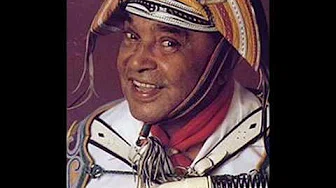
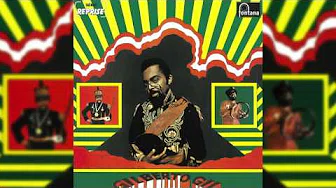
Gilberto Gil performs “Domingo na Parque” live on Brazilian television in 1967. The sound quality is better on the studio version, of course, but it is missing the energy of the audience.

Os Mutantes are the backing singers. Rita Lee, the Mutant on cymbals, will go on to become the Queen of Brazilian Rock and sell 55 million records (5 million more than Sade, the Measure of All Things).

Rolling Stone Brasil named this the 11th top Brazilian song of all time. That makes it comparable to The Who’s “My Generation” (1965) in the US – the song that the US Rolling Stone named as the 11th greatest song.

See also:

Lyrics:

O rei da brincadeira (ê, José)
O rei da confusão (ê, João)
Um trabalhava na feira (ê, José)
Outro na construção (ê, João)

A semana passada, no fim da semana
João resolveu não brigar
No domingo de tarde saiu apressado
E não foi pra Ribeira jogar capoeira
Não foi pra lá, pra Ribeira, foi namorar
O José como sempre no fim da semana
Guardou a barraca e sumiu
Foi fazer no domingo um passeio no parque
Lá perto da Boca do Rio
Foi no parque que ele avistou Juliana
Foi que ele viu
Foi que ele viu Juliana na roda com João
Uma rosa e um sorvete na mão
Juliana seu sonho, uma ilusão
Juliana e o amigo João
O espinho da rosa feriu Zé
E o sorvete gelou seu coração

O sorvete e a rosa (ô, José)
A rosa e o sorvete (ô, José)
Foi dançando no peito (ô, José)
Do José brincalhão (ô, José)

O sorvete e a rosa (ô, José)
A rosa e o sorvete (ô, José)
Oi, girando na mente (ô, José)
Do José brincalhão (ô, José)

Juliana girando (oi, girando)
Oi, na roda gigante (oi, girando)
O amigo João (João)
O sorvete é morango (é vermelho)
Oi girando e a rosa (é vermelha)
Oi, girando, girando (é vermelha)
Oi, girando, girando…
Olha a faca! (olha a faca!)

Olha o sangue na mão (ê, José)
Juliana no chão (ê, José)
Outro corpo caído (ê, José)
Seu amigo João (ê, José)
Amanhã não tem feira (ê, José)
Não tem mais construção (ê, João)
Não tem mais brincadeira (ê, José)
Não tem mais confusão (ê, João)

Source: Vagalume.


The Cosby Show

“The Cosby Show” cast photo, 1986. (Photo by: Alan Singer/NBCU Photo Bank)

“The Cosby Show” (1984-1992) was a US television comedy about an upper-middle-class Black family that lived in a Brooklyn brownstone. It starred Bill Cosby as Dr Cliff Huxtable, the happily married husband of a lovely lawyer, Clair, and the beloved father of Sondra, Denise, Theo, Vanessa and Rudy.

From 1985 to 1989 it was the number one show on US television, a hit with both Blacks and Whites. By 1995 NBC had made a billion dollars.

As far back as 1966 Cosby had been thinking of doing the show:

“Someday I want to do a family situation comedy on television and it will be a hit because people want to see what goes on in a Negro home today.”

But in 1969 he noted:

“if you’re really going to do a series about a black family, you’re going to have to bring out the heavy, and who is the heavy but the white bigot? This would be very painful for most whites to see, a show that talks about the white man and puts him down.”

*sniff*

By 1984 he had the answer: avoid the issue of race altogether, something he had long been doing in his comedy. White-owned NBC agreed. He got to show the Black family in a good light week after week – no mean feat after nearly 300 years of demonization.

Gratuitous picture of Clair Huxtable.

But there was a drawback: As a study by Sut Jhally and Justin Lewis later showed:

The Cosby Show, we discovered, helps to cultivate an impression, particularly among white people, that racism is no longer a problem in the United States. Our audience study revealed that the overwhelming majority of white TV viewers felt racism was a sin of the past”

If Cliff and Clair can make it so can any Black person!

While Whites were watching “The Cosby Show”, apparently as a documentary, many Blacks were living through the Crack Era. And as the last episode aired, on April 30th 1992, LA burned.

Whitewashed: Not only did the Huxtables live in a science-fiction post-racial universe on the planet Brooklyn, they were becoming Whiter. Critical race theorist Patricia J. Williams observed:

“As The Cosby Show’s warm, even smarmy appeal has made it a staple in homes around the country, black cultural inflections that were initially quite conspicuous (speech patterns, the undercurrent of jazz music, hairstyles ranging from dreadlocks to ‘high-top fades’) have become normalized and invisible … so that The Cosby Show has been described as little more than a portrayal of blacks costumed in cultural whiteface.”

Denise went to an HBCU, Theo went to NYU.

At least the Ellis Wilson painting was still up:

But it gets worse. Michael Eric Dyson:

“Each time Cosby cringed at the very thought of color or race in comedy, he bought the logic of normative white identity hook, punch line and sinker. Cosby didn’t cringe at race or color per se, he cringed at blackness. He didn’t see the color of whiteness; it was the ‘universal’ he embraced.”

– Abagond, 2018.

Sources: mainly “Is Bill Cosby Right?” (2005) by Michael Eric Dyson; “Critical Race Theory” (1995) edited by Kimberlé Crenshaw et al.

See also:

580

Marielle Franco

Marielle Franco (1979-2018), a city councilwoman in Rio de Janeiro and champion of human rights, was a rising political star in Brazil. She was, in effect, the leader of Brazil’s counterpart to Black Lives Matter. But then, two nights ago, on March 14th 2018, she was shot dead in an apparent assassination.

She was a voice for women, for Black people, for queer people, for the favelas – the slums and shantytowns of Brazil. She lived in Maré, a favela of 130,000 in Rio. She quoted Angela Davis and Audre Lorde. She belonged to PSOL, the Party of Socialism and Liberty, a small left-wing party, and was one of only five Black women elected to political office in Brazil in 2016.

Franco four days ago, speaking out on Acari, a favela in the Zona Norte part of Rio, well north of the famous beaches:

“We need to shout so that everyone knows what is happening in Acari at this moment. The 41st Battalion of the Rio de Janeiro Military Police is terrorizing and abusing the residents of Acari. This week two young men were killed and thrown into a sewage ditch. Today the police walked the streets threatening the residents. It has always happened and with the [military] intervention it has gotten even worse.”

Franco three days ago:

“Another homicide that can be credited to the Military Police. Matheus Melo was leaving church. How many more will need to die for this war to end?”

Franco two nights ago was shot dead, four bullets to the head, in the city centre of Rio. She had just left a meeting with Black activists (pictured above). The bullets were the sort used by the PF, the national police. Nothing was taken.

Rio de Janeiro, March 15th 2018. (AFP PHOTO / Mauro Pimentel. MAURO PIMENTEL/AFP/Getty Images)

Last night – it is hard to believe it was just last night – tens of thousands of people poured out into the streets of Rio, Sao Paulo, and cities across Brazil.

President Temer has cancelled his trip to Rio. He was not elected. He came to power after the impeachment of the elected president, Dilma Rousseff. Last month, just days after Carnaval, Temer sent the army into Rio. Supposedly to fight the War on Drugs – without a plan.

Rio is a violent city, but its murder rate is no worse than, say, Baltimore, St Louis or New Orleans in the US. In Brazil it does not even make the top ten.

But the police – and now the army – are out of control. In the US police kill over 1,100 people a year – a hideous number well beyond civilized standards. But in Brazil the number is over 4,200. For Rio state alone the number last year was at least 1,124 people.

And now when someone raises her voice against it, she too is killed. She was only 38. A mother.

Franco’s sister:

“Maré … cries. Rio cries. All of Brazil cries.”

Shaun King, a Black Lives Matter activist in the US:

“The assassination of human rights activist Marielle Franco was a huge loss for Brazil – and the world. …

“Marielle Franco was one of us.”

“They will not shut us up – Marielle is here”

– Abagond, 2018.

Sources: especially Google Images, Black Women of Brazil (the Franco quotes, basic facts), The Intercept (the numbers, the King quote), Midia Alternativa (the sister’s quote).

See also:

605

The number pi (π)

The number pi, written as π (the Greek letter p), is roughly 3.14. Or 3.14159. Or 3.14159265358979323846264338327950. Or – it goes on forever.

π is equal to how much longer the edge of a circle (its circumference) is than the circle’s width or diameter. π is short for the Greek word περιφέρεια (periphery, circumference). The number has been called π since the 1700s.

π is also equal to double the chance that a needle three inches long will fall on a crack on a floor made of strips of wood three inches wide. That is known as Buffon’s Needle, named after the French scientist who discovered it.

π is also equal to four times:

1 – 1/3 + 1/5 – 1/7 + 1/9 – 1/11 + 1/13 ….

And there are plenty of other ways to come up with the same number, from Archimedes’ polygons to the Chudnovsky brothers’ algorithm.

And that is the strange thing about π: even though it is used to work out numbers that have to do with circles, it appears in things that seem to have little  to do with circles. Like Einstein’s relativity, Maxwell’s laws of electromagnetism, Heisenberg’s Uncertainty Principle, statistics, price investment risk, and number theory.

It is like π is somehow built into the universe, like it is God’s (or the Flying Spaghetti Monster’s) favourite number.

π is irrational: it cannot be expressed as a fraction made up of two whole numbers. That is why it goes on for ever and never repeats. Johann Lambert proved that in 1768.

π is transcendental: it cannot be expressed as an algebraic equation. That means it was impossible for the Ancient Greeks to “square the circle” by using a compass and a ruler (creating a square with the same area as a circle). Ferdinand Lindemann proved that in 1882.

Timeline: The best value of π at the start of each century:

-2000: 3.16 (Egypt)
-1900:
-1800:
-1700:
-1600:
-1500:
-1400:
-1300:
-1200:
-1100:
-1000:
-900:
-800:
-700:
-600:
-500:
-400:
-300:
-200: 3.143 = 22/7 (Italy, Archimedes)
-100:
+001:
+100:
+200: 3.1416 = 377/120 (Egypt, Ptolemy)
+300: 3.14159 = 3927/1250 (China, Liu Hui)
+400:
+500: 3.1415926 = 355/113 (China, Zu Chongzhi)
+600:
+700:
+800:
+900:
+1000:
+1100:
+1200:
+1300:
+1400: 10 places (India, Madhava of Sangamagrama)
+1500: 16 places (Uzbekistan, Ghiyath al-Kashi)
+1600: 20 places (Netherlands, Ludolph van Ceulen)
+1700: 71 places (Britain, Abraham Sharp)
+1800: 136 places (Austria, Jurij Vega)
+1900: 527 places (Britain, William Shanks)
+2000: 206,158,430,000 places (Japan, Yasumasa Kanada)

The computer that calculated π to 12.1 trillion places in 2013 using the Chudnovsky Formula, currently the fastest way to do it. It took 94 days. It could have gone longer but did not have enough disk space.

Computers were the huge breakthrough in the 1900s. What took Shanks 15 years in the 1800s took a computer less than 15 minutes in 1954. Computers reached:

  • a thousand places by 1949,
  • a million by 1973,
  • a billion by 1989, and
  • a trillion by 2002.

π so far has been calculated to 22,459,157,718,361 places. It is not even on the Internet because it would take several months just to upload it.

π so far has been memorized to 70,000 places according to Guinness World Records. The record is held by Rajveer Meena. In 2015 at VIT University in Vellore, India he said the whole thing, blindfolded (pictured above). It took him nearly ten hours.

Pi Day – March 14th is Pi Day in the US. That is because the US regularly writes Gregorian dates backwards: 3/14. And because “π” sounds just like “pie” in English, the day is observed by eating pie.

Einstein was born on Pi Day 1879 and Stephen Hawking died on Pi Day 2018.

– Abagond, 2018.

Sources: mainly Google Images, numberworld.org (that awesome computer), Guinness World Records, Wikipedia (timeline), SINA.com (stray facts), dictionary.com (how it got its name); “Beyond Numeracy” (1991) by John Allen Paulos (Buffon, Maxwell, etc); “Isaac Asimov’s Biographical Encyclopedia of Science & Technology” (1972) by Isaac Asimov (some of the history). 

See also:

602

Samuel George Morton

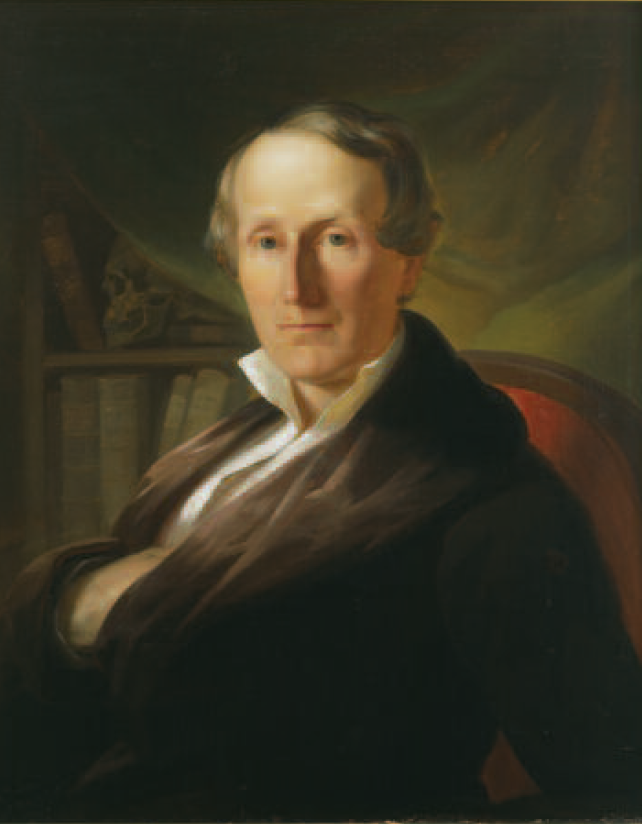
Samuel George Morton (1799-1851), a Caucasian professor of anatomy at the University of Pennsylvania, then the top medical school in the US, was the founder of the science of measuring skulls – craniometry. He used it to rank the races of man by skull volume, producing lists like this (here put into metric units):

  • 1427 Caucasian
  • 1361 Mongolian
  • 1345 American
  • 1328 Malay
  • 1279 Ethiopian

The numbers are the average volume of their skulls in cubic centimetres. Since skull size and intelligence were assumed to be pretty much the same thing, it became the IQ of its time.

In 1851, upon his death, the Charleston Medical Journal noted:

“We can only say that we [Caucasians] of the South should consider him as our benefactor, for adding most materially in giving to the negro his true position as an inferior race.”

In 1854 Frederick Douglass, a full-time negro, had a somewhat different take:

“His very able work ‘Crania Americana,’ published in Philadelphia in 1839, is widely read in this country. – In this great work his contempt for Negroes, is ever conspicuous.”

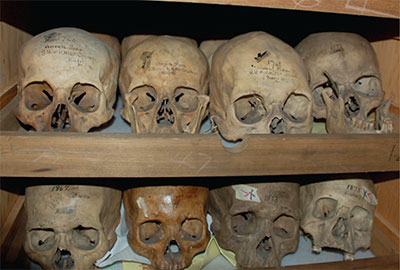
1% of Morton’s skull collection.

American Golgotha: when Morton died he had 918 human skulls with 51 more still on the way. It was called the American Golgotha. Morton had skulls from all over the world, more than a hundred from the tombs of Ancient Egypt.

Morton divided his skulls by race and measured their volume to within a cubic inch (16.4 cc). A 2011 study “almost” always got the same numbers when measuring his skulls the same way.

But then Morton pulled the same old tricks that people still pull with African IQs:

  • selective sampling: he left out Inuits and Asian Indians, which kept Mongolian and Caucasian skulls from ending in a tie.
  • correlation is cause: assuming that intelligence was being measured and not something else, like knowledge of English in the case of African IQs, or sex and height in his case:

In 1978 Stephen Jay Gould reran his numbers and found that if you take into account height or sex, where known, the differences by race in skull size all but disappear. In fact, among Morton’s skulls from Ancient Egypt, Negroid males had a slightly higher average (1435) than Caucasian males (1419).

Of the times: Gould used Morton to showcase how science is unwittingly shaped by racism. Others, in turn, have used Gould’s 1978 study to showcase how science is unwittingly shaped by left-wing beliefs. But either way, science is being shaped by the reigning beliefs of the time. Science as a glorified Clever Hans trick.

Polygeny: Morton was a leading defender of polygeny, later disproved by Darwin. Polygeny is the idea that the Christian god created the races separate and unequal. Adam and Eve were just for White people. Since the Earth was assumed to be about 6,000 years old, and since Blacks and Whites have changed little since the days of Ancient Egypt, there has not been enough time for the forces of nature to account for the differences between the races, like, say, skull size. The Christian god, in other words, made it that way.

– Abagond, 2018. 

Sources: mainly  “The Mismeasure of Man” (1996) by Stephen Jay Gould; “Frederick Douglass: Selected Speeches and Writings” (1999) edited by Philip S. Foner; “The History of White People” (2010) by Nell Irvin Painter; “Race in North America” (2012) by Audrey and Brian D. Smedley; “A Troublesome Inheritance” (2014) by Nicholas Wade; Google Images (2018). 

Update (April 14th 2021): Penn Museum at the University of Pennsylvania had these skulls on display till July 2020, when they were removed in the wake of the George Floyd protests. The museum “is now working with local communities to ‘understand their wishes for repatriation’ for the remains belonging to Black Philadelphians within the Samuel G. Morton Cranial collection.” CBS.  

See also:

MC Loma: Envolvimento

Remarks:

This song became the number one viral song on Spotify in early 2018 and a hit at the Carnaval in São Paulo last month. This video, and its high-budget remake, have received 140 million views so far on YouTube.

MC Loma is only 15, known for her neon make-up. She is from Prazeres in metropolitan Recife in north-eastern Brazil. As a little girl she would play with her cousins (the twins in the video) imitating singers. That led them to writing songs and making covers on YouTube as teenagers, which in turn caught the attention of music producers. They signed with KondZilla, who runs Canal KondZilla, the most viewed YouTube music channel based in Brazil. He is a driving force behind funk paulista, the funk music of São Paulo.

See also:

Lyrics:

Envolvimento diferente
Eu ensino a vocês, a vocês
Eu vou sentar e vou quicar
E vou descendo de uma vez, de uma vez

Esse hit é chiclete, na tua mente vai ficar
Sento, sento, sento, sento, sento e quico devagar

Tu não precisa exagerar, muito menos se empolgar
Tu vai sentar, tu vai sentar, tu vai sentar devagar

O nosso bonde é sinistro
Vem cá, que eu vou te ensinar
A descer, a subir, a quicar e rebolar

A descer, a subir, a quicar e rebolar

A descer, a subir, a quicar e rebolar
A quicar e rebolar
A quicar e rebolar

E aê, DJ?
Escama só de peixe
Uaai!
Cebruthius

Sources: Vagalume (lyrics), Wikipedia (bio).

Gilberto Gil.

Last weekend I discoverd Gal Costa’s “Baby” – 50 years after the song came out in Brazil! To avoid another such mishap I googled for lists of the best Brazilian songs.

In 2009 Rolling Stone Brasil listed the top 100 Brazilian songs of all time. I am not sure how good their taste is, but they put “Baby” at #30, so that is promising.

Here is their top 30 listed from oldest to newest. I did not list them in rank order since most of them are presumably classics. Click on the picture to hear the song on YouTube (subject to link rot and copyright issues).

format: artist: “title” (year), #rank – musical style. Optional remarks.
Pixinguinha: “Carinhoso” (1917), #3 – MPB or Música Popular Brasileira, a kind of a catch-all genre, like R&B or pop. Heavy on samba and later bossa nova.

Francisco Alves: “Aquarela do Brasil” (1939), #12 – samba.

Luiz Gonzaga: “Asa Branca” (1947), #4 – forró.

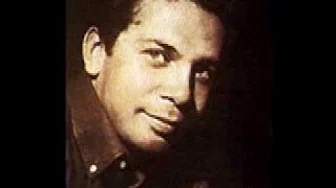
João Gilberto: “Desafinado” (1958), #14 – bossa nova. This song was an answer to critics who called bossa nova, then a new style of music, “desafinado”, out of tune or tuneless.

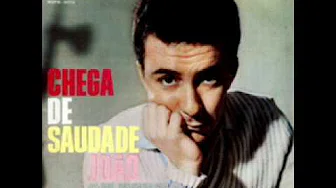
João Gilberto: “Chega de Saudade” (1959), #6 – bossa nova.

Pery Ribeiro: “Garota de Ipanema” (1961), #27 – bossa nova, jazz, MPB. A hit worldwide, known in the US as “The Girl from Ipanama”. She was a real person, Helô Pinheiro, now 72, then 17.  Written by Vinicius de Moraes and Tom Jobim, who appear later in the list.

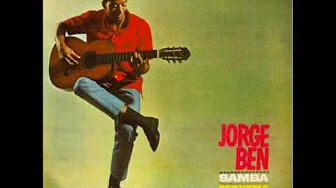
Jorge Ben: “Mas Que Nada” (1963), #5 – MPB. This song is familiar to me.

Demônios da Garoa: “Trem das Onze” (1964), #15 – samba.

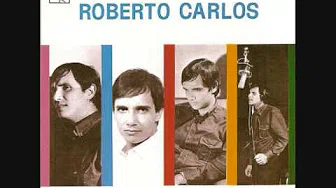
Roberto Carlos: “Quero Que Vá Tudo pro Inferno” (1965), #19 – vintage rock, iê-iê-iê.

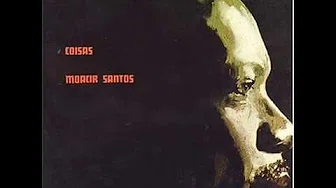
Moacir Santos: “Nanã – Coisa Número 5” (1965), #29 – MPB, jazz.

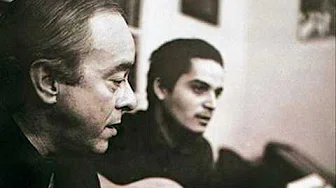
Baden Powell & Vinicius de Moraes: “Canto de Ossanha” (1966), #9 – MPB.

Caetano Veloso: “Alegria, Alegria” (1967), #10 – tropicalismo, psychedelic rock.

Gilberto Gil & Os Mutantes: “Domingo no Parque” (1967), #11 – tropicalismo, MPB.

Chico Buarque & MPB 4: “Roda Viva” (1967), #26 – MPB.

Os Mutantes: “Panis et Circenses” (1968), #7 – tropicalismo.

Caetano Veloso: “Tropicália” (1968), #21 – tropicalismo.

Geraldo Vandré: “Pra Não Dizer que Não Falei das Flores” (1968), #28 – hymn. The military government banned this song. Vandré left the country. In the video one of the protesters holds up a sign that says in Portuguese, “Yankees kill Brazilians.” The US was making Latin America safe for right-wing military dictatorships.

Gal Costa: “Baby” (1968), #30 – tropicalismo. Written by Caetano Veloso, listed above twice on this list. The Roberto she mentions in the song, Roberto Carlos, is also on this list twice.

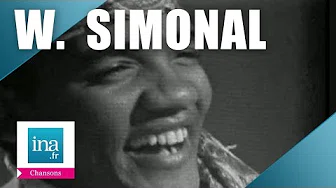
Wilson Simonal: “País Tropical” (1969), #25 – samba, soul. Written by Jorge Ben. This song is familiar.

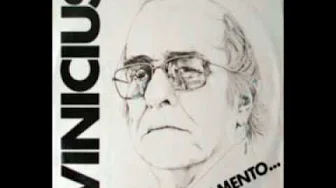
Vinicius de Moraes: “Eu Sei Que Vou Te Amar” (1970), #24 – MPB.

Chico Buarque: “Construção” (1971), #1 – MPB. The top Brazilian song of all time according to Rolling Stone Brasil!

Roberto Carlos: “Detalhes” (1971), #8 – MPB, soul.

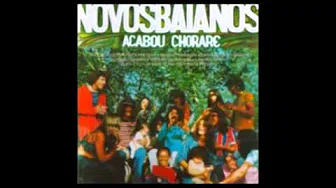
Novos Baianos: “Preta Pretinha” (1972), #20 – MPB.

Raul Seixas: “Ouro de Tolo” (1973), #16 – folk rock.

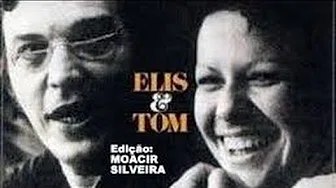
Elis Regina & Tom Jobim: “Águas de Março” (1974), #2 – samba/MPB. This song I know.

Cartola: “As Rosas Não Falam” (1974), #13 – samba.

Cartola: “O Mundo É um Moinho” (1974), #17 – MPB, samba.

Chico Buarqu: “Sinal Fechado” (1974), #18 – MPB.

Ultraje a Rigor: “Inútil” (1985), #23 – rock.

Chico Science & Nação Zumbi: “Da Lama ao Caos” (1994), #22 – manguebeat.

Current musical styles not on this list: Brazilian funk and sertaneja. At least.

– Abagond, 2018.

Sources: Rolling Stone Brasil (see the full list), Portuguese Wikipedia (genres).

See also:

524

Cuvier

Baron Georges Cuvier (1769-1832), namer of the pterodactyl, dissector of Sarah Baartman, was one of France’s top scientists in the early 1800s. He founded comparative anatomy and palaeontology as we know them. He was called “the dictator of biology” in the days before Darwin.

Comparative anatomy is that thing where scientists can take a few bones and recreate a long-dead creature. It comes from Cuvier. By 1799 he had discovered how to do it. It soon became clear that the distant past was a very different place, with pterodactyls flying through the air.

Catastrophism: Cuvier said that the earth has been visited with four catastrophes that wiped out most life, Noah’s Flood being the latest. After each catastrophe, God creates new species of plants and animals. Since the Earth was less than 6,000 years old according to the Bible, there was not enough time for evolution to account for the great changes seen in the fossil record. After all, the mummified cats of Ancient Egypt were more than halfway back to the beginning of time and they were just like the cats of the 1800s. Charles Lyell would later overturn catastrophism, laying the groundwork for Darwin.

Racism: Ancient Egyptians had to be Caucasian because their brains were too big to be Negroes:

“we possess so many of the ancient Egyptian embalmed bodies, it is easy to prove that, whatever may have been the hue of their skin, they belonged to the same race with ourselves; that their cranium and brain were equally voluminous; in a word, that they formed no exception to that cruel law, which seems to have doomed to eternal inferiority all the tribes of our species which are unfortunate enough to have depressed and compressed cranium.”

Notice that Negro inferiority is assumed as a given.

Sarah Baartman: She was an African woman with a huge butt who was shown in England and France in a cage like she was an animal. When she died in 1815, just five years after arriving in Europe, Cuvier studied her body, particularly her genitals and her butt – in the name of science. He made a plaster mould of her body, put her brain, vulva and anus in glass jars, and stripped the flesh from her skeleton and hung it in a Paris museum.

Cuvier reports:

“She had a way of pouting her lips exactly like what we have observed in the orang-utan. Her movements had something abrupt and fantastical about them, reminding one of those of the ape. Her lips were monstrously large. Her ear was like that of many apes, being small, the tragus weak, and the external border almost obliterated behind. These are animal characters. I have never seen a human head more like an ape than that of this woman.”

Yet she knew three languages and was learning a fourth. Cuvier himself admitted she had an excellent memory. And he knew full well that apes do not have thick lips.

Thus one of the great minds of Western science.

– Abagond, 2018.

Sources: mainly Google Images; “Negro-Mania: Being an Examination of the Falsely Assumed Equality of the Various Races of Man Demonstrated by the Investigations of Champollion, Wilkinson, Rosellini, Van-Amringe, Gliddon, Young, Morton, Knox, Lawrence, Gen. J. H. Hammond, Murray, Smith, W. Gilmore Simms, English, Conrad, Elder, Prichard, Blumenbach, Cuvier, Brown, Le Vaillant, Carlyle, Cardinal Wiseman, Burckhardt, and Jefferson” (1851) by John Campbell; “The Flamingo’s Smile” (1985) by Stephen Jay Gould; “The Mismeasure of Man (1996) by Stephen Jay Gould; “Medical Apartheid” (2006) by Harriet A. Washington. 

See also:

630

books

Last update: January 25th 2026.

Books and authors I have done posts on, listed by year:

– Abagond, 2018, 2022.

See also:

lips

Naomi Campbell.

Lips are the fleshy parts along the edge of the mouth. When loose they sink ships. When making out they are first base (at least to baseball fans). And when viewed through the White lens, they determine one’s level of humanity. Take a look:

In 1827, Georges Cuvier, namer of the pterodactyl, dissector of Sarah Baartman, and one of France’s leading scientists, said in his book “The Animal Kingdom”:

“The negro race is confined to the south of Mount Atlas. Its characters are, black complexion, woolly hair, compressed cranium, and flattish nose. In the prominence of the lower part of the face, and the thickness of the lips, it manifestly approaches to the monkey tribe.”

Minstrel show poster, 1900.

For those in the US not up on the latest science, the same point was made by blackface characters in the minstrel shows of the 1800s. Their lips were made to seem big for laughs. Ha ha.

By 1837 the term “nigger lips” appears in English as an insult, as Hosea Easton noted:

“Negro or nigger, is an approbrious term, employed to impose contempt upon them as an inferior race, and also to express their deformity of person. Nigger lips, nigger shins, and nigger heels, are phrases universally common among the juvenile class of society, and full well understood by them”

By the 1950s, as Assata Shakur recalls her Black American childhood:

“We had never heard the words ‘Black is beautiful’ and the idea had never occurred to most of us. … i was only saying what everybody knew: little, thin lips were better than big, thick lips. Everybody knew that. … We had been completely brainwashed and we didn’t even know it.”

In 1993, Rev. Jeremiah Wright, speaking to Black American women:

“This country has tried negation and degradation. They have taught you to look down on your broad hips and thick lips.”

Angelina Jolie, on the cover of Italian Vanity Fair, October 2008.

In 2006, nearly 200 years after Cuvier, Angelina Jolie, famous for her lips, was named by People magazine the most beautiful woman in the world. Now that White women could have thicker lips through lip injections and surgery, now, suddenly, they are beautiful. But apparently only on White women.

Kylie Jenner before and after she got a lip injection, 2015.

So now we know that there was nothing wrong with thick lips all along. They were just, ahem, out of fashion among White people.

But that is hardly the worst of it: the whole thing was built on a lie from the start.

From Cuvier’s very own book, here is a picture of an African woman (Sarah Baartman herself):

And here is a picture of an orang-utan:

Where is the orang-utan’s “thickness of the lips”? Cuvier was the founder of comparative anatomy  – this was his stock in trade.

As it turns out, lips are something that sets humans apart from apes and other animals: human lips are turned inside out. It allowed human females to look more beautiful: not just the lips themselves, but it also allowed their breasts to be bigger and rounder since it gave babies a better airtight seal.

So if anything, thick lips are more evolved than thin ones.

– Abagond, 2018.

Sources: mainly Google Images; “The Animal Kingdom” (1827) by Georges Cuvier; “A Treatise on the Character and Civil and Political Condition of the Colored People of the United States” (1837) by Hosea Easton; “Assata: an Autobiography” (1987) by Assata Shakur; “What Makes You So Strong?” (1993) by Jeremiah A. Wright, Jr; “The Naked Woman” (2004) by Desmond Morris. 

See also:

624

Gal Costa: Baby

Remarks:

I absolutely love this song. I am not alone – it was a big hit for her in Brazil. Caetano Veloso wrote it and she recorded it in 1968. The video above was recorded well after that (for one thing, Brazil did not get colour television till 1972), but what you hear is the 1968 recording. She recorded a new version in 1983 in full 1980s awfulness, getting rid of the violins, one of the best parts of the song.

When she sings:

“Ouvir aquela canção do Roberto”

“Listen to that song of Roberto” – she means Roberto Carlos.

It breaks my heart that this song has been there all this time in Brazil and I did not even know it. Life is way too short.

See also:

Lyrics: 

Você precisa saber da piscina
Da margarina
Da Carolina
Da gasolina
Você precisa saber de mim

Baby baby
Eu sei que é assim

Você precisa tomar um sorvete
Na lanchonete
Andar com a gente
Me ver de perto
Ouvir aquela canção do Roberto

Baby baby
Há quanto tempo

Você precisa aprender inglês
Precisa aprender o que eu sei
E o que eu não sei mais

Não sei, comigo vai tudo azul
Contigo vai tudo em paz
Vivemos na melhor cidade
Da América do Sul
Da América do Sul

Você precisa
Você precisa
Não sei
Leia na minha camisa

Baby baby
I love you.

Source: Vagalume.

W.E.B. Du Bois

William Edward Burghardt Du Bois (1868-1963) was the foremost Black thinker in the US in the early 1900s. He is famous for writing “The Souls of Black Folk” (1903) and helping to found the NAACP. He was the editor of its magazine, The Crisis, from 1910 to 1934. Born three years after slavery, he died the night before the March on Washington.

In the early 1900s, the three main Black leaders in the US were, in order of appearance:

  • Booker T. Washington (Tuskegee Institute): education, boostraps, respectability politics
  • W.E.B. Du Bois (NAACP): civil rights, winning court cases, integration.
  • Marcus Garvey (UNIA): Black nationalism, Black unity, Black pride, Black businesses, Back to Africa.

Du Bois thought Marcus Garvey was a dangerous nut. President Coolidge sent Du Bois to Liberia, apparently to undermine Garvey’s attempt to settle Black Americans there and cause trouble.

Du Bois thought Booker T. Washington’s ideas of Black self-help would come to little without political rights to protect any gains. Later race riots, like Tulsa, seemed to prove him right.

But Du Bois’s Black Liberal approach did not take off till Martin Luther King Jr added civil disobedience to it in the 1950s.

The Talented Tenth was Du Bois’s idea that if a tenth of Blacks got a university degree, that would be enough to uplift the race. Carter G. Woodson said education was too Eurocentric for that to work.

“The Souls of Black Folk” (1903) is the book that made his name. It explains Black people to White people, making him the foremost Negro whisperer of his day, like Frederick Douglass before him and James Baldwin after him.

Famous quote:

“this double-consciousness, this sense of always looking at one’s self through the eyes of others, of measuring one’s soul by the tape of a world that looks on in amused contempt and pity. One ever feels his twoness, — an American, a Negro; two souls, two thoughts, two unreconciled strivings; two warring ideals in one dark body, whose dogged strength alone keeps it from being torn asunder.”

Education: Du Bois studied at Fisk and then became the first Black American to get a PhD from Harvard. He did ground-breaking work in Black sociology – but then found he could not remain on the sidelines as an objective scientist.

Activism: He helped to form the Niagara Movement, which did not depend on White people. Then he helped to found the NAACP, which did. At its first board meeting he was the only Black person in the room. They parted ways in 1934.

Later years: Du Bois became a Pan-Africanist and a communist. Both positions fell out of favour in the US, and its Black mainstream, in the late 1940s: they went against US foreign policy. In 1952 the US government took away his passport. When he got it back in 1958, at age 90, he left and told African countries that the US was not their friend – as Patrice Lumumba would soon find out. Du Bois moved to Ghana and was buried there as a citizen.

– Abagond, 2018.

See also:

555

Black Brazil

Six Black beauty queens who competed for Miss Brazil 2016, a record. Miss Paraná, in front, won.

Note: This is very much a work in progress. 

Black Brazil (1538? – ) is made up of those of African descent in Brazil. They are about half of Brazil and half of the African Diaspora.

The numbers: This post uses “Black” in the English sense of the word, meaning anyone of African descent. That means anyone who marks their colour on the Brazilian census as preto (black) or pardo (brown). That is a good first approximation, but note that some pardos are a mix of White and Native. In 2010 Brazil was 43% pardo and 8% preto. Only in the south-east – and on television – are most people branco (White).

preta-parda-branca.png

The prototypical preta, parda and branca female faces in Brazil (based on samples of 64 faces each). 

The map of Black people. Click to find out more.

History: When the pope divided the non-Christian world between Spain and Portugal, Portugal got Africa and Brazil. Roughly half of all African slaves who crossed the Atlantic were sent to Brazil. There, at gunpoint, they made Europe rich, growing sugar and mining diamonds and gold.

Brazil and the US have gone through roughly the same stages of history:

  1. Colonization – founded as a colony by a western European power.
  2. Slavery – African slaves build up the country, a local White elite gets rich.
  3. Independence – from Europe. Rule by the local White elite, which lasts to this day.
  4. Emancipation – slaves are freed, in 1865 in the US by the Thirteenth Amendment, in 1888 in Brazil by the Golden Act.
  5. White immigration – Now that Blacks are free, they are seen as holding the country back. Starting in the 1880s, the government puts in place immigration policies to make the country Whiter. In Brazil this is called branqueamento, whitening. This is supported by the rise of scientific racism and social Darwinism.
  6. Colour-blind racism – and melting pot ideologies, in the middle to late 1900s. The White elites declare racism is over – but remain strangely White. In Brazil this is known as racial democracy. Whites want to think racism is over, but racial discrimination continues apace. Racial quotas are put in place at universities, by the 1970s in the US, by the 2000s in Brazil. Police violence is at hideous levels even according to government numbers. The mass media under-represents and stereotypes Blacks.
  7. Whites become a minority – in 2042 in the US, in 2010 in Brazil.

Main differences: In Brazil, unlike the US:

  • Slaves were not mere property – rooted in Roman law, Brazilian law saw slaves as human, allowing them certain rights.
  • No One Drop Rule – the Portuguese colonizers did not bring their women. They had children with the Black and Native women of Brazil and did not readily disown them. This made race in Brazil more a rainbow than a black-or-white thing.
  • No Jim Crow – unlike South Africa or the US, the law did not formally separate the races. But the police still might stop you from going to a (White) tourist beach.
  • Money whitens – if you have money or education, you will seem less Black. This makes Brazil seem less racist than it is to Black tourists from North America.
  • No Hollywood – Brazil is way more affected by US mass media and its image of Blacks, even of Black Brazilians, than vice versa.

– Abagond, 2018.

See also:

607

Bantu Expansion

The Bantu Expansion (-2000 to +500) spread Bantu languages, iron and farming across most of Africa south of the equator, between roughly 4,000 and 1,500 years ago. It gave rise to Swahili civilization, Great Zimbabwe, and the Zulus. And the Mbundus of Angola – who in turn were the first recorded Black people brought to the Thirteen Colonies.

Today Bantu-speaking people make up most of the people south of the equator of Africa, a third of Africa overall. They account for a fourth of Africans brought to mainland North America and most of those brought to southern Brazil (Rio, Minas Gerais).

Proto-Bantu: Most of the hundreds of African languages spoken south of the equator are so alike that it could not be an accident or just due to borrowing words. By comparing the languages and working backwards you can recreate the language they all came from, called Proto-Bantu. It had words for yam, goat, warthog, sorcery, leaders, specialists, religious experts, and, most of all, fishing. It seemed to have no word for iron or any kind of metal.

Homeland: Proto-Bantu was most likely spoken somewhere near the border of Cameroon and Nigeria some 4,000 years ago. That is before metal-working and where you see the greatest differences between Bantu languages, meaning that is where it was most likely spoken the longest.

The spread of Bantu languages: You can also work out roughly how Bantu languages spread. One branch spread slowly south down the west coast to Angola and inland up rivers. Another branch went east to the Great Lakes region of what is now Uganda and Tanzania. From there Bantu languages spread southward all the way to South Africa.

Migration: Languages do not always spread by migration. Latin, for example, was spread by conquest. But the genetics seem to show a movement of people roughly in line with the Bantu expansion. The spread of iron seems to match the later stages of the expansion. In general, Bantu-speaking people mixed with farmers and herders, especially in the Great Lakes region and South Africa, but not with hunter-gatherers, especially in Angola.

Technological edge: While iron and farming gave them an edge, especially over hunter-gatherers, they spread so slowly it was apparently not decisive. As late as 1900 there were still plenty of people who used digging sticks or who got much of their food from hunting and gathering.

Genetic edge: If you look at where they live now in Africa – in the malaria and tsetse fly belt of Africa – their edge seems to have been more genetic: they and animals were less likely to die of malaria or sleeping sickness. On top of that, their way of farming helped to spread malaria!

European Expansion: The Bantu Expansion never spread into the south-western corner of Africa. Its summer-rain crops did not grow well in the winter rains there. But European crops did. That gave the Dutch and other Europeans a toehold. In 1702 in South Africa the European Expansion met the Bantu Expansion, leading to 177 years of war.

– Abagond, 2018.

See also:

522