Feeds:
Posts
Comments

Nobody Knows My Name

“Nobody Knows My Name” (1961) is a collection of 13 essays James Baldwin wrote between 1954 and 1961, many of them for Esquire magazine. He was in the US for the Civil Rights Movement, but the essays as a whole give a better picture of his time in Paris in the late 1940s and early 1950s. He does visit and write about the US South, the land of his parents, but it is like another country to him. He grew up in New York.

Common themes:

  • Exile – Black people are born into exile in the US, and yet can never leave the US behind no matter where they go. They will never be American and yet forever be American.
  • The moral blindness of White people – which affects the vision of Black people.
  • Duties of the artist – to see clearly and write the truth, to open people’s eyes.

My five favourites of Baldwin’s baker’s dozen:

1. “Fifth Avenue, Uptown” (1960) is the best short essay of his that I have read. I quoted it at length in my post “James Baldwin on the police”.

2. “Princes and Powers” (1957) is Baldwin’s account of the Conference of Negro-African Writers and Artists in 1956 in Paris. Richard Wright, Senghor, Cesaire, Cheikh Anta Diop, and others appear.

3. “Alas, Poor Richard” (1961) is about Richard Wright, Baldwin’s mentor, one-time friend, and fallen hero. He had just passed away. When Wright lived in the US he wrote books in which Baldwin found expressed, “the sorrow, the rage, and the murderous bitterness which was eating up my life and the lives of those around me.” Books like “Uncle Tom’s Children” (1938), “Native Son” (1940), and, especially, “Black Boy” (1945) were a “liberation and revelation”.

But then, in 1946, Wright moved to Paris. Instead of freeing him, it cut him off from his roots and made him a shadow of his former self. He hung on the words of his White intellectual friends, like Sartre, Camus, and Simone de Beauvoir, while dismissing those of Africans. In Paris, Richard Wright was adored and could live like a White man in New York. He no longer cared about Black people back home.

4. “The Black Boy Looks at the White Boy” (1961) is about Baldwin’s writer friend Norman Mailer. Mailer had the talent to become a great writer at a time when the US was badly in need of great writers. But what was he doing? He was running for mayor of New York. Huh? What a waste of his talents. And he was taking witless fools like Jack Kerouac seriously, causing him to write that cringeworthy essay “The White Negro” (1957). Mailer, though, unlike Richard Wright, was still breathing and had a chance to turn it around.

5. “Faulkner and Desegregation” (1956): William Faulkner, still alive, believed that his fellow White Southerners would do the right thing, suddenly, after hundreds of years of doing the wrong thing. Everyone just needs to get off their backs. Sheesh. Baldwin saw Faulkner as being deluded, like most White people, but as a writer he should have known better – and almost did.

– Abagond, 2019.

Sources: Google Images (2019).

See also:

563

2018

November 25th 2018 at the US-Mexican border. (Kim Kyung-Hoon/Reuters)

My look back on the year 2018 as it ended:

The bad news: Donald Trump is still the US president.

The good news: Trump lost control of the lower house of Congress in the midterm elections.

This year’s theme: Fear. Criminalizing and fear-mongering on mom-and-pop asylum seekers from Central America. The caravan of several thousand asylum seekers crossing Mexico were painted as an invasion bringing disease, crime, and terrorism to the US. When they tried to cross the border, they were gassed, men, women, and children (pictured at top).

Making a comeback: family separation.

This year’s new/old trend: Calling the police on Black people minding their own business. Among this year’s trendsetters: Starbucks, #BBQBecky, #PermitPatty, #PoolPatrolPaula, #CornerStoreCaroline, #BrooklynBecky, #PaulBlartPoolCop, #BaggageClaimBecky, #CouponCarl, #DepressedDebbie.

Brett Kavanaugh was confirmed by the Senate to serve on the US Supreme Court, giving it a 5-4 hard-right majority. In spite of riveting Senate testimony by Christine Blasey Ford of an attempted rape by Kavanaugh in 1982, all but one Republican senator backed him.

Alexandria Ocasio-Cortez, the future US president (2037-2045), was elected to Congress.

Russiagate: Robert Mueller’s investigation proceeds apace. Trump calls it a witch hunt, but in July he all but licked Russian President Putin’s boots at a summit in Helsinki.

North Korea can now nuke California. Trump met with Kim Jong-un, the leader of North Korea, in a historic photo-op that at least cooled tensions.

Brazil took two steps backwards, murdering Marielle Franco in February and electing Jair Bolsonaro in October.

Britain has worked out a deal with the EU on Brexit but cannot get it through parliament.

Film: Black Panther, Crazy Rich Asians.

Television: Pose, grown-ish, the first female Doctor Who (still White).

Music festivals: Coachella became Beychella.

Music videos: Childish Gambino’s This Is America.

The Doomsday Clock is now two minutes to midnight, a half minute closer than last year, thanks mainly to Trump.

Global temperature average: “The website you are trying to access is not available at this time due to a lapse in appropriation.” (Thanks to Trump’s current partial shutdown of the US government.)

Word of the Year: toxic (Oxford), as in toxic masculinity.

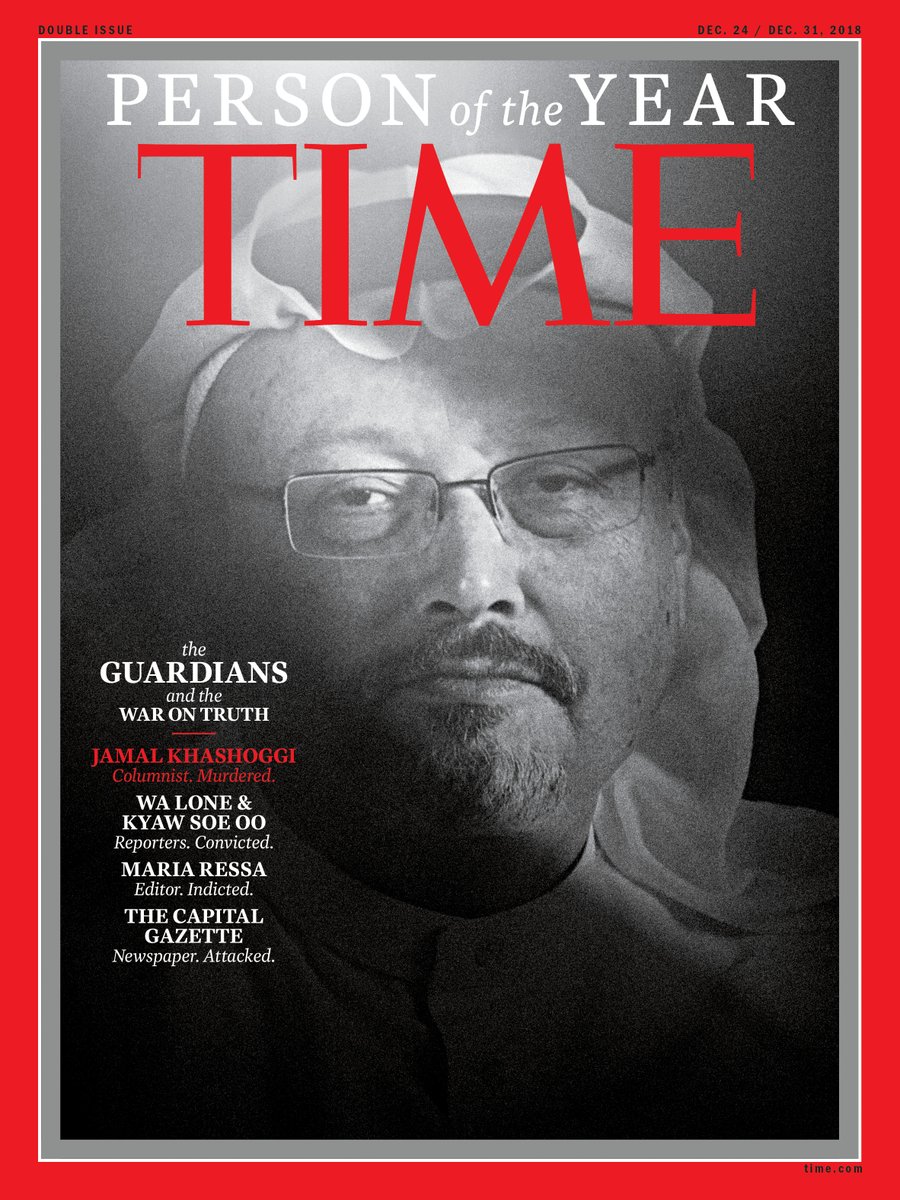
Person of the Year: The Guardians: news reporters who were persecuted, arrested or murdered, Jamal Khashoggi (pictured) being merely the most famous.

Top US R&B song: “God’s Plan” by Drake (Billboard).

Top Hollywood film: “Avengers: Infinity War” (“Black Panther” was number two).

Top images (on Google Images):

the most beautiful woman:

Thylane Blondeau (France)

well-dressed man:

car:

Jaguar Electric SUV

computer:

RAM: 8 GB. OS: Linux/Ubuntu

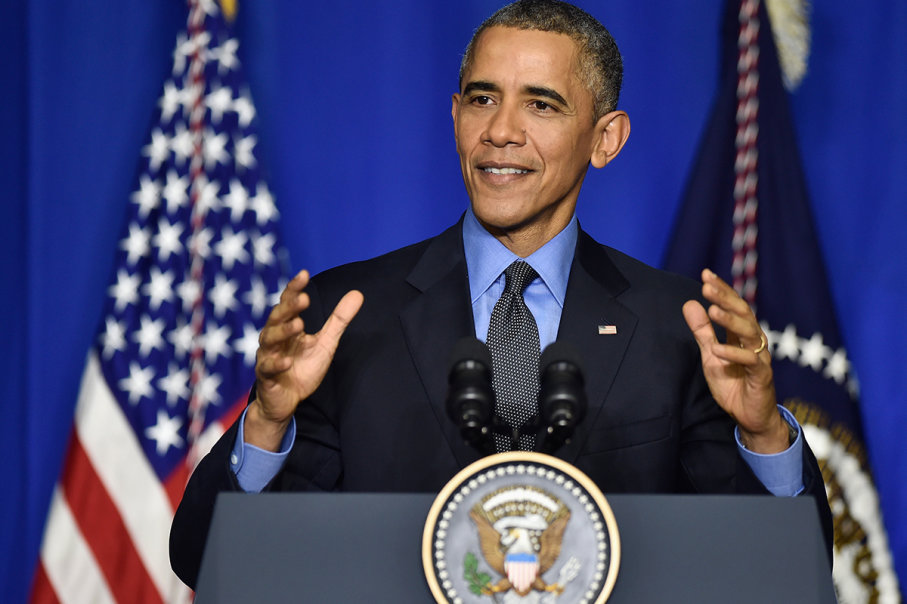
president:

Former US president Obama

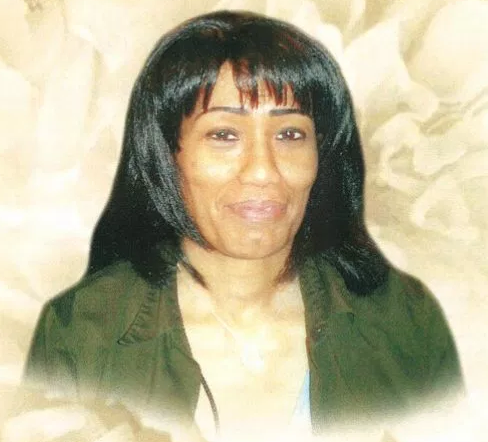
In memoriam: Trojan Pam, Marielle Franco, Ntozake Shange, Aretha Franklin, Nancy WilsonThe Old KanyeLinda Brown, Winnie Mandela, George H.W. Bush, John McCain, Stephen Hawking, The Village Voice, Tumblr, The Weekly Standard, Ursula K. Le Guin, Douglas Rain (voice of HAL), Les Payne, Yvonne Staples, Dennis Edwards, Jamal Khashoggi, Razan al-Najjar, Saheed Vassell, Jackeline Caal, Sandra Parks, Stephon Clark, Antwon Rose, Botham Jean, E.J. Bradford Jr, Jemel Roberson, Patrick Kimmons, the 11 gunned down at the Tree of Life synagogue by Robert Bowers, and the 17 gunned down at Parkland high school in Florida on Valentine’s Day.

Trojan Pam. Requiescat in pace.

– Abagond, 2019.

See also:

547


St Beauty: Caught

Remarks:

This came out late last year, in 2017, on the Wondaland label. I doubt it charted. It was one of the songs I played to death in 2018. The video has a strange hypnotic, addictive quality, at least for me. I love the horns at the end.

St. Beauty is made up of singer-songwriters Alexe Belle and Isis Valentino, who appear in the video. They wrote this song.

See also:

Lyrics:

[Verse 1]
You ain’t worth nothing
I should’ve seen it coming
You said I was the only one
We were having so much fun

[Pre-Chorus]
And now I want something
More than
You, I
Caught ya

[Chorus]
He was the coolest I had ever known
He did me dirty so I let him go
Now everything is alright
After I said goodbye
He was getting way too comfortable
Now I’m taking back all my control
Now everything is alright
After I said goodbye

[Verse 2]
I know what you’re doing
Behind my back screwing
Coming home late at night (at night)
Doing things I would’ve spite

[Pre-Chorus]
And now I want something
More than
You, I
Caught ya

[Chorus]
He was the coolest I had ever known
He did me dirty so I let him go
Now everything is alright
After I said goodbye
He was getting way too comfortable
Now I’m taking back all my control
Now everything is alright
After I said goodbye

Source: Genius Lyrics.

Here are some books I got for Christmas 2018. I used to get toys for Christmas, then clothes, now books.

If you have read any of these, please let me know what you think! They are listed here in order of first publication, which is also, roughly, the order from best to worst according to my Theory of Old Books:

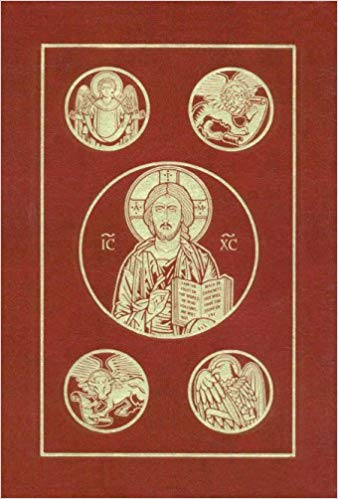
The Ignatius Bible (300s AD): a Catholic edition of the Bible based on the RSV-2CE, an updated RSV translation from 2001. I read the books of Esther and Daniel in the King James Bible. The Catholic version has added chapters.

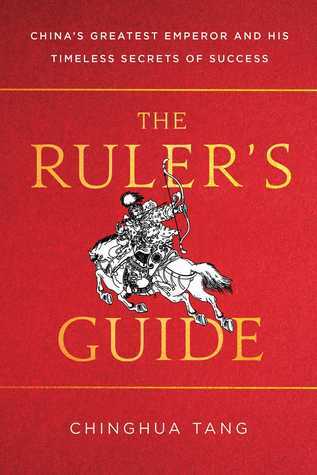
Emperor Taizong of Tang: The Ruler’s Guide (600s): Advice from the second emperor of the Tang Dynasty of China, as told by Chinghua Tang, a New York management consultant.

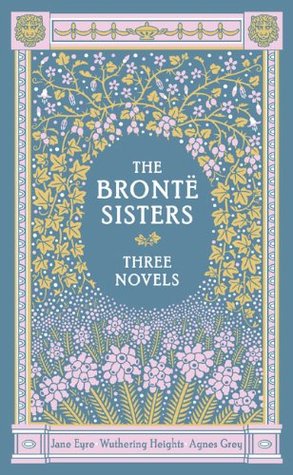
The Bronte Sisters: Three Novels (1847): Bound as a book that looks great on a bookshelf (one of those). It has Charlotte Bronte’s “Jane Eyre”, Emily Bronte’s “Wuthering Heights”, and Anne Bronte’s “Agnes Grey”, which all came out the same year (1847). I adored “Wuthering Heights”, hated “Jane Eyre”, and have yet to read “Agnes Grey”. I asked my sister a few weeks ago if “Agnes Grey” was any good. I guess I got my answer.

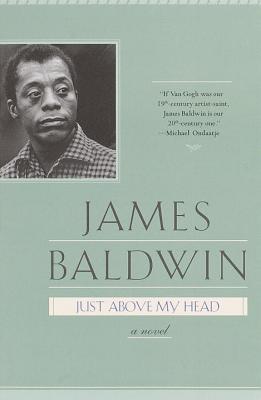
James Baldwin: Just Above My Head (1979): A long James Baldwin novel I have never read! Like the Bronte sisters, he is an old favourite of mine.

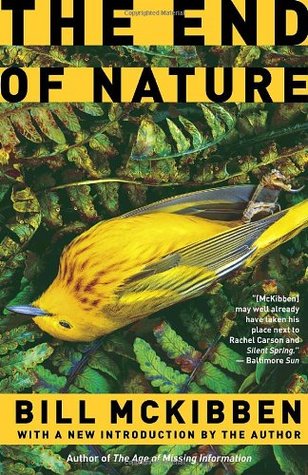
Bill McKibben: The End of Nature (1989): The book he wrote about climate change back in the 1980s complete with an I-told-you-so introduction from 2006. The other week I was telling my mother about his book “The Age of Missing Information” (1992). She says I have too many books – but got me this one anyway.

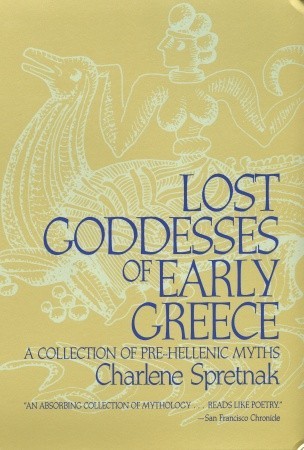
Charlene Spretnak: Lost Goddesses of Early Greece (1992): The Greek goddesses as they probably were before the Indo-European Greeks came to Greece and masculinized the religion there. The oldest knowable layer of Greek religion.

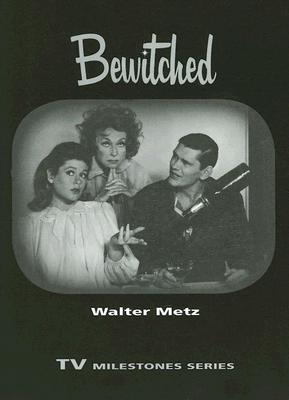
Walter Metz: Bewitched (2007): “Bewitched” was one of my favourite television shows from childhood. Metz liked it too, only he grew up to become a professor of film and theatre and watched all the episodes over again armed with film theory – and then wrote this book about it. The book is part of the TV Milestones Series.

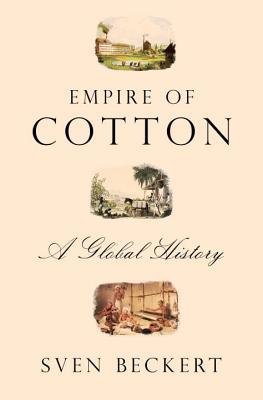
Sven Beckert: Empire of Cotton (2014): a history of cotton and how it led to the rise of capitalism and the deep inequalities that last to this day. A must read – unless Beckert is just a capitalist shill.

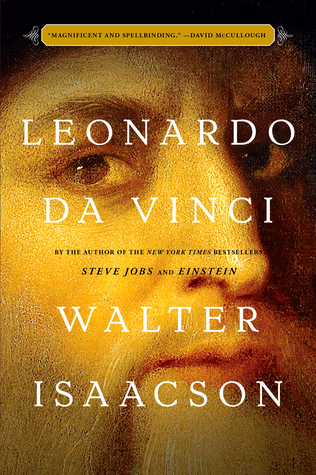
Walter Isaacson: Leonardo da Vinci (2017): I got Isaacson’s biography of Steve Jobs three or so Christmases ago. Should be good.

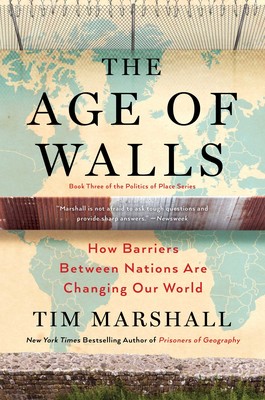
Tim Marshall: The Age of Walls (2018): From Trump’s wall to Israel’s wall and other walls and what it all means for the world and where it is going.

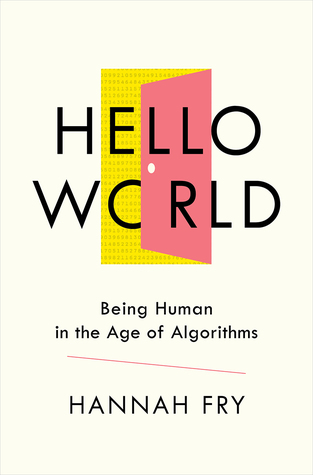
Hannah Fry: Hello World (2018): How computer algorithms affect daily life and the moral issues that arise from them.

Timeline:

  • Before 1950: Bible, Taizong, Brontes
  • 1950s:
  • 1960s:
  • 1970s: Baldwin
  • 1980s: McKibben
  • 1990s: Spretnak
  • 2000s: Metz
  • 2010s: Beckert, Isaacson, Marshall, Fry

– Abagond, 2018.

Sources: Cover images mainly from Goodreads, but also Amazon and Simon & Schuster. They match the editions I have.

See also:

548

Merry Christmas

“José y Maria” (2014) by Everett Patterson

Merry Christmas to all of my lurkers, likers, subscribers, rebloggers, spammers, trolls, and commenters, even bah-humbug Herneith!

See also:

Apollo 8

Apollo 8 (December 21st to 27th 1968) was the first spacecraft to take men to the Moon – 50 years ago on Christmas Eve. They did not land but were looking for future places to land. Seven months later Apollo 11 would land on the Moon.

The three astronauts:

  • Colonel Frank Borman (US Air Force);
  • Captain James Lovell, Jr (US Navy) – later played by Tom Hanks in “Apollo 13”;
  • Lieutenant Colonel William Anders (US Air Force).

Saturn V: They were the first to ride up into the sky on a Saturn V rocket, the most powerful ever made. It was not fully tested, gulp, but the CIA said it had intelligence that Russia was about to send men to the Moon.

The Book of Genesis: When they circled the Moon, they showed it live on television, the most watched television broadcast up to that time. As they showed the Moon below through their window, they took turns reading from the first ten verses of the Book of Genesis from the King James Bible (they were all serious Christians):

“In the beginning God created the heaven and the earth…”

The Moon below was a dead world, no trees, more forlorn than a lost desert road in the night. A “beat-up” world they said.

Discovering the Earth: After the end of the broadcast they turned their ship’s window away from the Moon and towards the stars to find out where they were with a sextant.

Then:

ANDERS: Oh my God! Look at that picture over there! There’s the Earth coming up. Wow, that’s pretty.

BORMAN: Hey, don’t take that, it’s not scheduled. (joking)

ANDERS: (laughs) You got a colour film, Jim? Hand me that roll of colour quick, would you…

LOVELL: Oh man, that’s great!

Anders took several pictures.

Borman later said:

“It was the most beautiful, heart-catching sight of my life, one that sent a torrent of nostalgia, of sheer homesickness, surging through me. It was the only thing in space that had any colour to it. Everything else was either black or white. But not the Earth.”

Earthrise: NASA turned one of Anders’ pictures it on its side to make it look like an Earth-rise and then cropped it to make the Earth seem bigger and more central. On December 30th they made it public. Time and Life magazines printed it. Stewart Brand put it on the cover of his counter-cultural “Whole Earth Catalog” the following spring. The picture is now known as “Earthrise”.

Stewart Brand:

“A dead planet in front of a living one, the living one in all its fragile smallness. [Earth] is neither small nor fragile, of course, but that’s a helpful way to think about it.”

 On Christmas Day 1968 the poet Archibald MacLeish said:

“To see the Earth as it truly is, small and blue and beautiful in that eternal silence where it floats, is to see ourselves as riders on the Earth together, brothers on that bright loveliness in the eternal cold – brothers who know now that they are truly brothers.”

– Abagond, 2018.

See also:

533

The Little Drummer Boy

The Rankin-Bass version of “The Little Drummer Boy” came out 50 years ago this Christmas season, on December 19th 1968. The climactic last five minutes are shown above complete with the song of the same name. Rankin-Bass is best known for “Rudolph the Red-Nosed Reindeer” (1964).

The song itself only goes back to 1941 and did not become popular till the 1950s. So back then it was a newish Christmas song. One of my favourite Christmas books was based on this song.

See also:

Lyrics:

Come they told me, pa rum pum pum pum
A new born King to see, pa rum pum pum pum
Our finest gifts we bring, pa rum pum pum pum
To lay before the King, pa rum pum pum pum,
rum pum pum pum, rum pum pum pum,

So to honor Him, pa rum pum pum pum,
When we come.

Little Baby, pa rum pum pum pum
I am a poor boy too, pa rum pum pum pum
I have no gift to bring, pa rum pum pum pum
That’s fit to give the King, pa rum pum pum pum,
rum pum pum pum, rum pum pum pum,

Shall I play for you, pa rum pum pum pum,
On my drum?

Mary nodded, pa rum pum pum pum
The ox and lamb kept time, pa rum pum pum pum
I played my drum for Him, pa rum pum pum pum
I played my best for Him, pa rum pum pum pum,
rum pum pum pum, rum pum pum pum,

Then He smiled at me, pa rum pum pum pum
Me and my drum.

Source: carols.org.uk.

James Baldwin on the police

The July 1960 issue of Esquire magazine where this description first appeared.

James Baldwin’s description of the New York police (NYPD) in 1960 (bolding mine):

“… the only way to police a ghetto is to be oppressive. None of commissioner Kennedy’s policemen, even with the best will in the world, have any way of understanding the lives led by the people they swagger about in two’s and three’s controlling. Their very presence is an insult, and it would be, even if they spent their entire day feeding gumdrops to children. They represent the force of the white world, and that world’s real intentions are, simply, for that world’s criminal profit and ease, to keep the black man corralled up here, in his place. The badge, the gun in the holster, and the swinging club make vivid what will happen should his rebellion become overt. Rare, indeed, is the Harlem citizen, from the most circumspect church member to the most shiftless adolescent, who does not have a long tale to tell of police incompetence, injustice, or brutality. I myself have witnessed and endured it more than once. …

“It is hard, on the other hand, to blame the policeman, blank, good-natured, thoughtless, and insuperably innocent, for being such a perfect representative of the people he serves. He, too, believes in good intentions and is astounded and offended when they are not taken for the deed. He has never, himself, done anything for which to be hated – which of us has? – and yet he is facing, daily and nightly, people who would gladly see him dead, and he knows it. There is no way for him not to know it: there are few other things under heaven more unnerving than the silent, accumulating contempt and hatred of a people. He moves through Harlem, therefore, like an occupying soldier in a bitterly hostile country; which is precisely what, and where, he is, and is the reason he walks in two’s and three’s. And he is not the only one who knows why he is always in company: the people who are watching him know why, too. …

“Even if he is gifted with the merest mustard grain of imagination, something must seep in. He cannot avoid observing that some of the children, in spite of their color, remind him of children he has known and loved, perhaps even of his own children. He knows that he certainly does not want his children living this way. He can retreat from his uneasiness in only one direction: into a callousness which very shortly becomes second nature. He becomes more callous, the population becomes more hostile, the situation grows more tense, and the police force is increased. One day, to everyone’s astonishment, someone drops a match in the powder keg and everything blows up. Before the dust has settled or the blood congealed, editorials, speeches, and civil-rights commissions are loud in the land, demanding to know what happened. What happened is that Negroes want to be treated like men.

Source: “Fifth Avenue, Uptown” by James Baldwin in Esquire (July 1960). Also appeared in his book “Nobody Knows My Name” (1961).

See also:

600

Julian calendar

“Julius Caesar” by Andrea Ferrucci (1465–1526)

The Julian calendar (fl. -45 to 1582) was the Roman calendar as reformed by Julius Caesar. It was the main calendar used in the West till Pope Gregory XIII reformed it in 1582, giving us the Gregorian calendar, still the main Western calendar in 2018.

The English-speaking world used the Julian calendar till 1752, which is why George Washington has two birthdays – he was born under the Julian calendar on February 11th 1732, which was February 22nd on the Gregorian calendar.

Some Eastern Orthodox churches still use the Julian calendar, which is why Christmas and sometimes Easter falls on a different day than it does in Catholic and Protestant churches. December 25th on the Julian calendar is currently January 7th on the Gregorian.

It all began with Caesar and Cleopatra:

Cleopatra by Uderzo (1927- )

In the year -48 (48 BC), Julius Caesar fell in love with Cleopatra. At one of her parties he met Sosigenes, an astronomer. Egypt had the best calendar of the Mediterranean world. Sosigenes said it was different from the Roman calendar in three main ways:

  1. It kept in step with the seasons, not the phases of the moon. (The Roman calendar tried to do both and failed.)
  2. Its months added up to 365 days.
  3. Every fourth year had a leap day added.

Julius Caesar reformed the Roman calendar accordingly.

The year -46 was the Year of Confusion. It was 445 days long with a leap month after February and two after November. Caesar did that to get the first day of spring back on the traditional date of March 25th.

On January 1st -45, the Julian calendar began. It had these months:

  1. January (31 days)
  2. February (28)
  3. March (31)
  4. April (30)
  5. May (31)
  6. June (30)
  7. Quintilis (31)
  8. Sextilis (31)
  9. September (30)
  10. October (31)
  11. November (30)
  12. December (31)

Mercedonius, aka Intercalans, was dropped. It was the old Roman leap month added after February 23rd. The leap day, February 29th, took its place.

In -44, when Julius Caesar died on the Ides of March, the Senate named Quintilis after him, which is still called July in English.

In -8, Augustus named Sextilis after himself, the month in which he defeated Antony and Cleopatra. Some scholars say he robbed February of a day to make August as long as July.

From -8 to +8 there were no leap days. Because the priests had added too many, adding them every three years – “in the fourth year” according to inclusive counting.

In 321 Constantine added the seven-day week:

  • Sun day (Sunday)
  • Moon day (Monday)
  • Mars day (Tuesday)
  • Mercury day (Wednesday)
  • Jupiter day (Thursday)
  • Venus day (Friday)
  • Saturn day (Saturday)

That year began on Sunday January 1st.

The week is a Babylonian invention from the -600s, which came to Rome by way of the Christians and Jews.

In the early 800s Charlemagne ruled most of the West and made common the practice of numbering years from the birth of Christ: AD and BC. But not everyone agreed when the year started. Some said it started in January, others in March.

In the 1500s the calendar was off by ten days. With the help of Copernicus, the pope in Rome reformed the calendar giving us the Gregorian calendar.

– Abagond, 2018.

Sources: mainly Google Images (2018); “Calendar” (1998) by David Ewing Duncan; “Calendar” (1989) in the Encyclopædia Britannica. 

See also:

554

Remarks:

Nancy Wilson passed away this past week at age 81. Which makes me miss – Amy Winehouse. And, if I started to think about it too much, Phyllis Hyman too. They were here and then they were gone. Wilson, on the other hand, lived a long and active life, from the 1950s to the 2010s. I was never into Nancy Wilson, she was kind of before my time, but she was an influence on singers I like.

This song sounds like an Etta James song – because it is. Etta James sang it in 1960, Wilson in 1967, but I think Wilson does it better. Amy Winehouse did a cover too.

Requiescant in pace. 

See also:

Lyrics:

Build your dreams to the stars above
But when you need someone to love
Don’t go to strangers, darling, come to me

Play with fire till your fingers burn
And when there’s no place for you to turn
Don’t go to strangers, darling, come to me

For, when you hear a call to follow your heart
You’ll follow your heart I know
I’ve been through it all, for I’m an old hand
And I’ll understand if you go

So…
Make your mark for your friends to see
But when you need more than company
Don’t go to strangers, darling, come to me

Source: International Lyrics Playground

Black Barbie dolls

Trichelle, So In Style Barbie, circa 2009.

Black Barbie dolls (1967- ) are dolls of apparent African descent made by Mattel as part of its Barbie line.

Some notable Black Barbies:

1967: Colored Francie. Yes, that was her name. She did not sell well. By 1967 “coloured” was becoming outdated, she was a brown-skinned Caucasian, and, probably worst of all in the eyes of White parents (who back then could make or break a Black doll), she was Barbie’s cousin!

1968: Christie, Barbie’s friend. She was a hit. Mattel made Christies till 2005. Her boyfriend Brad came out in 1970.

1980: Black Barbie, the first so named. She was Barbie but only Black. Well, Black Caucasian. Mattel did not heavily market her – you did not see ads for her during the Saturday morning cartoons on US television.

1991: Asha (light brown skin), Shani (brown), and Nichelle (dark brown). Optional boyfriend: Jamal. Designed by Kitty Black Perkins. At long last Mattel made separate face moulds for Black Barbies. And took advice from Dr Darlene Powell Hopson, a Black psychologist who reran the Clark Doll Experiment in the 1980s and found little had changed. It was her idea to have Barbies in three shades of brown since colourism is an issue for Black girls. She also wanted at least one short-haired doll, but Mattel said that long, combable (Caucasian) hair was a key Barbie selling point. They made Shani curvier, but not by much: she still had to fit into all of the Barbie clothes.

1992: Jamaican Barbie. Apron included. Like the other Dolls of the World, she is dressed in an ethnically conspicuous and stereotyped way. Meant as a collectible, not as a toy. Other Black Barbies in that series: Nigeria (1991), Kenya (1994), and Ghana (1996).

1997: Oreo Barbie. Apparently no Black person was in the room when Mattel and Nabisco, the maker of Oreos, came up with this brainwave. Oreo is a slur among Blacks. Many Black Oreo dolls went unsold. Now a collector’s item.

1997 was also the year Barbie got a wider waist, one that was no longer sub-anorexic.

2002: Princess of the Nile. There was also a South African Princess (2003).


2006: Sugar Barbie, designed by Byron Lars. He did a series of collectible Black Barbie dolls for Mattel from 1997 to 2011.

2008: AKA Barbie, to mark Alpha Kappa Alpha turning 100 years old.

2009: So In Style Barbies, designed by Stacey McBride-Irby. Pictured above are Kara, Grace, Marisa, and Chandra. Chandra was added in 2010, Marisa, who is Latina, in 2011. There is also Trichelle (2009), pictured at top. They are all friends of Grace, who in turn was friends with Barbie back in Malibu. They all have professional ambitions and little sisters, who are sold as dolls too.

2018: Katherine Johnson, who helped put the US in space. Other Black women made into Barbies: Diahann Carroll as Julia (1969), Diana Ross (2004 by Bob Mackie), Beyonce (2005), Misty Copeland (2016), Gabby Douglas (2017), and others.

2018: Barbie Fashionista Doll 3. In 2016 Barbie started coming out with Curvy, Tall, and Petite Barbies to cover a broader range of body types than just Anorexic. This one is Curvy, complete with 4c hair. The best yet.

– Abagond, 2018.

Sources: Images mainly from Google Images and Tumblr; “Barbie the Icon” (2015) by Massimiliano Capella; “The Good, the Bad, and the Barbie” (2010) by Tanya Lee Stone; “Forever Barbie” (2004) by M.G. Lord; “Bulletproof Diva” (1994) by Lisa Jones. 

See also:

586

If Beale Street Could Talk

“If Beale Street Could Talk” (1974) is a short novel by James Baldwin about what it is like to live in the US, especially for Black men, especially in terms of the police and the courts. Set in the 1970s it could have been written almost yesterday. And even then it would be the Disney version. Just ask Kalief Browder’s family.

In 2018 it was made into a film directed by Barry Jenkins, he who gave us “Moonlight” (2016). I might do a post on the film if I see it. This one is about the book.

Place: New York (Harlem, Greenwich Village, the Tombs), Puerto Rico.

Time: circa 1973.

Our Story: Tish and Fonny are in love and want to get married. They are childhood sweethearts. Tish is expecting their firstborn – but Fonny is in jail accused of raping a Puerto Rican woman he has never met. As the day of the trial approaches, Tish tells the tale, past and present. Her family and his family are doing everything they can to get him out of jail, but they are poor and the courts do not work well (or work all too well) if you have no money.

The best scene: Tish buying tomatoes. Everything becomes extremely vivid, just like in a life-or-death moment. Because it becomes life-or-death. She is on Bleecker Street in Greenwich Village, a White part of Manhattan. A White police officer is across the street. A greasy Italian junkie starts putting his hands on her. Fonny, coming back from buying cigarettes, sees it and hits him, sending the junkie to the ground, bleeding. Officer Bell, the White police officer, comes across the street to arrest Fonny. The shopkeeper, an Italian lady, saw the whole thing and sticks up for Fonny. He was defending his woman like any good man would. Bell lets Fonny go, but now he has his address in the Village.

Then one night the police come for him.

Officer Bell’s eyes when Tish looks into them:

“his eyes were as blank as George Washington’s eyes. But I was beginning to learn something about the blankness of those eyes. What I was learning was beginning to frighten me to death. If you look steadily into that unblinking blue, into that pinpoint at the center of the eye, you discover a bottomless cruelty, a viciousness cold and icy. In that eye, you do not exist: if you are lucky. If that eye, from its height, has been forced to notice you, if you do exist in the unbelievably frozen winter which lives behind that eye, you are marked, marked, marked, like a man in a black overcoat, crawling, fleeing, across the snow. The eye resents your presence in the landscape, cluttering up the view. Presently, the black overcoat will be still, turning red and with blood, and the snow will be red, and the eye resents this, too, blinks once, and causes more snow to fall, covering it all.”

– Abagond, 2018.

See also:

541

Charlottesville, 2017, described by The Economist as “racially tinged”.

The term “racially tinged” (by 1926), or “tinged with racial overtones”, is a mealy-mouthed euphemism for “racist”. It is adored by the New York Times, largely avoided by the BBC, and used by both Blacks and Whites.

The Economist uses it, they whose style guide admonishes writers to avoid “trembling racial sensibilities” and “mealy-mouthed euphemisms”. They spoke of the “racially tinged violence in Charlottesville” – the riot in 2017 where literal neo-Nazis and the Klansmen violently defended a Confederate statue and chanted “Jews will not replace us.”

Some use it interchangeably with “racist”, like Joan Walsh in “What’s the Matter with White People?” (2012):

“There is no denying that racism drove some of the right’s abuse of Obama: there were just too many racist protest placards, offensive viral e-mails, and disgusting simian imagery in Photoshop caricatures. All of those could be, and usually were, dismissed as the work of bad actors at the Republican fringe. Yet mainstream Republicans rarely rejected the racially tinged Obama hatred; some even encouraged it.”

Others use it to avoid the word “racist”, like the New York Times on September 26th 2018:

“Angry Colleague Tells Congressman What to Do With ‘Racist Ad’

“Sept. 26, 2018

“A racially tinged campaign attack ad released by Representative Chris Collins has drawn the opposite of its intended effect — causing a fellow House member to criticize him in unusually caustic terms. …”

The article uses the word “racist” nine times, but always in quoted speech. Congressman Ted Lieu was willing to call the ad “racist”, but not the New York Times.

A month earlier the Associated Press ran this article:

“Analysis: Trump still flirts with racially tinged rhetoric”

It never called Trump a racist – except in quoted speech, and only once when Omarosa does it.

This is not new with the 2010s and the rise of Trump. It first became common in news reports in the 1950s with the rise of the civil rights movement and the “racially tinged” White backlash.

In 1957 the Associated Press itself used the term. As the US watched Little Rock Central High School admit its first Black students at bayonet point, the AP called the actions of the Segregationist League of Central High Mothers “racially tinged”.

The R-word: The whole trouble is the word “racist”:

  1. White people have made it into a huge insult that can only be easily applied to the most extreme cases, like the Klan and neo-Nazis.
  2. Whites have narrowed “racist” to just the personal and have made it hard to prove by making it a thing of intentions, not actions. Which makes it easy for them to deny they are racist since no one can read their innermost thoughts.
  3. Most White people are afraid to call out racism in other White people. Not rocking the boat is one of the Club Rules.

Therefore it is easier to call a person’s actions or words “racially tinged” than “racist”. “Racially tinged” is a perception, a seeming. “Racist” requires mind reading or rare personal confession.

– Abagond, 2018.

Sources: Townhall (image); “What’s the Matter with White People?” (2012) by Jon Walsh; Boston Review (2018); New York Times (2018); AP (2018); The Economist (2017).

See also:

571

Gallant: Doesn’t Matter

Remarks:

At the end of June 2018 in the US this became the sixth most played song on urban adult contemporary radio stations (those aimed at grown Black people). And in October it became the song that most rang in my head.

See also:

Lyrics:

Talking to the moon with the lights down
Half a dozen ovals in your mouth, your muse
Kurosawa bleeding through your headphones
Knuckles in my back till your nails turn blue
Bet you remember back when I was headstrong
Tugging on the ends of my invisible noose
Thought you’d be jumping ship, but I was dead wrong
You can sail on thin ice long as I can too

Uh, if this love’s an accident waiting to happen
Let’s go out with a bang, with a bang
Uh, I’m up to go under
To drown with each other
Yeah, we both feel the same

Doesn’t matter to us, doesn’t matter to us
Doesn’t matter, you run, I run
You jump, I jump, that’s all we want

Doesn’t matter to us, doesn’t matter to us
Doesn’t matter, you run, I run
You jump, I jump, that’s all we want

Told me two years ago I was selfish
But you’re the one who put us in the mushroom cloud
Liquor bottle saying what I’m thinking
Dancing in a minefield, don’t look down

Uh, if this love’s an accident waiting to happen
Let’s go out with a bang, with a bang
Uh, I’m up to go under
To drown with each other
Yeah, we both feel the same

Doesn’t matter to us, doesn’t matter to us
Doesn’t matter, you run, I’ll run
You jump, I jump, that’s all we want

Doesn’t matter to us, doesn’t matter to us
Doesn’t matter, you run, I run
You jump, I jump, that’s all we want

Stay forever young, in this state of mind
Dying for your love, call it killing time
No matter what you do I’ll be on your side
Stay forever young, in this state of mind
Dying for your love, call it killing time
No matter what you do I’ll be on your side

Doesn’t matter to us, doesn’t matter to us
Doesn’t matter, you run, I run
You jump, I jump, that’s all we want

Doesn’t matter to us, doesn’t matter to us
Doesn’t matter, you run, I run
You jump, I jump, that’s all we want

Source: AZLyrics.

Books I read in 2018

Some books I read in 2018 and what I think of them now:

Janet Mock: Redefining Realness (2014) – I was kind of rough on this book in the post I wrote about it back in January, but now it shines. Janet Mock is like a transgender Maya Angelou. It is the only book, so far, that I have completed from My 2018 Book List! At least now I know what to read for 2019.

Joann Fletcher: The Search for Nefertiti (2004) – Fletcher is an Egyptologist from a family of undertakers. And she knows her wigs. She goes deep into the archaeology, but the best part is about Amarna, the capital that Akhenaton and Nefertiti built. My post on Nefertiti was based mainly on this book.

Patricia Hruby Powell: Josephine (2014) – about the life of Josephine Baker. Even though I knew how it would end, I still cried! Pretty good for a children’s book.

Tagore: Gitanjali (1910) – a book of poems that sometimes reads like scripture. Most seem to be addressed to the Hindu god Brahman, but could apply almost as well to the Christian god Jehovah. This book won him the Nobel Prize.

Bhagavad Gita (circa -400) – Hindu answers to the mysteries of life. Some people are blown away by this book. I was not. But then I doubt I understood it that much. I read it in the loosey-goosey Stephen Mitchell translation. Bears rereading.

Michael Eric Dyson: What Truth Sounds Like (2018) – a glorified Slate article. Only the last chapter, “Wakanda Forever”, was any good.

Jonathan Wilson-Hartgrove: Reconstructing the Gospel (2018) – how White Evangelical Protestantism has been warped by slavery, racism, and capitalism. All Christian religion in the US has been affected, but not as badly.

Joyce A. Tyldesley: Cleopatra (2008) – what we know about Cleopatra based on the evidence. Tyldesley places her mainly in Egyptian history, not Roman history. My post on Cleopatra was based mainly on this book.

Victor Davis Hanson: Mexifornia (2004) – I could only take 42 pages of this racist rant. I expected better of him as a historian of Ancient Greece. He could not even get the date of 9/11 right! And says that northern Europeans were the first people to settle North America. Huh?

Bob Woodward: Fear (2018) – the Trump White House as Crazytown. Positioned as a prequel to a book on Russiagate.

Barbara Cartland: Imperial Splendour (1979) – A cross between “War and Peace” and a fairy tale.

Ken Grimwood: Replay (1986) – if you could go back in time and relive your life, it would not turn out as well as you would expect. Partly because you would be concerned about the wrong things, like getting rich or trying to change history.

James Baldwin: If Beale Street Could Talk (1974) – I am rereading this now and falling in love with it all over again. It comes out next week as a film directed by Barry Jenkins, he who gave us “Moonlight” (2016). James Baldwin + Barry Jenkins should be amazing. We shall see.

Timeline:

  • before 1500: 1
  • 1500s: 0
  • 1600s: 0
  • 1700s: 0
  • 1800s: 0
  • 1900s: 4
  • 2000s: 8

– Abagond, 2018, 2026.

Source: Images mainly from Goodreads.

See also:

528