Feeds:
Posts
Comments

Brian Kemp

Brian Kemp (1963- ) is one of the foremost voter suppressors in the US. In the 2018 midterm elections he is running as a Trump Republican for governor of Georgia against Democrat Stacey Abrams. If Abrams wins she will become the first Black woman ever to become a state governor in the US – and of a red state at that.

Too close to call: With the election just two weeks away, the race is too close to call. In 2016 Trump won Georgia by 5 points – low for a red state.

The battle: The race for governor is merely the latest in a long-running battle between Kemp and Abrams to change the face of Georgia politics by changing who shows up to vote.

Abrams, a state senator, is the founder of the New Georgia Project, which has been working to register Georgia’s 700,000 unregistered Black voters.

Kemp is the secretary of state of Georgia, which puts him in charge of elections – even the one he is running in! He has been busily blocking Blacks from voting:

  • From 2013 to 2016 he closed 214 polling places in 53 counties, a fourth of all polling places closed nationwide.
  • From 2012 to 2016 he purged 1.5 million people from the voter rolls – twice as many as during the same period before 2012. In 2017 he purged 670,000 more.
  • In 2018 he is holding up 53,000 registrations because they do not exactly match the voters’ driver licences, often because of a missing hyphen or accent.

All of that sounds race-neutral and it is meant to. But in practice Blacks and other people of colour are affected more than Whites. Those 53,000 registrations, for example, “just happen to be” 70% Black – in a state that is 32% Black. Oops! Those closed polling places? Mostly in Blacker counties. The purged registrations? Many were people who changed address, something poor Blacks (and younger people) do more often than middle-class Whites.

All this from a man who talks of “outside agitators” like it was still Jim Crow times.

In 2014 Kemp said:

“Democrats are working hard, … you know, registering all these minority voters that are out there and others that are sitting on the sidelines, if they can do that, they can win these elections in November.”

and then two months later he opened a “criminal investigation” into the New Georgia Project itself, accusing it of voter fraud. He found none, but was able to keep it under a cloud of bad press.

In 2012 he did the same to the Asian American Legal Advocacy Center (AALAC) when they asked Kemp why people they registered to vote were not on the voter rolls.

Kemp says he is merely trying to fight voter fraud, yet strangely:

  • There is no paper trail to double-check the computers that run the elections. A disaster waiting to happen.
  • When Russians hacked Georgia’s election software, Kemp refused help from Washington.

Stranger still, right before the 2016 election Sergei Kislyak, the Russian ambassador, visited Kennesaw State, a small university in Georgia. It “just happens to be” where all the computers that run Georgia’s elections are kept.

– Abagond, 2018.

Update (October 30th): Jimmy Carter, the former US president and governor of Georgia, is asking Kemp to step down as secretary of state, that he should not be overseeing his own election, especially not in a state like Georgia:

“In Georgia’s upcoming gubernatorial election, popular confidence is threatened not only by the undeniable racial discrimination of the past and the serious questions that the federal courts have raised about the security of Georgia’s voting machines, but also because you are now overseeing the election in which you are a candidate.”

More at NPR.   

See also:

533

H.E.R.: Focus

Remarks:

I love this song, even if it is kind of repetitive. Maybe it is the harp. Or that it was on “Insecure”. Or that it seems like it samples “I’m Not in Love” (1975) by 10cc.

The song came out in 2017 and went to #45 on the US R&B chart. It went to #1 on “urban adult contemporary” radio stations and is still in the top ten on BET Soul.

See also:

Lyrics:

Me
Can you focus on me?
Baby, can you focus on me?
BabeHands in the soap
Have the faucet’s running
And I keep looking at you
Stuck on your phone
And you’re stuck in your zone
You don’t have a clue

But I don’t wanna give up
Baby, I just want you to get up
Lately I’ve been a little fed up
Wish you would just focus on

Me
Can you focus on me?
Baby, can you focus on me?
Me
Me
Can you focus on me?
Baby, can you focus on me?

Lazy and broke?
No, he get this money
So I guess I can’t complain
But I feel alone even when we’re alone
And that don’t cost a thing

But I don’t wanna give up
Baby, I just want you to get up
Lately I’ve been a little fed up
Wish you would just focus on

Me
Can you focus on me?
Baby, can you focus on me?
Baby
Me
Can you focus on me?
Baby, can you focus on me?
Me

Baby, focus
Can’t you see?
I just wanna love you, baby
Look me in my eyes

Books I read in 2017

Some of the books I read in 2017 and what I think of them now:

Eddie S. Glaude Jr: Democracy in Black (2016) – where Black America is and where it is going. Says little will change until Whites change. Translation: it is going to get worse before it gets better.

Andrew J. Bacevich: Washington Rules (2010) – how the US became addicted to a war economy in the Second World War and has yet to kick the habit. The US learned almost nothing from the Vietnam War. Thus Iraq and Afghanistan.

Jonathan Schell: Observing the Nixon Years (1989) – pieces he wrote for the New Yorker when Nixon was in power. As bad as he thought Nixon was, Nixon was worse.

Rebecca Skloot: The Immortal Life of Henrietta Lacks (2010) – about Henrietta Lacks and how her cancer cells, taken from her on her death bed without her family’s knowledge or consent, have changed science.

Harper Lee: Go Set a Watchman (2015) – “To Kill a Mockingbird” before her New York editor changed it up. Scout makes her peace with White racism. Ugh.

Jonathan Schell: The Time of Illusion (1975) – how nuclear weapons shaped the Vietnam War and caused the downfall of Nixon. Excellent.

Donald P. Ryan: Ancient Egypt on 5 Deben a Day (2010) – time-travel tourism. Wonderful.

Colin McEvedy: Cities of the Classical World (2011) – short articles on 120 cities of Greek and Roman times, from Londinium to Babylon.

Naguib Mahfouz: Miramar (1967) – I read this because Mahfouz won a Nobel Prize and Alexandria is one of my favourite cities I have not visited. The book now forms most of my picture of present-day Alexandria.

Herge: Tintin in the Congo (1946) – as bad as it sounds.

H.G. Wells: The Time Machine (1895) – I love time travel stories but what a downer!

W.E.B. Du Bois: The Souls of Black Folk (1903) – since high school I have heard such good things about this book that I felt embarrassed for not having read it. Some chapters are great, but some are cringetastic. Du Bois (trained as a scientist) lacks the clean, moral outrage of James Baldwin (trained as a preacher).

Carter G. Woodson: The Mis-Education of the Negro (1933) – about how Eurocentric US education is, making university-educated Blacks too brainwashed to be of much use.

Margot Lee Shetterly: Hidden Figures (2016) – about the Black women who helped to put the US in outer space. Enough for a miniseries – and without Hollywood’s White gaze. Shetterly is a treasure.

Michael Hastings: The Operators (2012) – Hastings’ behind-the-scenes look at the War in Afghanistan in the first years of the Obama Era. Mike Flynn is in it. Confirms Bacevich and Schell.

Lauren Slater: Prozac Diary (1999) – I read this because I love how she writes. The most interesting part was how she felt about her sex life.

I also read half of (and have yet to finish!):

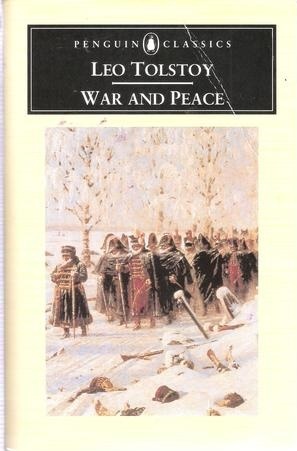
Tolstoy: War and Peace (1868) – about rich Russians and Napoleon’s invasion of their country. Long, but good (so far).

H.G. Wells: Outline of History (1920) – the most interesting parts are where he tries to talk about religion from a historian’s point of view.

Timeline:

  • before 1500: 0
  • 1500s: 0
  • 1600s: 0
  • 1700s: 0
  • 1800s: 2
  • 1900s: 8
  • 2000s: 8

– Abagond, 2018, 2026. 

Source: Images mainly from Goodreads.

See also:

549

The Columbian Exchange

(Image via Slideplayer.com)

The Columbian Exchange (1492- ) is the exchange of plants, animals, people, and diseases between the Americas and the rest of the world. It took place after Columbus arrived in 1492.

In 1491 in the Americas there were no:

  • cows, oxen, horses, sheep, pigs, chickens, rats,
  • honeybees,
  • wheat, rice, barley, oats, rye, yams, black-eyed peas,
  • sugar, coffee, tea, milk, wine, beer,
  • bananas, apples, peaches, pears, lemons, oranges, watermelons, grapes,
  • carrots, lettuce, onions,
  • dandelions, crabgrass, thistles,
  • malaria, measles, mumps, swine flu, smallpox, typhus, bubonic plague, diphtheria, or whooping cough.

None!

Meanwhile, in Africa, Europe, and Asia there were no:

  • turkeys,
  • maize (corn), potatoes (white or sweet), cassava (manioc),
  • pineapples, avocados, blueberries, strawberries,
  • tomatoes, pumpkins, squash,
  • beans (kidney, navy, lima), peanuts, cashews,
  • chocolate, vanilla,
  • chilli,
  • sunflowers,
  • tobacco,
  • syphilis.

American Indians did not ride on horses. There was no tomato sauce in Italy or curry powder in India.

Columbus changed all that. The Portuguese Empire and the Catholic Church, with their early worldwide networks, helped it along.

The Americas had been largely cut off from the rest of the world for over 10,000 years. When plague and disease had repeatedly wracked Eurasia, killing millions, the Americas were untouched – until, that is, Columbus arrived. Then, in the space of 200 years, more than half the people of the Americas were wiped out by disease and the dynastic wars and famines it led to.

European conquest: The Aztecs and Incas, by the time the Spanish conquistadors arrived, had already been seriously weakened by Eurasian disease. Disease, not any technological edge, was the main reason the Spanish made short work of both empires.

Likewise, it is unlikely anyone but scholars would have heard of the Mayflower if disease (maybe bubonic plague) had not ravaged the New England coast before the Pilgrims arrived.

African Diaspora: In the 1700s the Americas bounced back – but much of the increase in people came from Africans brought as slaves. Malaria, a disease probably brought by Columbus himself, gave Africans an edge over both Europeans and Americans. But because they were in fact slaves, it was Europeans who profited.

World population growth: Because farmers had more choice of what to grow, in both the Americas and elsewhere, more land could be farmed or farmed better. Sweet potatoes, for example, grow better in parts of China than rice. Wheat grows better in parts of North America than maize. Cassava and potatoes, because they grow underground, helped people in Africa and Europe live through wars. And so on.

Mass extinction: The growth in farming, though, has meant that many species have died out, as many as would ordinarily die out in a million years. People have more choice of what to eat, but at the same time there are fewer different kinds of plants and animals on the Earth.

Alfred Crosby, a geographer and historian, came up with the term “Columbian Exchange” in the early 1970s. But it did not catch on till 1992, when all things Columbus were in. It is now a standard part of history as taught at US schools.

– Abagond, 2018.

See also:


The Tommy Westphall Universe

The Tommy Westphall Universe (1951- ), or TWU, is that strange, alternate universe that most US television shows take place in. Some British television shows and Hollywood films also take place there.

For example, you cannot buy real Morley cigarettes in the US. But they have been appearing on television shows since 1961, like “The Twilight Zone”, “Seinfeld”, “Friends”, “The Walking Dead”, and “The X-Files”.

Or: The character Detective John Munch shows up not just on “Homicide: Life on the Street”, but also “The Beat”, “Law & Order”, “The Wire”,  “30 Rock” – and “The X-Files”.

Or: Yoyodyne made a bus station in “The John Laroquette Show”, set in the 1990s. By the 2300s they are making starships on “Star Trek: The Next Generation”. They have an office right on the promenade in “Deep Space Nine”.

and so do “The Dick Van Dyke Show”, “Caroline in the City”, “Frasier”, “Cheers”, “St Elsewhere”, “Homicide: Life in the Street” and more than 400 others.

Or:

  • “The Alan Brady Show” was a fictional television show on “The Dick Van Dyke Show” – and on “Mad About You”.
  • Kramer from “Seinfeld” appeared on “Mad About You” as did Ursula from “Friends”.
  • Chandler from “Friends” appeared on “Caroline in the City” as did Daphne from “Frasier”.
  • Frasier went to the bar on “Cheers” as did characters from “St Elsewhere”.
  • Alfre Woodard’s character on “St Elsewhere” was on “Homicide: Life on the Streets” – as was Detective Munch!

And on and on and on, connecting over 400 shows:

A chart of known television show crossovers, as of 2016. Click to enlarge.

Some TWU shows:

  • 1950s: I Love Lucy, Dragnet, Superman, Honeymooners, As the World Turns, Leave it to Beaver, Donna Reed.
  • 1960s: Dick Van Dyke, Mister Ed, Beverly Hillbillies, Doctor Who, Addams Family, Munsters, Gillligan’s Island, Bewitched, Batman, Star Trek, Flying Nun, Brady Bunch.
  • 1970s: Mary Tyler Moore, All in the Family, M*A*S*H, Good Times, Happy Days, Diff’rent Strokes.
  • 1980s: Hill Street Blues, Degrassi, St. Elsewhere, Cheers, Family Ties, Miami Vice, The Cosby Show, Murder She Wrote, Moonlighting, The Simpsons.
  • 1990s: Twin Peaks, Fresh Prince, Seinfeld, Law & Order, X-Files, NYPD Blue, ER, Friends, Moesha, Ally McBeal, Buffy the Vampire Slayer, The 70s Show, Angel.
  • 2000s: Gilmore Girls, The Office, Girlfriends, CSI, The Wire, The L Word, Lost, Breaking Bad, Community, Glee.
  • 2010s: Luther, The Walking Dead, Orange is the New Black, Sleepy Hollow, The Flash.

Tommy Westphall was the autistic son of Dr Donald Westphall, the head
doctor of St Eligius hospital on “St Elsewhere”(1982-1988). Tommy only
appeared every now and then. On May 25th 1988, in the last scene of
the last episode, he is looking at a snow globe. His father comes home
– only he is not a doctor at all but a construction worker! He says to
his father:

“I don’t understand this autism thing, Papa. Here’s my son, I talk to him, I don’t even know if he can hear me. He sits there, all day long, in his own world, staring at that toy. What’s he thinking about?”

And in the snow globe we see St Eligius hospital – the whole show was
just in his imagination! According to the Tommy Westphall Universe Hypothesis so are all the other TWU shows.

Television is not just fake – it is fake within fake.

– Abagond, 2018.

See also:

568

The Meso-American Long Count

Stela C from Tres Zapotes (Olmec): the oldest, clearly written Long Count date found so far: 7.16.6.16.18 (September 1st 32 BC).

The Meso-American Long Count (by 32 BC) counts the number of days since the beginning of the world, since August 11th 3114 BC. It is also known as the Mayan Long Count since the Maya are the best known for putting it on their monuments.

The number zero: The Long Count is the first thing known to use the number zero. The earliest clearly written Long Count date found so far by archaeologists is 7.16.6.16.18 or September 1st 32 BC on the Gregorian calendar. By then the Long Count had probably been in use for hundreds of years, probably starting with the Olmecs.

Today on different calendars:

  • Mayan: 13.0.5.16.4 (17 Yax 9 Kan)
  • Gregorian: October 15th AD 2018
  • Roman: October 2nd 2771 AUC
  • Alexandrian: October 2nd AM 7511
  • Byzantine: October 2nd AM 7527
  • Athenian: Pyanepsion 6th Olympiad 699/2
  • Hebrew: Heshvan 6th 5779 AM
  • Islamic: Safar 4th 1440 AH
  • Persian: Libra 23st 1397 AHS
  • Julian Day: 2458406
  • Unix: time() = 1539561600
  • Discordian: Bureaucracy 69th YOLD 3184

The Mayan date:

13.0.5.16.4 (17 Yax 9 Kan)

in Mayan hieroglyphics it looks like this:

which reads roughly as follows:

Long Count
13 baktun, 0 katun
5 tun, 16 uinal
4 kin, 9 Kan
17 Yax, Lord of the Night

More on baktuns, katuns, etc below.

The date comes in three parts:

  • Long Count: 13.0.5.16.4
  • Tzolkin: 9 Kan
  • Haab: 17 Yax

The Haab date was for farmers (it repeats every 365 days). The Tzolkin date was for priests (it repeats every 260 days). The two together determined daily life and repeated every 52 years. That made it terrible for history, monuments or long-term prophecies. Thus the Long Count, which can last over a billion years.

The Long Count is made up of five numbers:

13.0.5.16.4

Each number goes from 0 to 19, except for the second-to-last one, which only goes up to 17

Tomorrow will be 13.0.5.16.5, then 13.0.5.16.6 and so on till 13.0.5.16.19. The day after that will be 13.0.5.17.0. The day after 13.0.5.17.19 will be 13.0.6.0.0. And on and on.

Format: If Western dates, like October 15th 2018, were expressed the same way, they might look like this:

20.1.8.10.15

the format being:

century.decade.year.month.day

For the Long Count the format is:

baktun.katun.tun.uinal.kin

where the kin goes up by one every day, the uinal every 20 days, the tun every 360 days (almost a year), the katun every 7,200 days (19.7 years, almost a double decade), and the baktun every 144,000 days (394.3 years, almost a quadruple century).

So for 13.0.5.16.4, the first three numbers (13.0.5) are like a year, the next one (16) like a short month, and the last one is the day of that month, the first day being day zero.

The full format has four more numbers:

alautun.kinchiltun.calabtun.pictun.baktun.katun.tun.uinal.kin

An alautun is 23,040,000,000 days or 63,081,429 years. Twenty times that is 1.26 billion years. One alautun ago was about when a comet hit Mayan land, killing off the dinosaurs.

Oh, one more rule: If the gods destroy the world and recreate it, then the Long Count starts over, at 0.0.0.0.0.

End of the world: The last time the gods destroyed the world, the Long Count had reached 13.0.0.0.0. Which is why some thought the world would end on December 21st 2012, which was also 13.0.0.0.0. The Maya themselves never said that. What some of them say is that the world will end on 17.0.0.0.0, which is January 3rd 3590, a Wednesday.

– Abagond, 13.0.5.16.4.

Update: Added hieroglyphics for today’s date.

See also:

544

The Kanye-Trump meeting

The Kanye-Trump meeting (October 11th 2018) was when rapper Kanye West met US President Donald Trump at the White House, aka Crazytown, to discuss “manufacturing resurgence in America, prison reform, how to prevent gang violence, and what can be done to reduce violence in Chicago.”

Kanye tried unsuccessfully to get Colin Kaepernick to attend.

In the part that was shown on live television, in the Oval Office with Trump sitting behind a very empty desk, Kanye West did almost all the talking.

About stop-and-frisk in his native Chicago:

KANYE: The thing that the head of the police and Mike Sacks met with me last night at the Soho House about was we feel that stop-and-frisk does not help the relationships in the city, and everyone that knew I was coming here said, ‘Ask about stop-and-frisk.’ That’s the number one thing that we’re having this conversation about.

REPORTER: points out Trump favours stop-and-frisk.

KANYE: I didn’t mean to put you on blast like that bro.

TRUMP: I’m open-minded. I’m here. I am open minded.

About why he wears a “Make America Great Again” Trump hat:

KANYE: You know, my dad and my mom separated, so I didn’t have a lot of male energy in my home. And also I’m married now into a family that, you know, not a lot of male energy going on, it’s beautiful though. But there’s times where, you know, it’s something about, I love Hillary, I love everyone, right, but the campaign “I’m With Her” just didn’t make me feel as a guy that didn’t get to see my dad all the time, like a guy that could play catch with his son. It was something about when I put this hat on, it made me feel like Superman. You made us Superman, that’s my favourite superhero, and you made a Superman cape for me.

About whether Trump cares about Black people:

KANYE: A Liberal will try to control a Black person through the concept of racism because they know we’re very proud, emotional people.

About his answers:

KANYE: You are tasting a fine wine that has multiple notes to it.

About his mental illness:

KANYE: I was diagnosed with bipolar disorder. I was connected with a neuropsychologist that works with the athletes in the NBA and NFL. He looked at my brain, it’s equal on three parts. I’m gonna go ahead, drop some bombs for you. 98 percentile IQ test, I had a 75 percentile of all human beings when it was counting eight numbers backwards, so I’m gonna work on that one. The other ones, 98 percent, Tesla, Freud. So, he said that I actually wasn’t bipolar, I had sleep deprivation, which could cause dementia 10-20 years from now, where I wouldn’t even remember my son’s name.

He told Trump “I love you” and then hugged him.

(Photo by Oliver Contreras – Pool/Getty Images)

Kim Kardashian, Kanye’s wife, was mortified and heartbroken. She thinks her husband meant well but was played by Trump, who at one point was laughing at him.

– Abagond, 2018.

See also:

578

Eratosthenes

“Eratosthenes Teaching in Alexandria” (c. 1635) by Bernardo Strozzi at the Montreal Museum of Fine Arts. Note that books in Eratosthenes’ time were all in scroll form.

Eratosthenes (c. -276 to -194) was the Alexandrian scientist from which the West gets:

  • the word “geography”,
  • the musical scale,
  • leap days,
  • the idea of prime numbers,
  • dating events in history,
  • dates of many events of ancient history.

And that was not even his day job.

Ptolemy III of Egypt had put him in charge of the Library of Alexandria and made him tutor to his son, the future Ptolemy IV.

Like Columbus, Eratosthenes said the Earth was round and that you could sail west from Spain to reach India – some 1700 years before Columbus did.

In our time he is best known for his amazingly accurate measurement of the circumference of the Earth. But no one knew how right he was till 1522, after the voyage of Magellan.

In his own time he was best known for solving the Delian problem: doubling the cube. It was one of three great problems of Greek mathematics, along with squaring the circle and trisecting an angle.

Round Earther: Eratosthenes believed the Earth was round because its shadow was round during an eclipse of the Moon. And, from living in Alexandria, he knew you could see a whole ship from the top of the Pharos lighthouse while on the ground you might only see the sails peeking above the horizon. That made sense on a round Earth, not a flat one.

Measuring the Earth: He did it with a stick, a well, and a royal pacer. At noon on the first day of summer, the rays of the sun reach the bottom of a well in Syene (now Aswan) in the south of Egypt. That meant the sun was directly overhead. At that very same moment a stick to the north in Alexandria casts a shadow of 7 degrees. That meant 7 degrees of the Earth’s 360 degrees lay between Alexandria and the well. Once the royal pacer he hired had walked back from the well to Alexandria, pacing out the distance, all Eratosthenes had to do was divide the distance by 7 to get the length of a degree. From that he got a circumference of 252,000 stades or about 39,700 km. The right value is 40,008 km.

Other measurements:

  • tilt of the Earth’s axis: 23.85 degrees (our value: 23.77)
  • distance to the Sun: 125.5 million kilometres (our value: 150.0)
  • distance to the Moon: 122,300 km (our value: 384,000)

Notice he gets at least the scale right, which seemed way too big to people back then.

What his world map might have looked like. Click to enlarge. It did use latitude and longitude, with the prime meridian going through Alexandria. The map went from Britain to Sri Lanka and from the Caspian Sea to Ethiopia. He knew it covered only a fourth of the Earth and that Africa was probably larger than it is on the map.

His books: He wrote at least 12 books, among them:

  1. “Geographica” – where the word “geography” comes from.
  2. “On Ancient Comedy”
  3. “Erigone” – the story of Virgo.
  4. “Hermes” – epic poem about the god Hermes.
  5. “Hesiod” – epic poem about the death of the poet Hesiod.
  6. “Chronologica” – history with dates! Introduces the leap day (did not catch on till 200 years later).
  7. “Platonicus” – includes the Sieve of Eratosthenes for finding prime numbers.
  8. a star catalogue of 675 stars
  9. a book of constellations and the stories behind them

All are lost – all we have are bits and pieces of them quoted in other books.

– Abagond, 2018.

Source: mainly Google Images; “The Rise and Fall of Alexandria” (2006) by Justin Pollard and Howard Reid. 

See also:

633

Columbus Day

Columbus Day (1892- ) is a US holiday that celebrates October 12th 1492, the day Columbus landed in the Americas. Since 1937 it has been observed on the second Monday in October.

In the late 1700s, Columbus became a hero in the US when it won its independence from Britain. That was when it became common to name streets and towns after him. It was part of feeling American instead of British or English.

In 1892, it was first observed by US schoolchildren, on the 400th anniversary. That was the very same day they first said the Pledge of Allegiance to the US flag.

In 1937, President Franklin Roosevelt made it a US government holiday from coast to coast. Columbus was a huge hero to Italian Americans, part of his voter base.

In the late 1900s, when I went to US public schools, the three great heroes were Abraham Lincoln, who freed the slaves, George Washington, who freed the nation, and Christopher Columbus, who, we were informed, discovered America and proved the Earth was round. Each hero had his own holiday.

The myth: America and the roundness of the Earth were known long before Columbus, of course, but that was part of the myth, to make him seem greater than he was.

The man: Our teachers failed to inform us about the Taino genocide and how Columbus set in motion the enslavement of Africans and the destruction of the Americans, who not only lost nearly all their land, culture, and people, but even their English name: by the 1800s “Americans” no longer meant the indigenous people of the Americas but the White people of the US.

If you want to celebrate the discovery of the Americas, then you should celebrate Indigenous Peoples’ Day. It is on the same day and is already observed by some US cities. Palaeo-Indians, not Columbus, discovered America.

If you want to celebrate it as a great day in history, then consider what that day means:

Rigoberta Menchú, a Quiche Maya and Nobel Peace Prize winner:

“The celebration of Columbus is for us an insult. … Who would celebrate their own colonization?”

Russell Means, a Lakota Sioux activist:

“To indigenous people of this hemisphere, the celebration is the ultimate affirmation that since 1492, Western society has regarded us as expendable.”

Jimmie Durham, a Cherokee poet:

“Greenrock Woman was the name
Of that old lady who walked right up
And spat in Columbus’ face. We
Must remember that, and remember
Laughing Otter the Taino who tried to stop
Columbus and was taken away as a slave.
We never saw him again.

“In school I learned of heroic discoveries
Made by liars and crooks. The courage
Of millions of sweet and true people
Was not commemorated.”

Joe Feagin, a White sociologist:

“Commemorative ceremonies on holidays, such as July 4th or Columbus day, honoring our history celebrate and sanitize a horrific past, thereby shaping contemporary communal memories by accenting the continuity of the present racial status quo with a positively portrayed racial past.”

Translation: it is a racist holiday! Worse than Hitler Day.

– Abagond, 2018.

See also:

545

NSFW: Nudity from 2:39 to 3:20, wherein the title character wears only gold paint. 

Remarks:

My favourite Celia Cruz song. Mikey Perfecto provides the rap. In 2002 it went to #4 on the US Tropical Songs chart and was popular in New York, Miami, Los Angeles, and Puerto Rico. It was one of her last hits before she died a year later. The Wikipedia counts the song as both salsa and reggaeton.

The video was filmed in Mexico City.

See also:

Lyrics:

Esa negrita que va caminando
esa negrita tiene su tumbao
y cuando la gente la va mirando
ella baila de lao, va bien apretao

La negra tiene tumbao
y no camina de lao

Si quieres llegar derecho
mejor camina de frente
para que no haya tropiezos
y vengan y te lamentes

Si quieres llegar primero
mejor se corre despacio
disfruta bien de la vida
aunque tomando medidas

La negra tiene tumbao
y no camina de lao

Cuando la gente se muere
se dice que era tan buena
tan buena cuando vivía
como la noche y el día

Que a mí me vengan a decir la verdad
no aguanto ya más mentiras
disfruto bien de la vida
aunque tomando medidas

La negra tiene tumbao
y no camina de lao

Tiene tumbao
anda derechito no camina de lao
diosa de la noche, dulce como el melao
otra como ella yo nunca he encontrao

Ven aquí para poder compartir
porque eres tú la negra linda que me hace feliz

Otra no quiero
(eres tú la que me da inspiración)
sin ti me muero
(me hace falta aparte tu corazón)

Otra no quiero
(si no estás, siento desesperación)
sin ti me muero

Source: AZ Lyrics, Wikipedia.

Brett Kavanaugh being sworn in to the Supreme Court by retiring Justice Anthony Kennedy, October 6th 2018. (Via MPR News)

On October 6th 2018, Brett Kavanaugh became one of the nine judges on the US Supreme Court, the highest court in the land – in spite of three women coming out publicly against him accusing him of sexual assault. In spite of seeming to lie under oath to the Senate repeatedly. In spite of coming across as a bitter, angry partisan hack, not as a calm, fair-minded judge – what, in my day, two weeks ago (seems more like three), was called “judicial temperament”.

The confirmation vote in the Senate was 50 to 48, the narrowest in over a hundred years. Not a single Republican voted against him. Not one. And one Democrat voted for him, Senator Manchin from the great red state of West Virginia.

You used to need 60 votes to get on the Court. The Republicans changed that to a simple majority – which allows them to put on judges who are far to the right. And will allow Democrats to put on judges far to the left. Neither can be good in the long run.

President Trump did order an FBI investigation into the accusations, as was right, but it was a whitewash. The FBI interviewed only nine witnesses, mainly Kavanaugh’s friends, and only one of the three accusers. They interviewed none of the more than 30 witnesses provided by the accusers. Nor any of the many people who came forward to the FBI with information. They were not interested in the truth.

Trump hamstrung the FBI while he mocked one of the accusers at a rally in Mississippi. His lily-White supporters laughed and cheered, both men and women.

The message from Republicans to the nation was in effect:

“Ha, ha! Fuck you.”

It has been scarring. Not as bad as, say, Trayvon Martin, but certainly worse than Anita Hill.

You go along thinking the US is slowly getting better, bit by bit, and then reality slaps you in the face.

The best face I can put on it is that the US is going through an Angry White Man backlash – because of Obama and because they will soon lose their democratic majority (only White women are keeping it going at this point). Sooner or later they will overplay their hand – arguably they already have. And that will lead to a backlash against them.

Black Twitter on this day:

Raquel Willis (@RaquelWillis_)

“This isn’t an alternate universe; this is what America’s been all along.”

Gabrielle Union (@itsgabrielleu)

“I just wanna fight everybody. We gotta vote all the suckas out. All. Of. Them. Still wanna punch some folks in the face tho… like, in addition to voting”

Mari Copeny (@LittleMissFlint)

“Im 11. My generation will fix this mess of a government. Watch us.”

Ava DuVernay (@ava)

“This dark day in American history has a light that shines brighter than the cowardly men and women who will put Kavanaugh on the Supreme Court. That light is Fannie Lou Hamer. Born on this day in 1917, her love and activism looms larger than their hate and treachery.”

– Abagond, 2018.

See also:

557

Bob Woodward: Fear

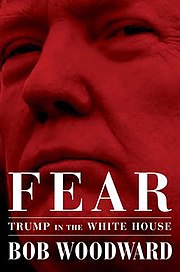
“Fear” (2018) is a book by Bob Woodward about the White House under US President Trump. Back in the 1970s Woodward and Carl Bernstein broke the Watergate scandal that brought down President Nixon.

Title: Trump says real power is based on fear.

Time period: August 2016 to March 2018.

Sources: Based on interviews of some of the refugees streaming out of the Trump White House, especially:

  • Steve Bannon – campaign manager, later chief strategist (Trump’s brain)
  • Reince Priebus – head of the Republican National Committee, later White House chief of staff
  • Gary Cohn – Trump’s top economic adviser
  • Rob Porter – Trump’s staff secretary (handles all the president’s paperwork, in particular the pieces of paper he signs)
  • John Dowd – one of Trump’s lawyers trying to keep him out of prison.

Crazytown: It is pretty much as people in blue states imagine, maybe a bit worse:

John Kelly, chief of staff since August 2017, in charge of bringing order to the White House:

“He’s an idiot. It’s pointless to try to convince him of anything. He’s gone off the rails. We’re in crazytown.”

An unnamed senior White House official in July 2017:

“The president proceeded to lecture and insult the entire group [of his top military and economic advisers] about how they didn’t know anything when it came to defense or national security. It seems clear that many of the president’s senior advisers, especially those in the national security realm, are extremely concerned with his erratic nature, his relative ignorance, his inability to learn, as well as what they consider his dangerous views.”

Rex Tillerson, secretary of state, right after that same meeting:

“He’s a fucking moron.”

Trump has the mind of a bright, spoiled 12-year-old. That is about his level of maturity and knowledge of the world. He is unwilling to learn and is bad at taking advice. He lies like it was nothing and easily breaks his promises. He expects loyalty but does not return it. He can ask sharp, profound questions, but the answers are lost on him.

Nepotism: On top of that he lets Ivanka and Jared Kushner, his daughter and son-in-law, do whatever they want, which undermines his cabinet and any orderly process.

Idiot king: If you imagine Trump as an idiot king, Ivanka as the princess, and Jared as the crown prince, you would have it about right.

Deep State: As Woodward tells it, there is a deep state – the Pentagon, CIA, FBI, Wall Street, etc. But it is not so much trying to overthrow Trump, as Fox News would have it, as trying to preserve the military and economic arrangements that the US and its allies set up to prevent a third world war. Trump is trying to tear all that down in the name of a narrow (White) nationalism.

Russiagate: Woodward, famous for Watergate, says surprisingly little about Russiagate. It appears, but more as an approaching storm. On one of the last pages of the book, John Dowd, his lawyer, warns Trump:

“Don’t testify. It’s either that or an orange jumpsuit.”

Expect a sequel.

– Abagond, 2018.

See also:

553
Patrick Kimmons

Patrick Kimmons (1991-2018), a Black American man, was killed by police in Portland, Oregon in the early hours of Sunday September 30th 2018. It seems he was armed – but it also seems he was shot in the back.

The police say they came across a shoot-out and drove into the parking lot on the corner of Southwest Fourth Avenue and Harvey Milk Street (formerly Stark). They saw flashes of gunfire. When they confronted Kimmons, he turned towards them holding a gun. They gunned him down. They recovered a gun near his body, one of five found at the scene.

Video: the police say they have surveillance video. It has not (yet) been made public.

Witnesses: four police officers and “numerous community members”.

One witness, Ayan Aden, was in the parking lot in her car with her boyfriend. She said she heard yelling and then saw Kimmons running through the parking lot. He dropped his gun near her car and kept running. The police said “stop” twice and then immediately started shooting. She and her boyfriend ducked. Two bullets hit their car. Aden:

“The shooting was excessive. He was clearly running away and threw the gun away.”

Some witnesses heard up to 16 shots.

His mother says he was shot 15 times, in the back and the leg.

The killer cops were Sergeant Garry Britt and Officer Jeffrey Livingston. Britt has been with the Portland police for ten years, Livingston for one and a half. Both are now on paid leave as the police investigate themselves. Their findings (cover-up?) will be presented to a grand jury, which will determine whether to charge the police with a crime.

Sgt Britt has taken part in two other shootings, of John Elifritz earlier this year, and of Joshua Stephen Baker in 2012. Baker, like Kimmons, was 27 on a September night, was running from police, and was believed to be armed and dangerous. But Baker was White and was taken alive.

The Portland police have a history of racial profiling.

Kimmons’ younger brother says that Kimmons had been part of a gang, the Rolling 60s Crips, but had quit for the sake of his children. He believes a rival gang was shooting at Kimmons when the police stepped in and killed him.

Kimmons was a baker at Dave’s Killer Bread.

Sequoia Turner, his girlfriend and mother of two of his three young children:

“He had a past, but we were working toward our future and our kids were our everything. He never experienced real love until we had our kids, you know. Trying to set an example that he wasn’t given was hard. But we worked together.”

Letha Winston, his mother:

“I don’t know how to go on, I don’t know how to begin to accept this. It kills me my son did not threaten the life or welfare of any of the 3 officers but was still murdered as he ran away! What happen[ed] to getting arrested? What[‘s] wrong with due process, or the judicial system?”

– Abagond, 2018.

See also:

571

nobel-prizeThe Nobel Prizes are given every year in October to those who have most benefited mankind in one of six fields: peace, literature, medicine, physics, chemistry, and economics. For each prize, 9 million Swedish kronas (equal to a million US dollars or two metric tons of silver) is split among the winners.

The winners for 2018: 

Medicine & Physiology: 

James P. Allison and Tasuku Honjo win for discovering immune checkpoint therapy, which uses the body’s immune system to fight cancer. It works (sometimes) on skin, lung, and kidney cancer. Allison says it is a great example of how basic science can save lives.

Professor Honjo and his team at Kyoto University.

Physics:

Donna Strickland, Gérard Mourou, and Arthur Ashkin win. Mourou and Strickland developed a laser technique called chirped pulse amplification (CPA). Ashkin used that to create optical tweezers, using lasers to pick up or move very small living things, like viruses or bacteria, without harming them. Strickland is the first woman to win a Nobel Prize since 2015.

Chemistry: 

Frances Arnold, George P Smith, and Gregory Winter win for using directed evolution to create proteins. Arnold, a chemical engineer at Caltech, gets half the prize, being the first to use something like natural selection to evolve chemicals for a particular purpose. She used it to create enzymes, proteins that speed up chemical reactions. Smith and Winter used it to create antibodies, proteins that kill bacteria and viruses. It is now used to make drugs, even green fuels,

Literature:

Olga Tokarczuk, a leading Polish novelist, “for a narrative imagination that with encyclopaedic passion represents the crossing of boundaries as a form of life”. Best books: “Primeval and Other Times” (1996) and “The Books of Jacob” (2014), both concerned with history, in the 1900s and 1700s respectively.

Peace:

Nadia Murad and Denis Mukwege win for their “efforts to end the use of sexual violence as a weapon of war”, making a “crucial contribution to focusing attention on, and combating, such war crimes.” Murad, the first Iraqi ever to win the Peace Prize, was made a sex slave by ISIS and was sold several times. She escaped in November 2014, becoming a champion for Yazidi Iraqis. Dr Mukwege runs a hospital in D.R. Congo under UN protection. He has treated many wartime victims of sexual violence. He was African of the Year in 2009.

Economics:

William Nordhaus and Paul Romer win for “constructing models that explain how the market economy interacts with nature and knowledge.” Nordhaus was the first to create a model that shows how the economy and climate change affect each other. He is for the carbon tax. Romer’s model shows that capitalism does not reward those with new ideas, that government has to step in and push research, as is done in the US.

Winners listed by country of birth:

  • Britain: Winter
  • Canada: Strickland
  • D.R. Congo: Mukwege
  • France: Mourou
  • Iraq: Murad
  • Japan: Honjo
  • Poland: Tokarczuk
  • US: Allison, Ashkin, Arnold, Smith, Nordhaus, Romer

by county of immigration:

  • none were immigrants, which is surprising based on past years.

by gender: Boys 9, Girls 4.

– Abagond, 2018, 2020.

Update (January 4th 2020): Added the Literature Prize, which was not awarded till 2019 due to a #MeToo scandal at the Swedish Academy.

See also:

620

Mocedades: Eres Tú

Remarks: 

This song finished second in the Eurovision contest of 1973. The Eurovision performance is shown above. A year later it went to #9 on the US pop chart. As of 2018 it is still one of only three songs completely in Spanish to make the top ten:

  • 1966: “Guantanamera” by The Sandpipers reached #9
  • 1974: “Eres Tú” by Mocedades reached #9
  • 1987: “La Bamba” by Los Lobos reached #1

The versions of “Macarena” (1995), “Despacito” (2017) and “Mi Gente” (2017) that reached the top ten in the US had parts in English.

See also:

Lyrics:

Como una promesa eres tú, eres tú,
como una mañana de verano,
como una sonrisa eres tú, eres tú,
así, así eres tú.

Toda mi esperanza eres tú, eres tú,
como lluvia fresca en mis manos,

como fuerte brisa eres tú, eres tú,
así, así eres tú.

Eres tú como el agua de mi fuente,
eres tú el fuego de mi hogar,
eres tú como el fuego de mi hoguera,
Eres tú el trigo de mi pan.

Como mi poema eres tú, eres tú,
como una guitarra en la noche,
todo mi horizonte eres tú, eres tú,
así, así eres tú.

Eres tú como el agua de mi fuente,
eres tú el fuego de mi hogar,
eres tú como el fuego de mi hoguera,
eres tú el fuego de mi hogar.
Eres tú como el agua de mi fuente…

Source: letras.com