Feeds:
Posts
Comments

Yemen

Yemen (1990- ), at the south-western corner of the Arabian peninsula, was the land of the Queen of Sheba, of frankincense and myrrh. It was where the West first got coffee, from the port of Mocha. But now it is the scene of the worst humanitarian crisis in the world – a man-made one made mainly by Saudi Arabia and the US. They made Yemen’s civil war into a proxy war with Iran.

Yemen is the poorest Arab country. Even before the war, half its people lived in poverty and did not have enough to eat. With the Saudi war it has become far worse:

  • a million people affected by cholera, the worst outbreak in the world since at least 1949.
  • 8.5 million on the brink of famine – a third of the country.

Even “at the brink”, a child dies every 11 minutes from lack of food (as of 2017).

Not yet famine: Yemen in 2016. (Via BBC in Spanish)

Most of Yemen’s food comes through the port of Al Hudaydah. If fighting should shut down the port, the famine will become full-blown. Right now food is getting through, but it is slow-going because the Saudis stop and search ships going to Yemen.

Back in 2011 the Arab Spring came to Yemen as it did to much of the Arab world. Yemen overthrew Saleh, its dictator since 1990 when North and South Yemen united. But in 2014 Saleh made a comeback with the help of his old enemies, the Houthi rebels of the north. Half the army was still loyal to him too. Sanaa, the capital, fell to them in 2014. President Hadi fled south to the port of Aden and then to Saudi Arabia.

In 2015 Saudi Arabia sent its planes and its bombs. Yemen is on the its southern border and it did not want the Houthis in power: the Houthis are Shiite Muslims (Zaydis to be exact) and therefore are suspected of being allies of Iran and Hezbollah. (Yemen is about 43% Shiite, 56% Sunni, 1% non-Muslim.)

Sanaa, 2015. UNESCO: “these attacks are destroying Yemen’s unique cultural heritage, which is the repository of people’s identity, history and memory” (Via Zamaneh Media)

Saudi Arabia, with help from the UAE, has been bombing the place to bits ever since – schools, hospitals, bridges, refugee camps, weddings, beautiful thousand-year-old buildings, etc. They bombed a water treatment plant. That helped to spread cholera. And then when Yemen built a new cholera treatment centre, they bombed that too.

Despite all the bombing, the war has been locked in a stalemate for three years now. It is becoming Saudi Arabia’s Vietnam as it was Egypt’s in the 1960s.

The US, having learned almost nothing from the actual Vietnam War, has been there by Saudi Arabia’s side all the way – up in the sky refuelling Saudi planes.

The US refuelling Saudi jets, August 2018. (Via Almasirah English)

On some of the bombs that do not go off you can see the words: “U.S. AIR FORCE”.

In 2017 the US agreed to sell Saudi Arabia $115 billion in arms. Pusherman.

Dronelandia: For years, even before the war, the US had been sending its drones into Yemen after AQAP, Al Qaeda of the Arabian Peninsula, its deadliest branch. But AQAP has not seemed to weaken. And now with Yemen as a failed state, AQAP grows stronger still.

Yemen at the end of 2017. Houthis in purple, Al Qaeda in green. (Via alaraby.co.uk)

– Abagond, 2018.

See also:

636

Andrew Gillum

Andrew Gillum (1979- ), the mayor of Tallahassee, Florida since 2014, won the Democratic race for governor of Florida in an upset victory last night, August 28th 2018. In the general election in November he will be up against Republican Ron DeSantis, a Trump bootlicker who is already spewing racially questionable language on Fox News. If Gillum wins he will become the first Black governor of Florida ever.

Trump v Bernie: Because Trump is backing DeSantis and Bernie Sanders is backing Gillum and because Florida is a big swing state, it could become the Spanish Civil War of the 2020 presidential election.

The Democratic Party will be running three Black candidates for governor in November:

  • Maryland: Ben Jealous
  • Georgia: Stacey Abrams
  • Florida: Andrew Gillum

(Via the New Yorker)

Four days ago he was in fourth place in the Democratic race, behind three millionaires. He did have the backing of two billionaires (George Soros and Tom Steyer) but was being heavily outspent. The leader of the pack was Gwen Graham, daughter of Bob Graham, former senator and governor of the state.

Gillum is from Richmond Heights, a Black working-class suburb of Miami, the son of a construction worker and a bus driver. The fifth of seven children he was the first to get a high school degree. He went to Florida A&M, an HBCU in Tallahassee. He became the youngest city commissioner in Tallahassee’s history.

As mayor the NRA took him to court for outlawing the shooting of guns in city parks. Florida is the land of hideous shootings like Parkland, Pulse, and Trayvon Martin. Gillum pushed to have city government hire people who, like his brother, have done their time in prison and need a fresh start. There is a big corruption scandal in Tallahassee but Gillum does not seem to be part of it.

Florida is a low-tax, low-wage, low-education state run by and for the rich. Gillum wants a Florida where ordinary people can live good lives.

As governor Gillum would raise taxes on corporations to spend more on education. He would accept Obamacare money that would cover 700,000 people in Florida, money Republicans have been turning away. He wants to raise the minimum wage to $15 an hour so that people who work full-time do not have to live in poverty. He wants to overturn the Stand Your Ground gun law.

His message is much like that of Alexandria Ocasio-Cortez, another young person who won an upset victory against the Democratic establishment. But her district in New York is the bluest of blues (the Democratic colour), not like Florida, which is the purpliest of purples (halfway between Democratic blue and Republican red).

In 2016 Gillum campaigned for Hillary Clinton and spoke at the Democratic National Convention. He made Clinton’s list of 39 possible vice presidents.

Both Michael Eric Dyson and Angela Rye have been campaigning for Gillum. Rye has known him for 15 years, since they were both 24. As she tells it, when she came to one of his rallies she saw a rainbow – a sign from God.

– Abagond, 2018.

See also:

534

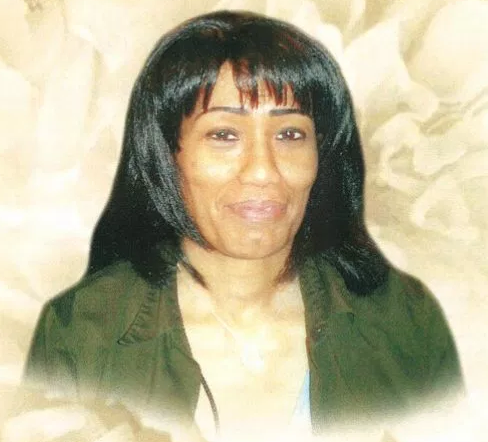
In memoriam: Trojan Pam

Pamela E. Harris (1953-2018), a fellow blogger better known here as Trojan Pam, passed away last February. I have been out of the loop of late and did not hear about it till last night. She stopped commenting here in early 2017 when this blog was a madhouse. If it were only that! Unfortunately she was having health issues.

Fortunately, she has left us four books, writing under the pen names Anon and Umoja (the blurbs below are from her bookstore where you can find out more. The books are also on Amazon):

Trojan Horse: Death of a Dark Nation (2009) by Anon – exposes the falsehoods, myths, lies, and deceptions of the relentless economic, political, and social systems black people confront every day without understanding how they function, or all the different faces they wear. By exposing the 13 Weapons of Mass Mind Destruction hidden inside the deadliest Trojan Horse in human history, this book will confirm what many have always secretly suspected…

Black Love Is A Revolutionary Act (2011) by Umoja – reveals the SECRET WAR that has been waged against the Black Man, Black Woman, and Black Family for the last 500 years that has devastated black male/black female relationships, marriages, families, and communities — and what WE MUST DO to save them.

The Interracial Con Game (2011) by Umoja – On the heels of all this “black love is bad” news comes the mainstream media’s manufactured cure: interracial relationships. What is the REAL agenda behind the Interracial Con Game and why are blacks the main targets? “Debunking the Top Ten Interracial Myths” will provide some interesting — and controversial answers — and some long overdue food for thought.

The Beauty Con Game (2012) by Umoja – reveals how “beauty” — or the lack of it – has been used to justify the degradation, exploitation, oppression, and murder of black people — and how the SECOND DEADLIEST CON GAME in human history threatens the survival of ALL non-white people, and ultimately, of the planet itself.

And of course there is her blog, Racism Is White Supremacy (2012-17), which is still up.

She also appeared on the the C.O.W.S. podcast countless times.

As diaryofanegress noted:

“Pam is a light that shone brightly and a voice that spoke earnestly for her people. She did what she did because she loved us and believed in us.”

Requiescat in pace.

– Abagond, 2018.

See also:

Cleopatra

Cleopatra as she appeared on a coin a year or two before her death.

Cleopatra VII (-69 to -30) ruled Egypt from -51 to -30, from age 18 to 39. She is famous as the last queen of Egypt and for seducing two powerful Romans, Julius Caesar and Mark Antony.

Queen: She was the last queen of the Ptolemies, the Macedonian Greek family that had ruled Egypt since the fall of Alexander’s empire 300 years before. For 21 years she kept Egypt independent and got it through famine and plague in one piece. At one point, in -48, her brother, Ptolemy XIII, tried to fight her for Egypt. Just then Caesar showed up and her brother died in battle. She had her two other living siblings, Ptolemy XIV and Arsinoe IV, killed.

Race: She was at least 25% Greek. We do not know who her mother or father’s mother were. Since she was the only Ptolemy who spoke Egyptian, her mother may have been Egyptian.

Beauty: She was famous for her beauty, but Plutarch, the first to write about it (over a hundred years after her death) said she had more charm than beauty. If power is an aphrodisiac, she had that too as Queen of Egypt.

The eastern Mediterranean in -39. Mark Antony controlled the green parts, Cleopatra the pink part. In two years King Herod will control Judaea.

Lovers:

  • Julius Caesar, whom she met at age 21. One child. Gave her Cyprus, accidentally burned down the Library of Alexandria while fighting her brother, Ptolemy XIII.
  • Mark Antony, whom she met at 27 and later married. Three children. Gave her Crete, Cilicia, Syria, Cyrene, Nabataea (part of Arabia) – and the 200,000 books of the Pergamun Library.

Non-lovers:

  • King Herod – Josephus says she tried to seduce Herod but failed.
  • Cicero – found her arrogant and insufferable.
  • Octavian – would not look her in the eye.

Battle of Actium: Antony and Cleopatra lost the Battle of Actium in -31, which led to the rise of Octavian (later named Emperor Augustus) and the fall of Egypt to Rome a year later on Sextilis 1st -30 (later named August 1st, in part because of Augustus’ victory that day).

Suicide: As Alexandria fell to Octavian on August 1st, Antony killed himself thinking Cleopatra was dead. She killed herself on the 10th. In part it was from from grief (he died in her arms), in part because she did not want to be paraded through the streets of Rome in chains. She probably did not kill herself with an asp: Octavian had her under suicide watch. Octavian buried her with Antony, their tomb now lost under the sea.

Children:

  • By Caesar: Caesarion (Ptolemy XV);
  • By Antony: Alexander Helios, Cleopatra Selene, Ptolemy Philadelphos.

Roman law saw all her children as bastards, Egyptian law did not.

  • Caesarion she tried to save after the fall of Alexandria. He was 17. She sent him to the Red Sea to catch a ship to India. He never made it: his tutor betrayed him. Octavian had him put to death on August 23rd.
  • Cleopatra Selene married Juba II, king of Numidia (now part of Algeria).

Cult: She claimed to be a goddess and sometimes dressed like Isis. Her cult lasted at least 400 years after her death.

– Abagond, 2018.

Sources: mainly “Cleopatra, Last Queen of Egypt” (2008) by Joyce Tyldesley.

See also:

574

Remarks:

It was 20 years ago yesterday that “The Miseducation of Lauryn Hill” (1998) came out, easily one of the best albums of the 1990s. This song was on the radio in advance to help sell it. The song itself sold at least a million copies, the album 12 million worldwide. The song is a cover of an old Frankie Valli hit.

See also:

Lyrics:

You’re just too good to be true.
Can’t take my eyes off of you.
You’d be like heaven to touch.
I wanna hold you so much.
At long last love has arrived.
And I thank God I’m alive.
You’re just too good to be true.
Can’t take my eyes off of you.

(I want you, I want you.)

Pardon the way that I stare.
There’s nothing else to compare.
The sight of you leaves me weak.
There are no words left to speak.
But if you feel like I feel.
Please let me know that it’s real.
You’re just too good to be true.
Can’t take my eyes off of you.

(I want you, I want you.)

I need you baby, if it’s quite all right,
I need you baby to warm a lonely night.
I love you baby.
Trust in me when I say, “OK.” (It’s OK.)
Oh, pretty baby, “Don’t let me down,” I pray.
Oh, pretty baby, now that I found you, stay.
And let me love you, oh, baby, let me love you, oh, baby…

You’re just too good to be true.
Can’t take my eyes off of you.
You’d be like heaven to touch.
I wanna hold you so much.
At long last love has arrived.
And I thank God I’m alive.
You’re just too good to be true.
Can’t take my eyes off of you.

(I want you, I want you.)

I need you baby, and if it’s quite all right,
I need you baby to warm a lonely night.
I love you baby.
Trust in me when I say, “It’s OK.”
Oh, pretty baby, “Don’t let me down,” I pray.
Oh, pretty baby, now that I found you, stay.
And let me love you, oh, baby, let me love you, oh, baby…

I need you baby, if it’s quite all right,
I love you baby, you warm a lonely night.
I need you baby.
Trust in me when I say, “It’s OK.”
Oh, oh, pretty baby, “Don’t let me down,” I pray.
Oh, pretty baby, now that I found you, stay.
And let me love you, oh, baby, let me love you, oh, baby…

Source: AZ Lyrics.

Crazy Rich Asians

Nick (Henry Golding) and Rachel (Constance Wu)

“Crazy Rich Asians” (2018) is a Hollywood romantic comedy – with an all-Asian cast! It stars Constance Wu of “Fresh Off the Boat” (2015- ) and is based on the 2013 beach novel of the same name. The book sold millions worldwide and is the first in a trilogy by Kevin Kwan. John Chu directs.

To review: Here is the list of films with an all-Asian cast set in the present-day put out by a major Hollywood studio:

  • 1961: Flower Drum Song
  • 1993: Joy Luck Club
  • 2018: Crazy Rich Asians

If you know of any others please let me know.

All-Asian everything: The cast is not only all-Asian, with no Scarlett Johansson in sight, it is a love story! As if Asians have deep feelings too. And the male lead, Henry Golding, is an Asian heartthrob. As if all Asian men are not neutered and nerdy. (Well, at least not the Eurasian ones – Golding’s father is White.)

And not all Asians are alike! Much of the film turns on the differences between Chinese Americans and Chinese Singaporeans.

According to Hollywood a film like that should fail in the US – but it soon became the number one film at cinemas.

Araminta (Sonoya Mizuno) gets married at the wedding Nick and Rachel attend in Singapore.

Our story: Rachel Chu (Constance Wu), a Chinese American woman from New York, is invited by her boyfriend Nick Young (Henry Golding) to Singapore to go to a wedding and meet his family. She has no idea how amazingly rich Nick is and soon finds herself in the lion’s den: other women want him and, far worse, his mother, Eleanor (Michelle Yeoh), does not want her to marry Nick.

Eleanor (Michelle Yeoh), Nick’s mother.

East meets West: Eleanor informs Rachel that she might look Chinese and speak Chinese, but inside she is American. Americans do not put family first or understand the value of love and sacrifice. Eleanor tells her she is not “our kind of people” and will never be good enough. Rachel proves her wrong.

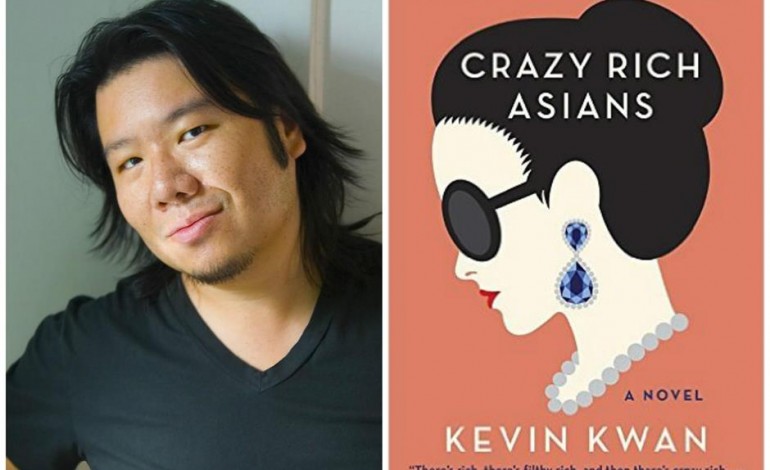
Hollywood Whitewashing: As you can imagine, there were some in Hollywood who wanted Rachel to be played by a White woman. After all, who in the US could possibly want to watch a love story that did not star a White woman? Well, as it turns out, there is someone like that: Kevin Kwan, the author himself!

Kevin Kwan and his book in 2017.

In 2016 Constance Wu herself had written about Hollywood Whitewashing. That in turn helped push John Chu into directing it:

“‘Why haven’t we had a romance of Asian leads in a movie? Why haven’t we had a full Asian cast in a movie?’ I suddenly looked myself in the mirror and thought, ‘Oh shit. I am Hollywood. I’m in this business and I’ve got enough relationships that if I want to push one through, I get one.'”

“Crazy Rich Asians” has done so well that a sequel is already in the works. And there are at least six other possible films with Asian leads that might now get the green light. Maybe we will not have to wait another 25 to 32 years.

– Abagond, 2018.

See also:

571

Was Cleopatra beautiful?

Cleopatra VII was Queen of Egypt 2,000 years before the 1950s and 1960s. Julius Caesar and Mark Antony both fell in love with her, making her famous for her beauty. But in the artwork and coins we have from that time she does not seem to be a great beauty, certainly not like Nefertiti.

She appears in Egyptian art and Greek art:

In Egyptian art she looks much like other Egyptian queens going back thousands of years. And much like the goddesses Isis and Hathor. That makes it hard to tell what she looked like. Part of why Nefertiti sticks out is because the famous bust of her was made during the Amarna Period when art was done in a more natural style.

Portrait of Cleopatra VII. Inv. No. 38511. Rome, Vatican Museums, Pius-Clementine Museum.

In Greek and Roman art she looks more like a real person. But Greek artists idealized kings and queens too. But to them an idealized queen was not a beautiful one, like in a Hollywood film, but one who looked strong and powerful – in other words, more like a man, sometimes even like a man in a wig. Thus all those terrible Cleopatra coins (pictured at top).

Scholars: Also keep in mind that scholars do not always agree on which statues are of her. Not all statues are named and some of those with names have turned out to be fakes. The statue of her in the Vatican Museum (pictured above) most scholars agree is her. The hairstyle even matches some of the coins.

Cleopatra as she appeared in Asterix comics, 1965.

All in all she most likely had:

  • dark hair,
  • light-brown skin,
  • a big, hook nose,
  • deep-set eyes,
  • a strong chin.

The hook nose is pretty certain. First because Westerners in our time consider it ugly on women, so the hook-nosed images seem more believable. Second, because her father, Ptolemy XII, also had one. On the other hand, though, her nose may have been played up to make her seem more like a Ptolemy, the family that had been ruling Egypt for the past 300 years.

Plutarch: The earliest account we have of Cleopatra’s beauty (or lack thereof) was written by Plutarch over a hundred years after her death. He said she had more charm than beauty:

“For her actual beauty, it is said, was not in itself so remarkable that none could be compared with her, or that no one could see her without being struck by it, but the contact of her presence, if you lived with her, was irresistible; the attraction of her person, joining with the charm of her conversation, and the character that attended all she said or did, was something bewitching. It was a pleasure merely to hear the sound of her voice, with which, like an instrument of many strings, she could pass from one language to another.” (Life of Antony, 27.2, Dryden translation)

Both Julius Caesar and Mark Antony fell for her, but we do not know exactly why. Caesar preferred writing about war. Even if it was for her beauty, beauty is in the eye of the beholder.

– Abagond, 2018.

Source: mainly Google Images (2018) and “Cleopatra, Last Queen of Egypt” (2008) by Joyce Tyldesley.

See also:

543

Jennifer Esposito, Italian American. (Reuters/Eduardo Munoz)

Jennifer Esposito, who was on the television show “Spin City” in the 1990s and on “NCIS” in the 2010s, says that in the past month she has been turned down five times by casting directors because she was not “white enough”.

I first saw the story in Brazilian media. I did not know who she was, so I thought, well, Brazilians have a different idea of what counts as White. Even so I studied her picture to try to see how she could possibly be seen as anything but White. I could not see it. To be fair, though, I am bad at that sort of thing (I thought Ann Curry was White). Also, she has an Italian name and I have spent a good part of my life in a place called New Jersey where Italian Americans are the most common sort of White people there are, Espositos and all.

But it was Hollywood, not Brazil, who thought she was not White enough. 

Esposito:

“In the last month I was told I was not white enough for 5 different projects. How is this still going on or allowed? Just not okay.”

Huh?

Names that end in vowels: It seems it was not her looks but her last name. It ends in a vowel: Esposito. That is common for Italian and Spanish names, but not for northern European ones, like Trump and Bush and Clinton.

Marisa Tomei, Italian American.

Marisa Tomei had warned her long ago to change her name before it was too late. It is what Margarita Cansino (Rita Hayworth), Natalia Zakharenko (Natalie Wood), and Raquel Tejada (Raquel Welch) did, to name a few. But Esposito did not listen. Now she says that Tomei is “10000% right.”

Many of Esposito’s characters on film and television, it turns out, have Italian or Spanish names: Tina Russo, Donna Delgrosso, Miss Ruiz, Olivia Garcia, Gina Tucci, Andrea Belladonna, Jackie Curatola, etc. Does she seem that “ethnic”?

Gina Torres, Cuban American.

Latina enough: Apparently she is “Latina enough”. That takes away parts that should go to actual Latina actresses, many of whom, in turn, are told they are not “Latina enough”! Just ask Gina Torres. But even for Esposito herself it is cold comfort since Latinas are hugely under-represented in English-language media in the US.

Hollywood Whitewashing not only makes the US and the world seem Whiter than it is, but it even makes Latinos and Whites themselves seem “Whiter” than they are. (And Blacks lighter skinned.)

Charlton Heston, Scottish and English American, as Moses.

Mediterranean characters that come to mind who were played by those with names ending in consonants:

  • Heston, Charles: Moses in “The Ten Commandments” (1956)
  • Heston, Charles: Judah Ben-Hur in “Ben-Hur” (1959)
  • Heston, Charles: El Cid in “El Cid” (1961)
  • Taylor, Elizabeth: Cleopatra in “Cleopatra” (1963)
  • Danes, Claire: Juliet in “Romeo + Juliet” (1996)
  • Pitt, Brad: Achilles in “Troy” (2004)
  • Farrell, Colin: Alexander the Great in “Alexander” (2004)
  • Butler, Gerald: Leonidas in “300” (2007) – “This is Sparta!”

And then, of course, there are all those brown-haired Jesuses.

– Abagond, 2018.

See also:

554

The audience at Woodstock, where Jimi Hendrix played on August 18th 1969.

Jimi Hendrix was Black, playing music rooted in Black culture, yet most of his fans are White. In the late 1960s, when he was at the height of his powers, they were even more White than they are now.

In the late 1960s:

  • No Black radio station would play him, not even those he asked personally.
  • His audience at Woodstock was lily-White (pictured above).
  • When he appeared at a free concert in Harlem a month later, people threw bottles and eggs at him and the audience melted away.
  • He had several top ten hits in Europe, none in his native US.
  • He had to go to Britain to become famous in the US.

In the US he felt his music was too White for Black people and too Black for White people.

From Jupiter: For most Black Americans of the time his psychedelic blues rock music was almost from another planet:

  • You could not dance to it (unless maybe you were high on drugs or something).
  • He was a terrible singer – and this in the age of Aretha Franklin.
  • His musical style was out-of-date: The electric blues guitar music that his style grew out of was considered “backward”, “depressing”, “accommodating” to White values, and no longer “relevant”.
  • He played White music: By 1965 rock & roll, a Black genre of music, had been taken over by White bands like the Beatles and the Beach Boys.

The blues become White: It was not just rock music and not just Hendrix. By the late 1960s, electric blues guitarists, like B.B. King, Muddy Waters, Howlin’ Wolf, and Bobby (Blue) Bland, also saw their audiences become lily White – even though they were playing pretty much the same music they had played to Black audiences in the 1950s. And that was the trouble: to Blacks they were old-hat has-beens, nostalgic at best. But in the musical time warp that Whites live in they were new and fresh.

Better than Bob: By the late 1960s, soul music was the new style of Black music. It had none of the guitar solos beloved by rock (and by Hendrix) and it valued good singing. Thus Aretha Franklin. In that world Hendrix was going to be nothing more than a session musician and he knew it. He was not better than the Isley Brothers, a soul act that he played for, but he knew he was better than rock star Bob Dylan.

Politics: It was not just his music that was out of step, so were his politics – or lack of them. He was colour-blind and apolitical, which became quaint at best after the assassination of Martin Luther King in 1968. But to Whites that made him “safe”.

Race: He seemed radical because of the way he dressed and lived and played the guitar, but he did not challenge the racist beliefs of his White listeners. His musical talent, his White girlfriends, and the way he made love to his guitar on stage, only confirmed their racist stereotypes.

– Abagond, 2018.

Sources: mainly “The Rough Guide to Jimi Hendrix” (2009) by Richie Unterberger; “The Death of Rhythm & Blues” (1988) by Nelson George. 

See also:

556

Remarks:

My favourite Aretha Franklin song. It came out in November 1973 and reached number one on the US R&B chart in January 1974.

As it turns out, it is a cover of a Stevie Wonder song. Miki Howard, Basia, and others have also covered it.

See also:

Lyrics:

Though you don’t call anymore
I sit and wait in vain
I guess I’ll rap on your door (your door)
Tap on your window pane (tap on your window pane)
I wanna tell you, baby
Changes I’ve been going through (uuuh)
Missing you, listening you
‘Till you come back to me that’s what I’m gonna doWhy did you have to decide
You had to set me free?
I’m gonna swallow my pride (my pride)
I’m gonna beg you to please, baby please see me (you never want to see me)
I’m gonna walk by myself
Just to prove that my love is true (uuuh)
All for you baby
‘Till you come back to me that’s what I’m gonna doLiving for you, my dear
Is like living in a world of constant fear
Hear my plea (hear my plea)
I’ve got to make you see (make you see)
That our love is dying (our love is dying)

Although your phone you ignore
Somehow I must, somehow I must, how I must explain
I’m gonna rap on your door (your door)
Tap on your window pane (tap on your window pane)
I’m gonna camp by your steps
Until I get through to you (uuuh)
I’ve got to change your view, baby
‘Till you come back to me that’s what I’m gonna do

I’m gonna rap on your door (tap on)
Tap on your window pane (tap on)
Open out baby, I’m gonna rap on your door (tap on)
Tap on your, tap on your (tap on)
Tap on your , tap on your window pane (tap on your window pane)
I’m gonna rap on your door (tap on)
Tap on your window pane (tap on)
Open out baby

Source: AZ Lyrics.

Aretha Franklin

Aretha Franklin, 1967.

Aretha Franklin (1942-2018), the Queen of Soul, is easily one of the best singers in living memory in the US, if not the best.

She has 20 number-one hit songs on the US R&B chart:

  • 1967: I Never Loved a Man (The Way I Love You)
  • 1967: Respect
  • 1967: Baby I Love You
  • 1968: Chain of Fools
  • 1968: (Sweet Sweet Baby) Since You’ve Been Gone
  • 1968: Think
  • 1969: Share Your Love with Me
  • 1970: Call Me
  • 1970: Don’t Play That Song (You Lied)
  • 1971: Bridge Over Troubled Water
  • 1971: Spanish Harlem
  • 1972: Day Dreaming
  • 1973: Angel
  • 1974: Until You Come Back to Me (That’s What I’m Gonna Do)
  • 1974: I’m in Love
  • 1976: Something He Can Feel
  • 1977: Break It To Me Gently
  • 1982: Jump to It
  • 1983: Get It Right
  • 1985: Freeway of Love

No one has more. Stevie Wonder is tied with her at 20. Drake, now at 19 in 2018, looks set to pass her – a half century later.

There was no one like her. Music critic Nelson George:

“Franklin’s voice communicated so wide a range of emotion as to truly defy description …

“Franklin expressed all a black woman could be, while her contemporaries (Diana Ross, Tina Turner, Dionne Warwick, Martha Reeves, even the underrated Gladys Knight) seemed trapped in one persona by the artistic decisions of male producers as well as by their own vocal limitations.”

On top of that, unlike Dionne and Diana, her music in the late 1960s was made for Black people, not made to cross over. (Clive Davis, he of Whitney Houston fame, would later try to put a stop that in the 1980s.)

She sang with such emotion that people wondered if the songs were about her. She said some were, some were not. Despite her youth and amazing talent, she had experienced enough of life’s aches and pains that by 1967 she felt like she was “26 goin’ on 65!”

In 1960 at age 18 she arrived in New York to make it big. She had been on the road as a gospel singer with her father, C.L. Franklin, a well-known Detroit pastor. Mavis Staples was a roadmate. In New York, Aretha was “discovered” by John Hammond of Columbia Records. Just as Hammond would later try to make Bruce Springsteen into another Bob Dylan, he tried to make her into another Billie Holiday. Meanwhile her husband, who had become her manager, wanted her to sing at swanky White supper clubs because that is where he thought the money was. Both Hammond and her husband saw her as becoming a White-oriented jazz and pop singer – in spite of her powerful gospel music roots.

In 1966 she left Columbia Records and New York for Atlantic Records and Muscle Shoals, Alabama. Jerry Wexler, the co-owner of Atlantic, was a huge fan. As he tells it, he “urged Aretha to be Aretha.” Atlantic at that time was mainly interested in making music for ordinary Black people, not swanky White people. Instead of forcing her into a box, the music was built around her.

In 1967 she blazed forth. Mightily. In that year alone she had five songs that sold at least a million copies each.

– Abagond, 2018.

Source: mainly “The Soulful Divas” (1999) by David Nathan; “The Death of Rhythm & Blues” (1988) by Nelson George. 

See also:

564

In memoriam: Aretha Franklin

Aretha Franklin (1942-2018), the Queen of Soul, is dead at age 76.

She had 20 number-one hits on the US R&B chart, among them:

Respect (1967)

Chain of Fools (1967)

Spanish Harlem (1971)

Until You Come Back to Me (That’s What I’m Gonna Do) (1973)

Freeway of Love (1985)

One of my favourites “only” made it to #2:

(You Make Me Feel Like) A Natural Woman (1967)

Requiescat in pace.

See also:


In your opinion, which are the best romance novels? Not just in terms of being a good read as a book, but also in terms of being true to life, especially emotionally. Do not limit yourself to just to genre romance (pictured above) but any sort of book, even poetry, biography or history. I want to read something good, not something trash or tedious.

Please let me know what you think in the comments below – or email me (abagond at gmail).

Thank you!

– Abagond, 2018.

See also:

Yara Shahidi

Yara Shahidi on the cover of Essence magazine, April 2018.

Yara Shahidi (2000- ) is a US actress best known for playing Zoey Johnson, the older daughter on the television show “black-ish” (2014- ) and the lead character of the spin-off, “grown-ish” (2018- ).

In 2018 Oprah told her:

“Baby, your future’s so bright it burns my eyes.”

which is what Quincy Jones told Oprah in 1985.

The Lisa Bonet of the 2010s: Like Lisa Bonet, Shahidi plays the pretty teenage daughter on a sitcom about an upper-middle-class Black family and then goes to university on a spin-off show. If she continues on Bonet’s path, she will appear in a racy film to shed her good-girl image, marry a rock star, and have a daughter who in turn will become famous, by which time there will be a Yara Shahidi of the 2040s. And so on.

The irony of “grown-ish” is that she is putting off going to university to play a character who goes to university.

Beauty and brains: She got into Harvard University. Michelle Obama wrote a letter of recommendation. Shahidi hopes to major in social studies and African American studies – which would fit her activist bent. She believes everyone should do what they can to make the world a better place, even famous Black people. She is not into being a Grateful Darky. She thinks Colin Kaepernick has it right, even though his activism got him fired and blacklisted.

Hair: She has gorgeously curly hair, but there was a time when she did not like her curls and would straighten them! She thought straight hair looked more “professional”.

Shahidi with her parents and two brothers.

Race: Her father is Persian (like her name), her mother is Black American. She considers herself to be both Black and Iranian American. She does not see it as an either/or thing. It gives her a broader, more global view of the world.

Shahidi (lower right-hand corner) at the wedding of Nas and Kelis, 2005. Click to enlarge.

Relatives: Nas, the rapper, is her cousin. In fact, you can see her as a flower girl when he married Kelis. Shahidi’s father is a photographer who left Iran just before the revolution. He became the personal photographer of Prince.

Acting: She has been in ads since she was a six-month-old baby, stuff like McDonald’s, Target, Gap Kids, Disney, and Ralph Lauren. In 2013 she appeared twice on “Scandal” as a young Olivia Pope, Kerry Washington’s character. She has been in other television shows and some films too, but did not hit the big time till “black-ish”.

She says she is more like her real self on “grown-ish” than on “black-ish”. But even there she is dumbed down to seem more like a stereotypical teenage girl. You would never guess, for example, that she would know what was going on in Iran or would use a Vonnegut reference in a tattoo.

Fandoms: She is huge fan of Marvel Comics and James Baldwin. She cried when she read “Giovanni’s Room” (1956), which she read while listening to Frank Ocean’s “Blonde” (2016) – a procedure which she recommends.

Robot dance: She does the robot dance to make sure her clothes fit properly.

– Abagond, 2018.

See also:

562

Queen Tiye

Queen Tiye (c. -1410 to -1340), also written Tiy, was an Egyptian queen in life and a Nubian goddess in death. Her male relatives ruled Egypt for most of the -1300s:

  • -1390 to -1352: Amenhotep III, husband
  • -1352 to -1336: Akhenaton, son
  • -1336 to -1327: Tutankhamen, grandson

Note that dates that far back can be off by about 35 years.

She was also the mother-in-law, if not an aunt, of Nefertiti.

She was the Great Royal Wife, the chief queen. Given how she was shown in pictures and how foreign rulers wrote to her, she must have had considerable power, even if she never ruled in her own right. That set the stage for Nefertiti to hold even more power.

Sons: Queen Tiye had at least two sons: Thutmose and Akhenaton. Thutmose was older but died before his father. So Akhenaton became king, the Heretic King who tried to overthrow the old gods. She became one of his advisers, living till at least the 12th year of his reign (-1341).

Daughters: She also had at least four daughters: Satamun, Henuttaneb, Nebetiah, and Isis. The picture at top might be Satamun, not her. It is hard to tell them apart.

Fellow wives: at least one Babylonian princess, two Mitannian ones (from present-day Syria), and her daughter Satamun. It was common for pharaohs to marry foreign princesses to keep the peace and to marry their own sisters and daughters.

Commoner: What was uncommon was for the king to marry a commoner like her, someone not of royal blood. Not that she was a poor Cinderella figure or anything: she came from a powerful family from Akhmin, a city 250 km down the Nile from the capital Thebes. Her father, Yuya, was the Master of the Horse. He commanded the king’s chariots, the most powerful war machine of its time.

Race: Tiye may have been part Asian, but, going by US racial standards of 3,300 years later, she was almost certainly Black. The same goes for her husband and therefore their son Akhenaton. Ancient Egypt did not have Anglo-American ideas about race, but it is important to point out her Blackness given how relentlessly Egyptian history is Whitewashed and used in turn to support anti-Black racism.

Her body was discovered in 1898. It was lying on the ground in a side room of her father-in-law’s tomb, KV35, in the Valley of the Kings. She was lying next to a ten-year-old boy and a young woman whose face was bashed in (probably from murder). The bodies had no name tags, so no one knew for sure who they were till 2010 when DNA tests showed that the Elder Lady (as she was called) was Queen Tiye and the Younger Lady was King Tut’s mother. We can tell that because among King Tut’s treasures was a lock of his grandmother’s hair.

Nubian goddess: She was worshipped as the solar eye of Ra at a temple in Sedeinga, over 1,000 km upriver from Thebes in Upper Nubia (now Sudan).

– Abagond, 2018.

Update (2023): Updated to use the dating of “The Princeton Dictionary of Ancient Egypt” (2008) by Ian Shaw and Paul Nicholson.

See also:

522