Feeds:
Posts
Comments

Welcome to Black History Month 2018, one year into the Trump Era. God willing, I will get some posts done on Black history. “Black” means Africa and the Diaspora, not just the US part.

If you want to suggest or second a topic, please leave a comment below or “like” another person’s comment. Since I do a song every Sunday, musical suggestions are good too.

My suggestions (in alphabetical order):

  • Ava DuVernay
  • Almoravids
  • Anglophone Cameroon
  • Black Brazil
  • Black Britain
  • Black Great Recession
  • Black Lives Matter
  • Black Panther Party
  • Crack Era
  • Civil Rights Movement: 1950s
  • Civil Rights Movement: 1960s
  • Great Zimbabwe
  • Harlem Renaissance
  • John Hope Franklin
  • Middle Passage
  • Reconstruction
  • SNCC
  • Thurgood Marshall
  • Trans-Saharan Trade
  • US racism in the 1700s
  • US racism in the 1800s
  • US racism in the 1900s
  • W.E.B. Du Bois

Promised posts (do four of these)

  • African Christianity
  • Bantu Expansion
  • Black Israel
  • Libyan slave trade
  • Moors
  • South Africa
  • voter suppression
  • Zimbabwe

Completed posts:

– Abagond, 2018.

See also:


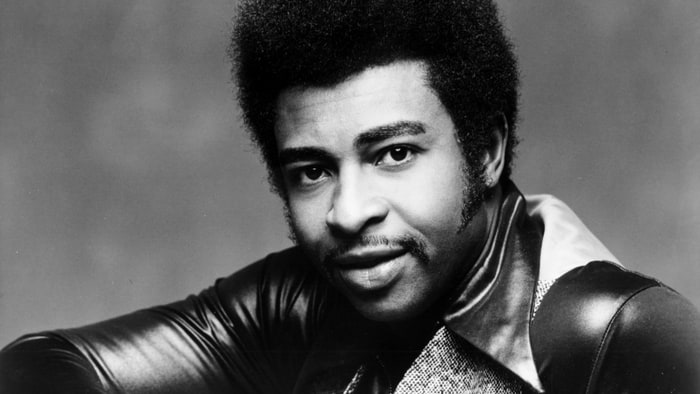
Dennis Edwards (1943-2018) has passed away at age 74. He joined the Temptations in 1968 to replace David Ruffin. He has appeared here as a lead singer twice:

Both great songs.

Requiescat in pace. 

See also:

Carter G. Woodson

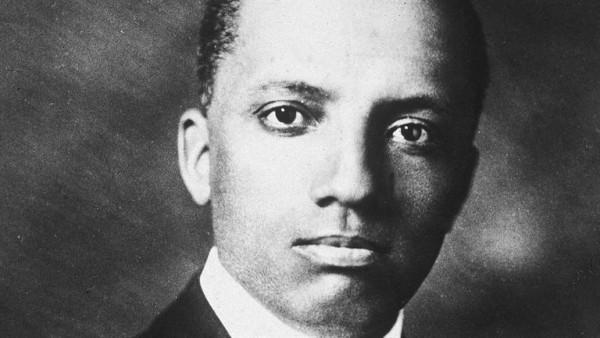
Carter G. Woodson (1875-1950), the Father of Black History, is best known for starting Negro History Week in the US, which by the 1970s had led to Black History Month and African American Studies. He is also known for writing “The Mis-Education of the Negro” (1933) about how education in the US serves White interests not Black interests.

Education: His mother as a slave secretly taught herself to read and write and passed that knowledge onto him. By day he was a coal miner, hearing the stories of Black men who had fought in the Civil War. By night he studied Latin and English classics so he could get a high school education. By 1912 he had a PhD in history, the second Black American ever to get a PhD at Harvard. W.E.B. Du Bois was the first.

Ignorance and racism: Woodson discovered that even highly educated Blacks and Whites knew little about Black history. And what little they did know was often wrong. That made it next to impossible for Blacks to overcome racism, both from Whites and from within.

In 1915, to help set that right, he founded the Association for the Study of Negro Life and History (ASNLH). Its aim was to put Black history on a sound scholarly footing and make its findings widely known. He raised money for research, put out the Journal of Negro History, and published books no one else would.

In 1922 he wrote “The Negro in Our History”. It was the book he was best known for in his own time, the one Malcolm X learned Black history from when he was in prison. It was the best book on Black history till John Hope Franklin’s  “From Slavery to Freedom” (1947).

In 1926 Woodson started Negro History Week to help spread knowledge of Black history. It was the second week of February when Blacks were already celebrating the birthdays of Abraham Lincoln (12th) and Frederick Douglass (14th). It proved to be a hit: he could not keep up with the demand for material by schoolteachers and Negro History Clubs. He dreamed of the week becoming a year. It was already a month in West Virginia by the time of his death.

Day job: Before the ASNLH could raise enough money to support him full-time, he was a schoolteacher and sometimes a principal, in West Virginia, the Philippines, and especially Washington, DC. In time he was a professor of history and a dean at Howard University.

Research: He liked Washington, DC because of its huge Library of Congress where he could do research. He wrote the first thorough history of the Black church and was one of the first historians to look at slavery from the slave’s point of view.

In 1933 he wrote “The Mis-Education of the Negro”, his essays (rants) about Black education and his answer to Du Bois’s idea of the Talented Tenth. It was not just history that needed to be Blacker. So did literature, philosophy, political science, music, art, law, medicine, religion, and sociology.

– Abagond, 2018.

See also:

530

Irish slave myth

The Irish slave myth (2000- ) claims that in the 1600s the British got slaves from Ireland as well as Africa. African Americans therefore need to stop complaining about racism and pull themselves up by their bootstraps just like Irish Americans have done. This claim is even supported by photographs.

The claim is false: Just as photography was not a thing in the 1600s, neither was White slavery in British colonies. People at the time may have thought the Irish became “slaves” when they were sent across the Atlantic Ocean, but in fact the Irish became indentured servants. That was a thing.

Indentured servitude is based on a contract for a set period of time, generally four to seven years. Your contract might be bought or sold, but not you. You still had human rights, you were not mere property. It was not forever and it was not passed on to your children. It was not based on your race, so there was no unpleasant racist aftertaste, like with Black slavery.

It made the Irish no different than most White Americans of the time: convicts, “rogues, vagabonds, whores, cheats, and rabble of all descriptions raked from the gutter” of Britain and Ireland to become indentured servants in the colonies. You know, the people White nationalists call Old Stock Americans, which they see as the genetic secret sauce of US greatness. (White Liberals meanwhile romanticize them as “settlers”.)

No peaches, no cream: Although the Irish were indentured servants, their working conditions were sometimes as bad as slavery. Many died before their contracts ended. Many were made indentured servants against their will – not just the Irish prisoners of war that Cromwell sent to Barbados, but anyone in Ireland who fell on the wrong side of England’s poor laws, like those kicked off their land by the English. The capitalist demand for cheap labour by British sugar and tobacco growers was huge.

Slavery: Black slavery by the early 1800s was a well-oiled machine based on race and supported by law, religion, racist beliefs, slave patrols, and the latest science. All of that did not fall from the sky. It took over a hundred years to assemble. It grew out of indentured servitude, but by the time it had become full-blown slavery the Irish had been excluded by design: it was race-based.

The Irish slave myth comes from not scholars but from Internet memes and articles, which in turn come from a book, “To Hell or Barbados: The Ethnic Cleansing of Ireland” (2000) by Sean O’Callaghan. He was a journalist, not a historian. Yet even Scientific American repeated his claims.

In 2016 in an open letter 82 Irish scholars and writers condemned the Irish slave myth:

“This has little to do with remembering the brutality of indentured servitude and all to do with the minimisation of the scale, duration and legacy of the transatlantic and intercolonial slave trade. The racist contemporary application of such bad history can be observed spreading like a virus across social media on an hourly basis.”

– Abagond, 2018.

Sources: mainly New York Times (2017), Medium (the open letter), “A Different Mirror” (2008) by Ronald Takaki.

See also:

544

Remarks:

My favourite song from 2017 if not the whole of the 2010s so far. It reached #6 on the US R&B chart the other week. I have been playing it to death.

The video is by Dave Meyers. Three of his videos have appeared here before: Usher’s “U Remind Me” (2001), Janet Jackson’s “I Want You” (2004) and Missy Elliott’s “Lose Control” (2005). “Lose Control” is kind of hard to beat, but I like this one better, maybe because it is more autobiographical for me.

See also:

Lyrics:

[Kendrick Lamar:]
Damn, love or lust
Damn, all of us[Zacari (Kendrick Lamar):]
Give me a run for my money
There is nobody, no one to outrun me
(Another world premiere!)
So give me a run for my money
Sippin’ bubbly, feelin’ lovely, livin’ lovely
Just love me
(I wanna be with you, ay, I wanna be with)
Just love me, just love me, just love me
(I wanna be with you, ay, I wanna be with)
Love me
(I wanna be with you)
Love me, just love me[Kendrick Lamar (Zacari):]
If I didn’t ride blade on curb, would you still (love me)?
If I minimized my net worth, would you still (love me)?
Keep it a hundred, I’d rather you trust me than to (love me)
Keep it a whole one hund’: don’t got you, I got nothin’[Kendrick Lamar:]
Ay, I got somethin’
Hold up, we gon’ function, no assumptions
Feelin’ like Tyson with it
Knock it out twice, I’m with it
Only for the night, I’m kiddin’
Only for life, you’re a homie for life
You’re a homie for life, let’s get it
Hit that shoulder lean
I know what comin’ over mean
Backstroke oversea
I know what you need
Already on ten, our money come in
All feeling go out, this feeling don’t drought
This party won’t end[Kendrick Lamar (Zacari):]
If I didn’t ride blade on curb, would you still (love me)?
If I minimized my net worth, would you still (love me)?
Keep it a hundred, I’d rather you trust me than to (love me)
Keep it a whole one hund’: don’t got you, I got nothin’[Zacari (Kendrick Lamar):]
Give me a run for my money
There is nobody, no one to outrun me
So give me a run for my money
Sippin’ bubbly, feelin’ lovely, livin’ lovely
Just love me
(I wanna be with you, ay, I wanna be with)
Just love me, just love me, just love me
(I wanna be with you, ay, I wanna be with)
Love me
(I wanna be with you)
Love me, just love me
[Kendrick Lamar:]
I’m on the way
We ain’t got no time to waste
Poppin’ your gum on the way
Am I in the way?
I don’t wan’ pressure you none
I want your blessing today
Oh, by the way, open the door by the way
Told you that I’m on the way
I’m on the way, I know connection is vague
Pick up the phone for me, babe
Damn it, we jammin’
Bad attitude from your nanny
Curves and your hips from your mammy
Remember Gardena, I took the studio camera
I know Top will be mad at me
I had to do it, I want your body, your music
I bought the big one to prove it
Look what you made
Told you that I’m on the way
I’m like an exit away, yep

[Kendrick Lamar (Zacari):]
If I didn’t ride blade on curb, would you still (love me)?
If I minimized my net worth, would you still (love me)?
Keep it a hundred, I’d rather you trust me than to (love me)
Keep it a whole one hund’: don’t got you, I got nothin’

[Zacari (Kendrick Lamar):]
Give me a run for my money
There is nobody, no one to outrun me
So give me a run for my money
Sippin’ bubbly, feelin’ lovely, livin’ lovely
Just love me
(I wanna be with you, ay, I wanna be with)
Just love me, just love me, just love me
(I wanna be with you, ay, I wanna be with)
Love me
(I wanna be with you)
Love me, just love me
Source: AZ Lyrics.

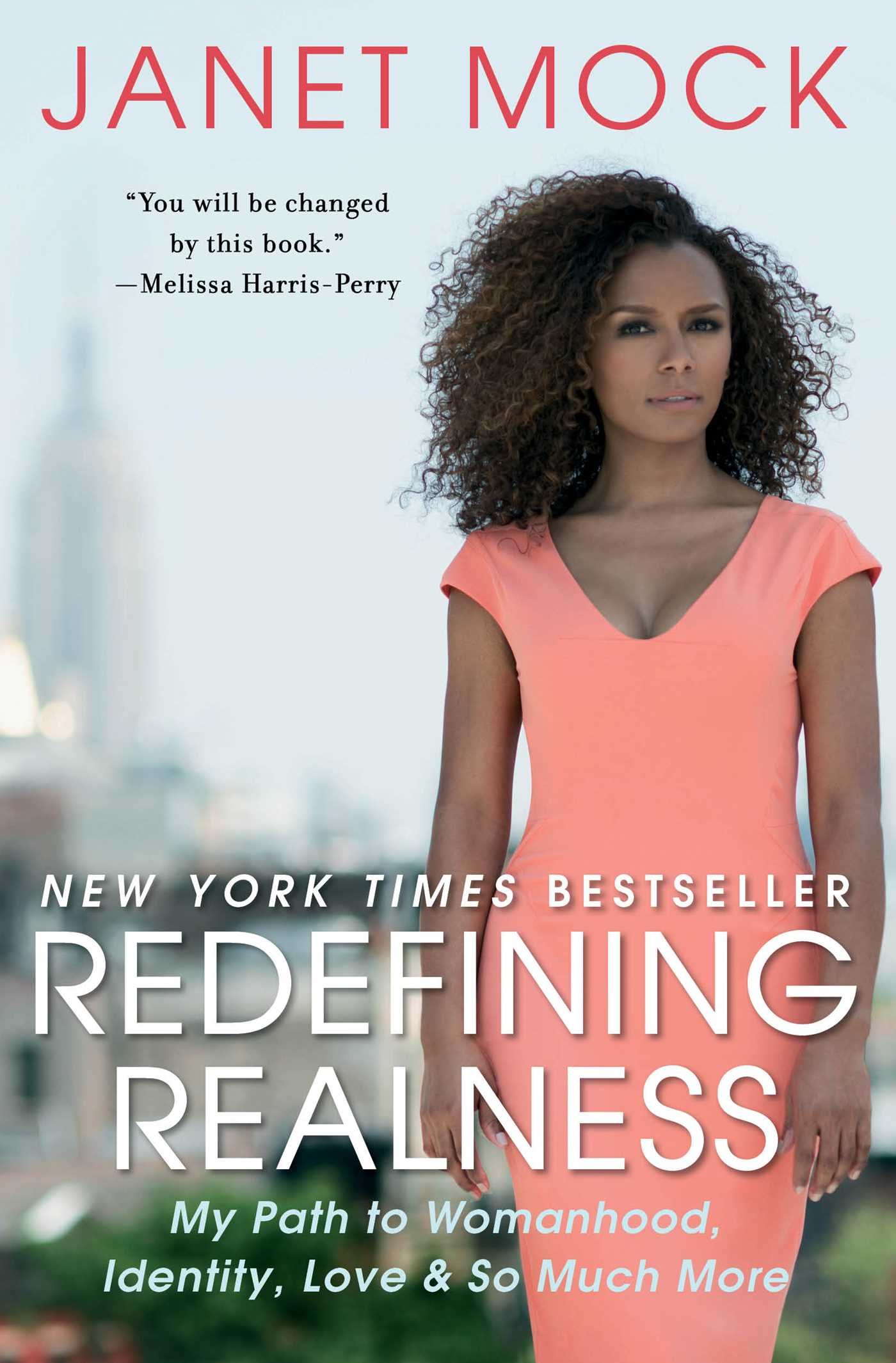
“Redefining Realness” (2014) by Janet Mock is her coming of age story as a transgender woman of colour in the US, the book she wishes she could have read growing up.

On page 4:

“I had yearned for true love ever since my junior year of high school, when I read Their Eyes Were Watching God in Mrs Chun’s English class. Zora Neale Hurston wrote that Janie’s ‘soul crawled out from its hiding place’ when she met Tea Cake. I wanted to come out of my hiding place. I wanted a love that could open me up to the world and to myself. I wanted my own Tea Cake who wanted all of me.”

From that moment I was hooked – and then found myself on a harrowing roller coaster ride. I had read her May 2011 Marie Claire article about her trans story, and wrote a post about her based on it in 2013, but that turned out to be the Disney version. The book goes into the sexual abuse and poverty she experienced, her parents’ drug addiction, and the porn and sex work she did.

The book mainly covers the period from 1989 to 2001, ages six to 18, growing up in her Black father’s Oakland and Dallas and in her Native Hawaiian mother’s Honolulu.

Omission: Although she makes a big deal of full disclosure and not hiding who you truly are, the book leaves out her first marriage, to her husband Troy. You are left to believe that her boyfriend Aaron was the first man to seriously love and accept her as she was.

In 2017 she said of that omission:

“What I love about writing in this genre is the sense of revealing myself to myself, revealing my desires to myself, getting to know and figure out the ways in which I think and the ways in which I act in the story that I choose to tell – having that, and then breaking the walls (breaking the page?) and telling that to the reader, and trusting them to not think any less of me for having made that distinct omission and choice.”

At times I did wonder if it was one of those fake memoirs – it is a bit too Oprahesque – but in the main it reads like an unfiltered trans woman’s story, the kind you hear on YouTube. If it is not strictly true, it is true enough.

In her sex worker days:

“In the small denim handbag that held my condoms, lube, baby wipes, hand sanitizer, scented lotion, and lip gloss, I carried a folded piece of paper with words from Maya Angelou’s I Know Why the Cage Bird Sings: ‘I didn’t come to stay.'”

Mock on Beyonce:

“She was the mold for me. She made me love being brown, she made me love my adaptable curly hair, she made me love that my thighs touched.”

Black-girl interns of New York on Mock:

“[They said] I was different because ‘You’re the right amount of black,’ the kind white woman editors aren’t intimidated to work with.”

– Abagond, 2018.

Source: Powell’s.

See also:

531

I Am Not Your Negro

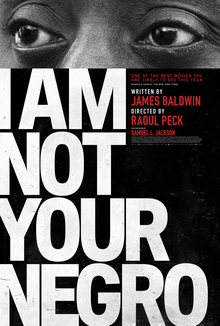
“I Am Not Your Negro” (2017), by Haitian film-maker Raoul Peck, sets the words of James Baldwin to images and videos of that “glittering republic”, the US, in the 1960s and the 2010s.

It is an excellent introduction to James Baldwin if you have never read him. And even if you have, there is probably stuff you have never seen or heard.

Medgar, Malcolm and Martin: It is based in part on a book that Baldwin could not finish: about Medgar Evers, Malcolm X and Martin Luther King Jr. They were his friends and one after another they were gunned down before the age of 40: 1963, 1965, 1968. The linchpins of the film.

Lorraine Hansberry, another friend, also appears – and then is taken from us too soon. Also dead before 40.

The film cannot match the power or depth of his essays, but it hits the main points through joining quote, image and video.

For example:

Cue: video of the Ferguson protests in 2014.

Baldwin voice-over (played by Samuel L. Jackson): I sometimes feel it to be an absolute miracle that the entire black population of the United States of America has not long ago succumbed to raging paranoia. People finally say to you, in an attempt to dismiss the social reality, “But you’re so bitter!”

Cue: video of Rodney King being beat up by police in 1991 as a violin plays.

Baldwin: Well, I may or may not be bitter. But if I were I would have good reasons for it, chief among them that American blindness or cowardice which allows us to pretend that life presents no reasons for being bitter.

Cue: the violin player himself, from “Love in the Afternoon” (1957). A White man and woman slow dance, presumably Audrey Hepburn and Gary Cooper.

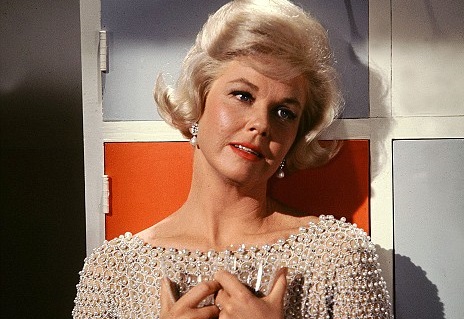
Baldwin: In this country, for a dangerously long time, there have been two levels of experience. One, to put it cruelly, can be summed up in the images of Gary Cooper and Doris Day –

Cue: Doris Day dancing in “Lullaby of Broadway” (1951).

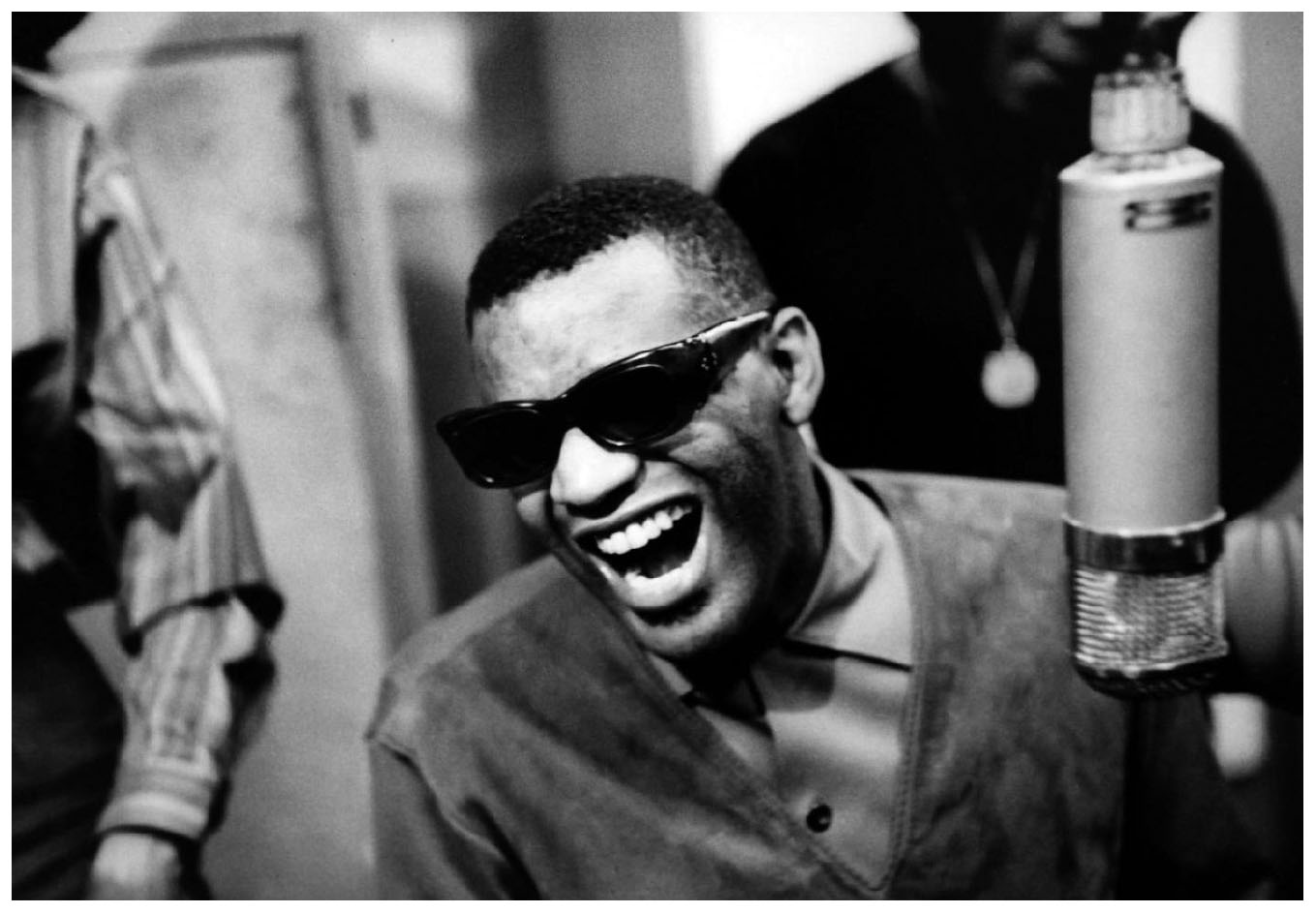
Baldwin: – two of the most grotesque appeals to innocence the world has ever seen. And the other, subterranean, indispensable, and denied, can be summed up, let us say, in the tone and face of Ray Charles.

Cue: Ray Charles singing “What’d I Say” (1959):

Ooh mama don’t you treat me wrong
Come and love your daddy all night long
All right, whoa, it’s all right
I know it’s all right now,
hey, hey, hey

When you see me in misery
Come on, baby, see about me

Baldwin: And there has never been any genuine confrontation between these two levels of experience.

Cue: Doris Day in “Lover Come Back” (1961) singing “Should I Surrender?”:

Should I be bad
Or nice?
Should I surrender?
His pleading words so tenderly
Entreat me
Is this the night that love
Finally defeats me?

Cue: still images of lynchings while Doris Day still sings.

Baldwin: You cannot lynch me and keep me in ghettos without becoming something monstrous yourselves.

Also Baldwin:

“We are our history.”

– Abagond, 2018.

Thanks to Mary Burrell for recommending this film.

See also:

555

Ursula K. Le Guin (1929-2018), a professor’s daughter in California who wrote about dragons and wizards and other things, passed away yesterday at age 88. She is best known for “The Left Hand of Darkness” (1969), about the ambisexual Gethenians, and her books about the wizards of Earthsea. But her best book, in my opinion, is “The Dispossessed” (1974), a pro-anarchist novel that I adored.

Requiescat in pace.

See also:


Statue of Liberty

Liberty Enlightening the World (1886- ), better known since 1924 as the Statue of Liberty, also called Lady Liberty, is a huge green statue of Libertas, a Roman goddess, that stands in New York harbour. With chains of slavery and tyranny broken at her feet, she holds up a torch lighting the way to liberty.

  • Location: 40.689 N, 74.044 W, on Liberty Island (formerly known as Bedloe’s Island), 1 km south of Ellis Island.
  • Orientation: faces south-east
  • Height: 46 metres (151 foot 1); with the pedestal, 93 metres (305 feet).
  • Shoe size: 879 (US)
  • Colour: copper, started turning green in 1900, mostly green by the 1930s, all green by the 1960s.
  • Inspired by:
    • the Colossus of Rhodes, one of the Seven Wonders of the Ancient World, and
    • the freeing of US slaves.
  • Visitors: 4 million a year

The electrically-lit torch used to be a wonder, but now we take it for granted.

The statue is designed to last a thousand years, though in Hollywood films it is a favoured target for apocalyptic destruction.

Statue of Liberty on September 11th 2001.

It was the brainchild of Édouard René de Laboulaye, president of the French Anti-Slavery Society. It was designed by French sculptor Frédéric Auguste Bartholdi and French engineer Gustave Eiffel, later famous for the Eiffel Tower.

It was a gift from France to the US for its 100th birthday, but by 1876 only the right hand and the torch were ready (pictured below).

Stereogram of the Statue of Liberty in 1876.

The statue stood for the friendship between France and US and the triumph of their shared Enlightenment values of freedom and democracy over slavery.

Was Lady Liberty supposed to be Black? According to the National Parks Service, Bartholdi used drawings of Egyptian women at first but in the end put his mother’s face on the statue. There is no evidence anyone asked him to make Lady Liberty White.

“The New Colossus” (1883) is a poem about the statue written by Emma Lazarus to raise money for the pedestal on which it stands. She was a champion for Jews in New York who had fled anti-Semitic violence and persecution in Russia.

From the poem:

“Give me your tired, your poor,
Your huddled masses yearning to breathe free,
The wretched refuse of your teeming shore.
Send these, the homeless, tempest-tost to me,
I lift my lamp beside the golden door!”

Among the wretched refuse were Frank Capra, Irving Berlin, Ayn Rand, Max Factor, Al Jolson, Cary Grant, Rudolph Valentino, Elia Kazan, Isaac Asimov, Claude McKay, along with the families of Colin Powell, Bruce Springsteen, Martin Scorsese, Cicely Tyson, Martha Stewart, and Ruth Bader Ginsburg – and the ancestors of 40% of US citizens. They all sailed past the Statue of Liberty on their way to Ellis Island to gain entry into the US.

The poem is not inscribed into the base of the statue and did not appear on the plaque inside till 1903. Even then it did not become the “meaning” of the statue till pro-immigration activists pushed for it in the 1930s.

Richard Spencer defending the statue of Robert E. Lee in Charlottesville, 2017.

Richard Spencer, alt-right defender of Confederate statues, commenting on Lazarus’ poem:

“It’s offensive that such a beautiful, inspiring statue was ever associated with ugliness, weakness, and deformity.”

– Abagond, 2018.

See also:

563

Busy Bee: Express

Remarks:

This came out in 1988. I doubt it ever charted. The sound of the train is sampled from another song of the same name, “Express” by B.T. Express, which was a hit in the US in 1974.

I like the song mainly for the video. It reminds me of the 1980s more than most videos – because it seems to have been filmed somewhere on this plane of existence, not the Hollywood one created by casting directors, make-up artists, wardrobe, etc. It avoids what I call the Jeanie Boulet Effect where everything is too good-looking to seem real, like the statues of Greek gods or the cleaned-up street in “Do the Right Thing” (1989).

See also:


gender dysphoria

Captain Kirk looking in the mirror and finding himself in the body of Dr Janice Lester.

Gender dysphoria, known in the US as “gender identity disorder” till 2013, is that thing where you feel your body does not match your gender. You might feel like a boy stuck in a girl’s body, for example. It is the main reason people come out as transgender.

Thought experiment: Imagine if you woke up tomorrow morning in the body of the opposite sex and knew you would be stuck in that body for the rest of your life.

If you suffer from gender dysphoria, you will probably regard that as an amazing piece of luck, a miracle, a prayer answered.

And if you do not suffer from gender dysphoria, you will now:

Your body: When you look in the mirror you will see a man instead of a woman or a woman instead of a man. Your body will be too hairy or too smooth, too tall or too short. Your voice will come out too high or too low. You will feel like a prisoner in your own body, marooned, where no one can see the real you.

Finding a way out: There is a 41% chance you will attempt suicide, especially if your family and friends turn their backs on you. Which they might. Or you might start cutting yourself. Or sink into drug or drink to make the pain go away, if only for a short time (maybe adding an addiction to your troubles too).

Middle school: If you are under 12 you will probably “grow out of it” and accept your new body. But since you have yet to go through puberty it could also get worse, way worse, as your body becomes even more like the wrong sex – amid the social dystopia that is middle school.

The gatekeepers: To get back to something like your old body you will have to persuade a psychiatrist that you feel like you are stuck in the wrong body. Some might not believe you or make you “prove” it. Gender dysphoria – the very thing you are going through – is right there in the DSM-5, the book that US psychiatrists go by, but the wording is vague and not all of them understand it.

Transition: And even when you do get a doctor’s note saying you have gender dysphoria, you will still have to take hormones and get several surgeries. It will take many years and much money – and even then you will probably not get all the way back to looking on the outside like how you feel on the inside. You might not even be able to pass. The gender dysphoria will probably lessen (or hopefully lessen enough by the time you run out of money), but it will never completely go away.

Add to all that, hatred, fear, and contempt by transphobic people – who would do precisely the same thing in your shoes.

That was just the beginner’s level.

Now go back to the start of the thought experiment but this time without any memory of your former life.

– Abagond, 2018.

Source: Inspired by In Transit.

See also:

534


Jeanie Boulet

Jeanie Boulet was the character that Gloria Reuben played from 1995 to 1999 on “ER”, a hospital show. She made a guest appearance in 2008. She was one of the first long-running characters on US television to be HIV positive.

Job description: Boulet was a physician’s assistant at County General Hospital’s emergency room (ER), somewhere in Chicago.

Risk factors: In 1996 she tested positive for HIV. It causes AIDS, an incurable disease, but as of 2008 she was still AIDS-free. Boulet got HIV from her unfaithful husband Al. Long-term partners were the number one cause of HIV among Black women. And straight Black women like Boulet were the main women getting HIV then. So that part was not unrealistic.

Beauty: What was unrealistic is that Boulet was then one of the most beautiful women in North America, at least according to this blog, one unlikely to be married to a construction worker named Al or be working at a hospital somewhere in Chicago. More likely she would be in New York or Los Angeles trying to become an actress, model or singer. And instead of working at an ER she might be, say, working on Stage 11 at Warner Brothers.

More than just a pretty face: She was so beautiful I could watch her with the sound off. That they gave her actual words to say, even her own storyline (an optional feature for Black characters) was icing on the cake.

Acting: Vulture in 2008 put it well:

“No one suffers like Jeanie Boulet, and last night’s episode was a welcome throwback to the days when it seemed like every episode forced Jeanie to process some piece of world-shattering news. There’s always been great pleasure in Reuben’s beautiful, open face in moments like that; she played those scenes to the hilt, creating in us a great sympathy for her character that’s eclipsed how we’ve felt about any subsequent TV character other than maybe Buffy. We couldn’t stand to watch her suffer so, but we couldn’t stop watching her suffer, and we died a little with every hurt the producers hit her with.”

John McWhorter, on the other hand, dismisses her, along with Denise Huxtable of “The Cosby Show” and Lilly Harper of “I’ll Fly Away” (two other favourites of mine) as “low-key, dreamy black women” who appeal to those who do not like the Mammy stereotype. Like that is a bad thing.

Not a stereotype: Jeanie Boulet was not “sassy”, she did not speak in Mock Ebonics, she was not a Black Best Friend, she was not fat, ugly and asexual, neither was she sexy in a trashy way, she did not live on welfare with five children and no long-term partner, she was not a man in a dress, she was not a stripper.

Noble But Boring Middle-Class Negro? This is the Hollywood stereotype she falls closest to. She was spared that fate by having moral complexity and a (tragic) love life. And she did not wink out of existence when there was no White people to see her.

– Abagond, 2018.

Source: Google Images, Tumblr, Vulture (2008), “Authentically Black” (2003) by John McWhorter.

See also:

575

Taylor Michael Wilson

Wilson, October 22nd 2017. (Furnas County Sheriff’s Office via AP)

Taylor Michael Wilson (c. 1991- ) is a White man in the US who has been – brace yourself – charged with terrorism. He is even in jail. But it does not seem to be getting much news coverage. When I googled it, CNN was listed first and then – Teen Vogue.

On October 22nd 2017 at two in the morning the California Zephyr, an Amtrak train with about 175 people travelling from California to Chicago, suddenly lurched to a stop – in Nebraska in the middle of nowhere. The lights went out and the emergency lights came on.

The crew looked for who pulled the emergency brake and found Wilson in the rear locomotive sitting in the engineer’s seat “playing with the controls.” He was talking kind of crazy. Even though he had a gun and tried to reach for it, they were able to subdue him.

Wilson:

“I’m the conductor, bitch!”

The police from the nearest town arrived an hour later. When they searched him they felt something in his left pocket. They asked him what it was. He said, “My dick.” It was a speedloader filled with bullets. They also got the .38-calibre handgun it went with.

In his backpack:

  • three loaded speedloaders,
  • box of .38 ammunition,
  • hammer,
  • fixed blade knife,
  • tin snips,
  • scissors,
  • tape measure,
  • respirator-style mask.

He also had business cards from:

  • the National Socialist Movement,
  • William Davidson of the Covenant Nation Church in Oneonta, Alabama.

The National Socialist Movement (NSM), according to the ADL, is the largest neo-Nazi group in the US. It calls itself “the shock troops for the white race.” With the rise of Trump and his White nationalist talking points, they think they got a shot at the big time.

William Davidson is better known as Bill Riccio, a suspected paedophile and an infamous neo-Nazi even among neo-Nazis. He used to run the White Aryan Resistance.

Both NSM and Riccio are believed to have been at the Charlottesville riot. So was Wilson says his cousin.

Wilson’s cousin is also his roommate, in St Charles, Missouri, 21 minutes from Ferguson. He says Wilson started acting strange last June when he joined an “‘alt right’ neo-Nazi group” he found online. In August he travelled to Charlottesville with a home-made shield and a bulletproof vest. And most likely a gun too: he has a conceal permit and carries a gun everywhere.

Killing Black people: His cousin says Wilson is “serious about killing Black people.” In April 2016 he pointed a gun at a Black woman on Interstate 70. He was not charged with a crime.

On Wilson’s mobile phone the FBI found:

  • “100 Deadly Skills”,
  • “The Anarchists Cookbook”,
  • “Poor Man’s James Bond”, volume 5, by Kurt Saxon,
  • “The Ranger Handbook”,
  • “The Ultimate Sniper” by John L. Plaster.

The sort of stuff terrorists read.

Behind his refrigerator in a hidden compartment:

  • a bulletproof vest,
  • a hand-made shield,
  • over a 1,000 rounds of ammunition,
  • ammunition reloading supplies,
  • gunpowder,
  • a pressure plate (probably for setting off a bomb),
  • white supremacy documents and paperwork.

They also found 15 guns, two of them possibly illegal.

– Abagond, 2018.

Update (October 10th): Wilson has been sentenced to 14 years in federal prison. When asked why he stopped the train, he said that he was “going to save the train from the Black people.”

Source: mainly Google Images, NPRHeavy, and SPLC.

See also:

542

#MLKalsoSaid

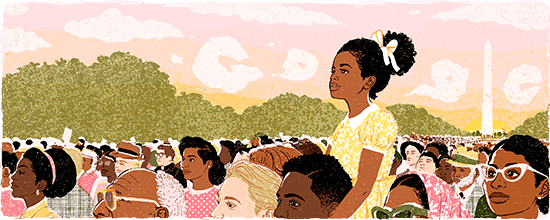
The Google Doodle for January 15th 2018, for Martin Luther King Day in the US.

#MLKalsoSaid (2015- ) is a hashtag on Twitter where people quote Martin Luther King, Jr to show that he said more than just that one thing that White people love to quote:

“I have a dream that my four little children will one day live in a nation where they will not be judged by the color of their skin but by the content of their character.”

Some of what has been tweeted under #MLKalsoSaid:

“But it is not enough for me to stand before you tonight and condemn riots. It would be morally irresponsible for me to do that without, at the same time, condemning the contingent, intolerable conditions that exist in our society.”

“A riot is the language of the unheard,”

“A true revolution of values will soon look uneasily on the glaring contrast of poverty and wealth.”

“All of us are on trial in this troubled hour.”

“America is going to hell if we don’t use her vast resources to end poverty and make it possible for all God’s children to have the basic necessities of life.”

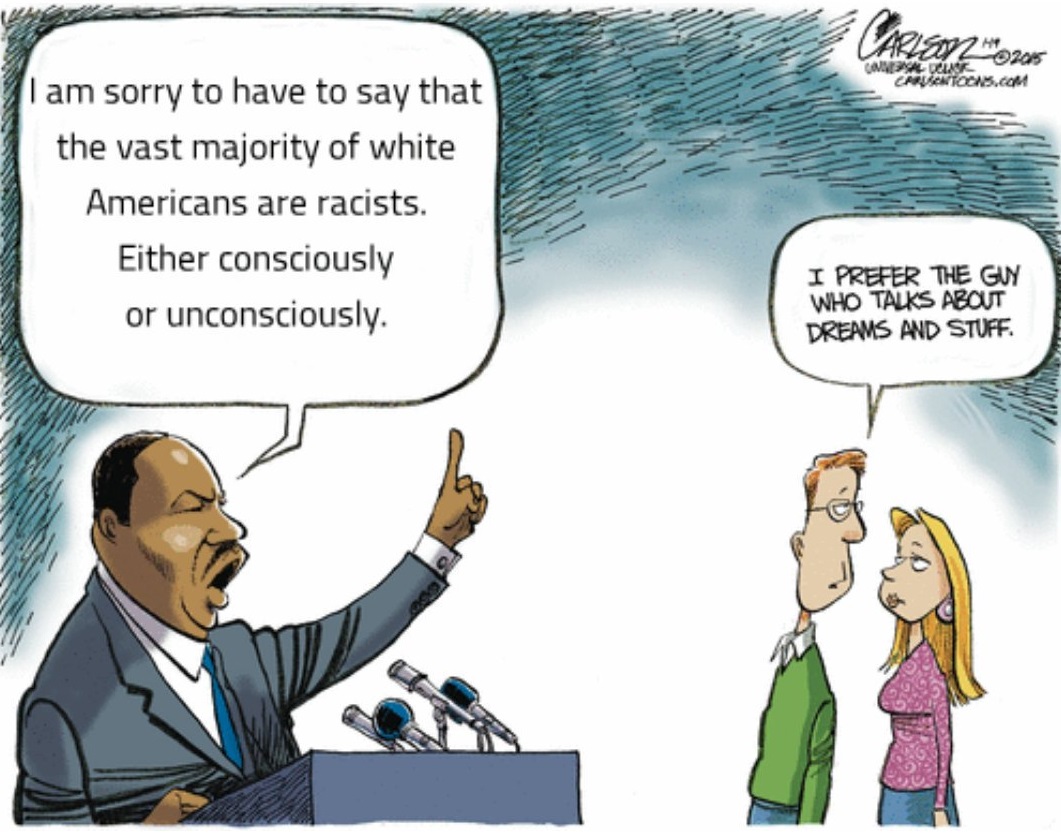
“I am sorry to have to say that the vast majority of white Americans are racists, either consciously or unconsciously.”

“Injustice anywhere is a threat to justice everywhere. We are caught in an inescapable network of mutuality tied in a single garment of destiny. Whatever affects one directly affects all indirectly.”

“It is cruel jest to tell a bootless man that he ought to lift himself up by his own bootstraps”

“No, no, we are not satisfied, and we will not be satisfied until justice rolls down like waters and righteousness like a mighty stream.”

“Of all the forms of inequality, injustice in health care is the most shocking and inhumane.”

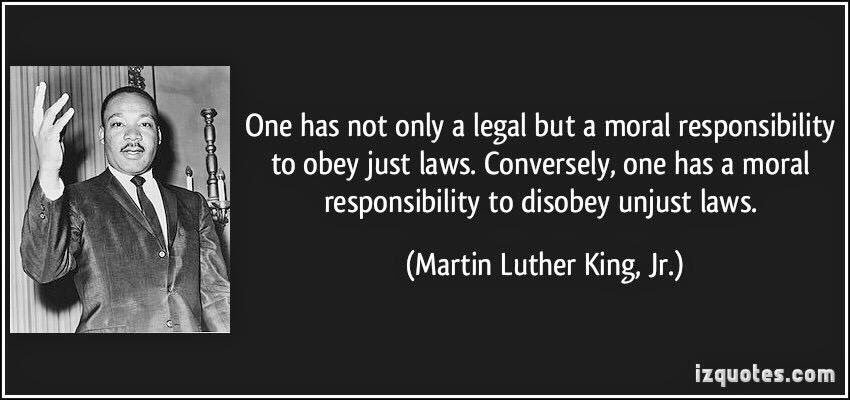
“One has not only a legal but a moral responsibility to obey just laws. Conversely, one has a moral responsibility to disobey unjust laws.”

“Our Summers of riots are caused by winters of delay.”

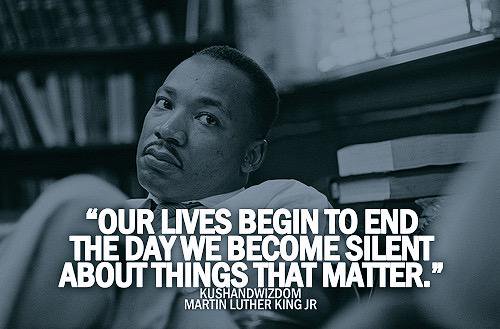
“Our lives begin to end the day we become silent about things that matter.”

“Poverty is one of the most urgent items on the agenda of modern life.”

“The curse of poverty has no justification in our age. It is socially as cruel and blind as the practice of cannibalism.”

“The evils of capitalism are as real as the evils of militarism and evils of racism.”

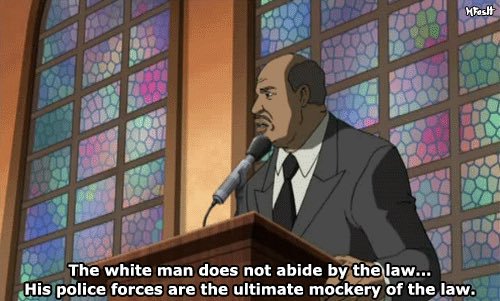
“The white man does not abide by the law… His police forces are the ultimate mockery of law.”

“There aren’t enough white persons in our country who are willing to cherish democratic principles over privilege.”

“Three hundred years of humiliation, abuse and deprivation cannot be expected to find voice in a whisper.”

“True compassion is more than flinging a coin to a beggar.”

“We can never be satisfied as long as the Negro is the victim of the unspeakable horrors of police brutality.”

“We must see now that the evils of racism, economic exploitation and militarism are all tied together.”

For more, see #MLKalsoSaid on Twitter.

– Abagond, 2018.

See also:

577

Toni Braxton: Deadwood

Remarks:

Not her best song, but it is what is ringing in my head of late. Must be the cello 😉 In 2017 it reached #34 on the US R&B chart.

See also:

Lyrics:

Cant believe that I’m home all alone
Doesn’t stop me from wanting to see you
Why the hell won’t you pick up the phone?
Hello?
Don’t know which way is up anymore
No excuses and nothing to cling to
Oh you’re shaking me right to the core

Just wanna let you know
I won’t let this one go
You got me down, but I ain’t out
Think you got me good
Left me like some deadwood
I may be down, but I’ll turn it round

All my friends say that “I told you so”
They ain’t making me feel any better
Buttons up and it’s on with the show
Got me aching inside of my skin
No excuses and nothing to cling to
You will pay for the state that I’m in

Just wanna let you know
I won’t let this one go
You got me down, but I ain’t out
Think you got me good
Left me like some deadwood
I may be down, but I’ll turn it round

But you gon’ see wiser me
And I won’t break down easily

Just wanna let you know
I won’t let this one go
You got me down, but I ain’t out
Think you got me good
Left me like some deadwood
I may be down, but I’ll turn it round

Just wanna let you know
I won’t let this one go
You got me down, but I ain’t out
Think you got me good
Left me like some deadwood
I may be down, but I’ll turn it round

Don’t you go
Don’t you go
[?]

Source: A-Z Lyrics.