Feeds:
Posts
Comments

President Obama with Kamala Harris, now a senator from California.

Welcome to Asian American History Month 2018! This year I am going to centre my attention on South Asia and its diaspora, especially in the US. South Asian history is a huge hole in my education.

Some topics I am thinking of doing (or have already done), here listed by century:

  • -2500: Dravidians, Indus civilization, Indus seal, Mohenjodaro Dancing Girl
  • -2400:
  • -2300:
  • -2200:
  • -2100:
  • -2000:
  • -1900:
  • -1800:
  • -1700:
  • -1600:
  • -1500: Indo-Aryans, Hinduism, Vishnu, caste, karma, Dalits, eunuchs
  • -1400:
  • -1300:
  • -1200:
  • -1100:
  • -1000:
  • -900:
  • -800:
  • -700:
  • -600:
  • -500: Buddha, Buddhism, Mahavira, Jainism
  • -400: Maurya Empire, Bhagavad Gita, Panini
  • -300: 
  • -200: Ashoka, Charaka, Pillar of Ashoka
  • -100: Kautilya
  • +1:
  • +100:
  • +200: Seated Buddha from Gandhara
  • +300: Gupta Empire
  • +400: gold coins of Kumaragupta I
  • +500: Aryabhata, zero
  • +600:
  • +700: Adi Shankara
  • +800: Statue of Tara
  • +900: Rajaraja Chola
  • +1000:
  • +1100: Basava
  • +1200: Amir Khusrau
  • +1300:
  • +1400: Kabir, Babur
  • +1500: Guru Nanak, Krishanadevaraya, Mirabai, Akbar
  • +1600: Mogul Empire, Mogul miniature, Malik Ambar, Afro-Indians, Dara Shikoh, Shivaji
  • +1700: Nainsukh, William Jones
  • +1800: The British Raj, Sepoy Mutiny, Rammohun Roy, Lakshmi Bai, Jyotirao Phule, Deen Dayal
  • +1900: Indian Americans, Bhagat Singh Thind, Annie Besant, Tagore, Periyar, Iqbal, Gandhi, Jinnah, Ambedkar, S. Chandrasekhar, V.K. Krishna, Subbulakshmi, Satyajit Rai, Bollywood, Raj Reddy, Salman Rushdie, V.S. Naipaul, Homi K. Bhabha, Yasmeen Ghauri
  • +2000: Apu, Dinesh D’Souza, Shilpa Shetty, Jhumpa Lahiri, H&M, , Mindy Kaling and Elle, Nina Davuluri, Lilly Singh, Humayun Khan, Ajit Pai, Nikki Haley, Kamala Harris, Fareed Zakaria, Rohingyas.

By topic:

There is no way I can do all of those in a month, of course. I will be thrilled to pieces if I can get ten of them done. I will post on other things as well.

Posts so far:

You can add your suggestions below. Not just topics, but books, films, websites, blogs, music, etc, as well.

Thanks!

– Abagond, 2018.

See also:


Romanization

US coin with Roman architecture, Roman letters, Roman language (except for “one” and “of”, everything else either comes from Latin or is Latin)

Romanization (fl. -133 to +400) is the process by which the Roman Empire spread its culture. It profoundly affected western Europe, so much so that the base culture there is Roman, so much so that the West continued to see ancient Rome as a model in the 1400s and the 1700s. It is why the government buildings in Washington, DC look like Roman temples.

The standard quote on Romanization comes from Tacitus. In the year 98 he said of Agricola, the governor of Britain (and his father-in-law):

“he began to train the sons of the chieftains in a liberal education, and to give a preference to the native talents of the Briton … As a result, the nation which used to reject the Latin language began to aspire to rhetoric:

“further, the wearing of our dress became a distinction, and the toga came into fashion, and little by little the Britons went astray into alluring vices: to the promenade, the bath, the well-appointed dinner table. The simple natives gave the name of ‘culture’ to this factor of their slavery.”

But that “civilizing mission” was the exception, not the rule.

Romanization in general was both far more thorough and far less top-down:

  • Thorough: Latin wiped out at least 25 languages in western Europe. Who still speaks Etruscan, Lusitanian or Celtiberian? Latin was spoken not just by the sons of chieftans. Instead nearly everyone spoke it, becoming in time French, Italian, Spanish, Portuguese, etc.
  • Not top-down: The main religion in western Europe goes back to Roman times but the people there worship not Roman gods but a Palestinian preacher. Rome did take over Christianity in the form of Catholicism, but Rome itself was first taken over by a Palestinian cult. And it was not just Palestine: Roman culture was heavily affected by Greek culture too. The conqueror conquered by the conquered.

Even what people ate and drank in western Europe changed, going from porridge and beer to bread and wine in just a few hundred years.

The better quote for understanding what was going on is this:

“All roads lead to Rome.”

Roman roads and the Roman peace: Before the rise of Christianity, the only bit of culture Rome forced on people was its emperor cult. Meanwhile Rome wound up creating a world at peace without borders, a world of cities, towns, ports, bridges and, most of all, roads. Roads along which cultural change could easily flow, creating a cosmopolitan culture that was only partly Roman. First came the soldiers, some of whom settled down, then came the merchants, and then came the crazed saints. The one-way sign is an invention of the 1900s.

In the eastern part of the empire the effect was more indirect. They already had cities and roads and all that. The Empire was largely just an administrative top layer. But a reaction did set in. The Jews rose up – their religion did not allow an emperor cult – while Greek culture returned to its pre-Roman roots.

– Abagond, 2018.

Sources: mainly Google Images (2018); “The Birth of Classical Europe” (2010) by Simon Price and Peter Thonemann; “Agricola” (98) by Tacitus. 

See also:

560

Remarks:

I did not think much of this song when it came out in 2016 but now it is ringing in my head.

See also:

Lyrics:

[Dreezy:]
I just wanna take away the pressure
I knew you were special when I met you
Hate the way you bottle your confessions
I wait for you, I gotta know, I gotta know
Who you… who you… are
And you ain’t gotta worry when you with me
I vibe with your mental because you get me
And whenever you want me, you can hit me
I’ll be there in a minute boy
I’m tryna get close to you, to you, whoa-whoa

[Dreezy & T-Pain:]
Anything you want, I got it
In my feelings, boy, I’m so about you
I just wanna get to know your body
Baby, anything goes
When I’m tryna get close to you, to you
Yeah, yeah, yeah, oh, no
Oh, na, na, na
Oh, na, na
Oh, na, na, na
Na

[T-Pain:]
I just wanna make this a “win-win”, baby
So tell me is you out or is you in, baby
We might just end up sharing skin babies
Siamese twins, babe
I wanna get close to you, oh, whoa-oh, oh-oh-oh
Ah, alright, oh
Baby, I think we done talked enough
Hit some of this kush and take this cup
Baby, I ain’t tryna make love
You know that I’m a thug, tryna fuck
So what’s up with you?
What’s up with you?
All I know… oh, girl I’d say

[Dreezy & T-Pain:]
Anything you want, I got it anything
In my feelings, boy, I’m so about you
I just wanna get to know your body
Baby, anything goes
When I’m tryna get close to you, to you
Yeah, yeah, yeah, oh, no
Oh, na, na, na
Oh, na, na
Oh, na, na, na
Na

[Dreezy:]
Said I was through with niggas, but I really want him
His swagger got me falling like a leaf in autumn
And I don’t give a damn about his baby mama
He always on my mind, I think I’m ’bout to call him
It might not last forever but it speed the healing
This ain’t the same with him, I get a better feeling
Don’t care ’bout what they say, it ain’t nobody’s business
I said I wouldn’t fall, I guess you got me slippin’

[Dreezy:]
I’m tryna get close to you, yeah
I’m tryna get close to you, yeah, yeah, yeah
To you, yeah, yeah, yeah
Yeah, yeah, yeah
Oh, na, na, na
Oh, na, na, na

[Dreezy & T-Pain:]
Anything you want, I got it anything
In my feelings, boy, I’m so about you
I just wanna get to know your body
Baby, anything goes
When I’m tryna get close to you, to you
Yeah, yeah, yeah, oh, no
Oh, na, na, na
Oh, na, na, na
Oh, na, na, na
Oh, na, na, na

Source: AZ Lyrics.

the colour pink

computer pink (#ffc0cb)

The colour pink (1733- ) is a colour between red and white, the colour of coral or salmon. Or so said the Oxford dictionary in 2011. There is no pink in the rainbow, in the “Iliad” or the “Odyssey”, in the King James Bible. Shakespeare used the word pink – “the very pink of courtesy” says Mercutio in “Romeo & Juliet” – but never as a colour.

Note: This post mainly applies to the English-speaking world, especially the US.

By the 1570s “pink” was the name of a flower, Dianthus plumarius:

By the 1680s “pink-coloured” was an adjective, meaning the same colour as the flower.

By 1733 “pink” was the name of a colour. This was well after the late 1600s when Anglos started seeing the world in terms of skin colour, which is part of why they call themselves White and not Pink.

In 1834 “pink skin” first shows up in print.

In 1908 “pink is for girls” first appears. But back then in the US it was not yet the self-evident truth that it later became.

In 1918 pink was still mainly for boys. Earnshaw’s Infants’ Department, a trade publication, observed:

“The generally accepted rule is pink for the boys, and blue for the girls. The reason is that pink, being a more decided and stronger color, is more suitable for the boy, while blue, which is more delicate and dainty, is prettier for the girl.”

Early Disney heroines wore blue: Snow White, Cinderella, Alice in Wonderland, Wendy in Neverland, and Sleeping Beauty.

In the 1940s the tide began to turn and was given a huge push in the 1950s when Eisenhower became the US president: his wife Mamie (pictured above) liked to wear pink because she thought it looked good with her blue eyes.

But in the 1970s feminism pushed back. There are Sears catalogues from that period where there are no pink clothes for little girls. Hard to believe now – because:

In the 1980s came the deluge. With sonograms doctors could determine a child’s sex before birth. Which meant that all the baby stuff could now be gendered (and therefore sold in greater numbers). Pink spread from sleepers and crib sheets to strollers, car seats and riding toys. By 1990 toy makers were heavily marketing things pink to little girls.

barbie-pink

Barbie pink (#e0218a)

It was a snowball effect driven in part by how children understand gender:

Between the ages of 3 and 6 most children know what gender they are but do not think it is permanent. They think that what makes them a boy or a girl is how they look and what they like. As if having long hair or liking Barbie dolls makes one a girl. They pick up on society’s gender stereotypes and turn them into a kind of cult. This is when many girls go through a princess or ballerina phase, when cooties become a health concern.

And so “pink is for girls”, a piece of fashion from the 1950s, was turned into an act of gender expression that now seems almost inborn.

– Abagond, 2018, 2019.

Update (2019): Added a sample of Barbie pink.

Sources: Etymology Online (2018); Vox (2015); Smithsonian (2011); “Cinderella Ate My Daughter” (2011) by Peggy Orenstein.  

See also:

530

Insecure

Issa (Issa Rae) and Molly (Yvonne Orji) on “Insecure” in 2017. (HBO)

“Insecure” (2016- ) is a US television show on HBO that was created by and stars Issa Rae, she of “Awkward Black Girl” (2011) on YouTube. It has been renewed for a third season. It tells the tale of two best friends, Issa Dee (Issa Rae) and Molly Carter (Yvonne Orji), and their search for success and love in Los Angeles. In 2018 it won an NAACP Image Award.

Overall: One of the best shows I have seen on television, but the bad language and nudity seem overdone. “It’s HBO!” I have been informed.

Broadcast Standards: HBO, unlike most television in the US, is allowed to use four-letter words and show people naked and having sex. Not only does “Insecure” seem to take it to an unnecessary degree, it confirms stereotypes about Black people as being oversexed and foul-mouthed. In real life White people are no better, of course, but you do not see much of that on television.

But otherwise it is something I have long wanted to see. In 2010 in my post “Black people according to American television” I said:

“There are not many middle-class blacks. Most of them are noble but boring – and have little or no love life.”

It is not just me: Zora Neale Hurston noticed the same thing in books and film back in the 1940s: people of colour (which back then included Jews) were “made of bent wires without insides at all.”

“Insecure” runs counter to all of that:

  • Issa and Molly’s love lives are shown in full.
  • Unlike “The Cosby Show”, the characters and circumstances are not idealized.
  • Unlike “The Wire”, the Black middle-class does not wink out of existence once they leave work and can no longer be observed by White people.

Bechdel Test for Race: It passes this easily: Black characters talk to each other all the time about something other than White people. But it does deal with issues of race too, like gentrification, Black-on-Brown racism, and the (White) old boys club.

Compared to “Awkward Black Girl” (I rewatched the first five episodes):

  • Longer episodes (30 minutes, not 13 or so).
  • Better make-up, cinematography and musical direction.
  • More cursing and nudity.
  • Deeper characters and storylines.
  • Not as funny.
  • Less multiracial.
  • More about love, less about work.

Issa Rae is still the star and still her awkward self.

Amanda Seales, who I also know from YouTube, is a regular character.

From YouTube to Hollywood: On YouTube people of colour can have complete control. Hollywood, on the other hand, is still a White man’s world. If Issa Rae had not stood her ground, most likely her character would have been made a light-skinned woman with long, straight hair. And the storylines would have been made “universal” – meaning “for White people”.

Behind the scenes:

  • Larry Wilmore acts as the bridge between her and (White) Hollywood.
  • Melina Matsoukas is an executive producer and directs most of the episodes. She is best known for her music videos, especially Beyonce’s “Formation”.
  • Raphael Saadiq is the music director.

All three are Black.

– Abagond, 2018.

See also:

587

Programming note #35

My computer has been acting up of late so my posting might become yet more erratic.

TMI: My Windows 10 machine is in Update Hell and my fan runs high most of the time. I am afraid it is going to get fried. My machine is six years old, so maybe the “upgrades” that Microsoft constantly downloads are crushing it. For me Windows 10 is as much of a mess as Windows 95 was: freezing, rebooting, no DVD support, and even a Blue Screen of Death the other week. My computer is a Toshiba Satellite L735D laptop running Windows 10 Home with 3.6 GB of usable RAM. I bought it as a Windows 7 machine.

See also:

Remarks:

This came out in 1985 and went to #12 in their native Britain and to #6 across the Anglosphere as a whole. It holds up surprisingly well some 30 years later. It is meant to be heard after “Broken”. That is how it is played in concert, though it is too long for pop radio.

Even though I knew they were British the video seemed like it was filmed in the US. I was not far wrong: it was filmed in Canada, at Emmanuel College in Toronto.

I bring up this song because this is the kind of music the record companies wanted Sade sing – and would have sung if she did not believe in herself and only cared for fame and fortune. Instead she gave us “Your Love is King” and “Smooth Operator”, just the way she meant them to be, the songs the record companies thought would never sell.

See also:

Lyrics:

I wanted to be with you alone
And talk about the weather
But traditions I can trace
Against the child in your face
Won’t escape my attention
You keep your distance with a system of touch
And gentle persuasion
I’m lost in admiration
Could I need you this much?
Oh, you’re wasting my time
You’re just—, just—, just wasting time

Something happens
And I’m head over heels
I never find out
‘Til I’m head over heels
Something happens
And I’m head over heels
Ah, don’t take my heart, don’t break my heart
Don’t—, don’t—, don’t throw it away
Throw it away
Throw it away

I made a fire, and watching it burn
Yeah, thought of your future
With one foot in the past
Now, just how long will it last?
Now, now, now, have you no ambitions?

(Mm, what’s the matter with my…)
My mother and my brothers used to breathe in clean air
(Nothing ever changes when you’re acting your age.)
And dreaming I’m a doctor
(Nothing gets done when you feel like a baby.)
It’s hard to be a man when there’s a gun in your hand
(Nothing ever changes when you’re acting your age.)
Oh, I feel so

Something happens
And I’m head over heels
I never find out
‘Til I’m head over heels
Something happens
And I’m head over heels
Ah, don’t take my heart, don’t break my heart
Don’t—, don’t—, don’t throw it away

And this is my four-leaf clover
I’m on the line, one open mind
This is my four-leaf clover

La, la, la…
In my mind’s eye
La, la, la…
One little boy, one little man
La, la, la…
Funny how time flies

Beychella

Beychella (April 14th 2018) is Beyoncé’s performance at the 2018 Coachella musical festival in California. She became the first Black woman ever to headline at Coachella in its 19-year history. Her two-hour performance was so amazing that it made the news in Brazil, needed a new word in the English language – and drew comparisons to Michael Jackson, even among those over 30.

She sang 26 songs, went through five costume changes, performed “Déjà Vu” with her husband Jay-Z, danced “Get Me Bodied” with her sister Solange (now in her blonde phase), and had a surprise reunion with her old band mates from Destiny’s Child – Kelly Rowland and Michelle Williams. It was their first reunion in five years and marked the band’s 20th anniversary.

Coachella is a faux bohemian arts and music festival that takes place every spring out in the desert east of Los Angeles. “Faux” because few actual bohemians (or ordinary Black people, for that matter) can afford it: tickets run from $426 to $1000 – and that does not count food, room and travel. The whole thing can easily run $2000 a person.

All Black Everything: Beyoncé made it like Homecoming at an HBCU (Historically Black College or University). She had a marching band (made up of former HBCU marching band members), a drum line and a hundred dancers. She built the show on them. They were dressed in yellow and black, the colours of Alpha Phi Alpha, the fraternity of Frederick Douglass and Martin Luther King, Jr. She was dressed like Queen Nefertiti, and then like a sorority sister from a fictional Beta Delta Kappa. She quoted Malcolm X, sampled Nina Simone’s “Lilac Wine”, and sang “Lift Every Voice and Sing”, the Black national anthem. It was great, it was glorious, it was the way it should be.

Beta Delta Kappa: Queen Nefertiti, Black Panther, Black Power, the Beyhive.

She also added $100,000 to the scholarship money she gave last year for HBCUs.

Too Black? Her mother had warned her:

“I told Beyonce that I was afraid that the predominately white audience at Coachella would be confused by all of the black culture and black college culture because it was something that they might not get.”

But Beyoncé said:

“I have worked very hard to get to the point where I have a true voice and at this point in my life and my career I have a responsibility to do what’s best for the world and not what is most popular.”

At long last! For 18 years she cranked out robotic, raceless, “universal” pop music. A huge talent wasted on playing it safe. Not till 2016, with her Super Bowl performance of “Formation” and her album “Lemonade”, did she seem to discover that she was a Black woman.

Doctor’s orders: She was to perform at Coachella last year, but her doctor advised against it: she was pregnant with twins. But it was all to the good. Beyoncé:

“So I had time to dream and dream and dream with two beautiful souls in my belly and I dreamed up this performance.”

– Abagond, 2018.

See also:

534

In the video above a top White American singer, Taylor Swift, sings “September”, the classic song by Earth, Wind & Fire. Here is the original:

See also:

Starbucks

Starbucks (1971- ) is a White American chain of coffee houses that is found on every continent except for Antarctica. It is known for selling overpriced coffee and, to some, as a force for gentrification, globalization or US Americanization.

At first they were just a shop in Seattle that sold roasted coffee beans. But then in 1983 employee Howard Schultz travelled to Italy and fell in love with its espresso bars. The Starbucks website:

“He had a vision to bring the Italian coffeehouse tradition back to the United States. A place for conversation and a sense of community. A third place between work and home.”

Schultz bought out the company in 1987. From then until the Crash of ’08 Starbucks spread across the earth like a weed. Today in 2018 they have 28,039 shops in 77 countries and employ more than 300,000 people.

Business model: In the 1700s coffee houses provided free newspapers and let people hang out, knowing they would invite their friends and keep buying coffee. Starbucks does the same, providing free Internet.

Socially conscious: They pride themselves in being socially conscious. They even have a 12-page Conflict Minerals Disclosure statement and a 3-page statement on their Animal Welfare-Friendly Practices.

On their Company Information page:

“We make sure everything we do is through the lens of humanity – from our commitment to the highest quality coffee in the world, to the way we engage with our customers and communities to do business responsibly.”

Humanity: viral videos are now coming out that make it clear that their lens of humanity does not always extend to Black people.

In January 2018 in California, Brandon Ward, a Black man, a paying customer, was not allowed to use the toilet – while a White man who bought nothing was. As if it was Whites-only. Thus their “lens of humanity” and “sense of community”.

In April 2018 in the city centre of Philadelphia, just last Thursday the 12th, when a Black man asked to use the toilet he and his friend (also Black) were arrested. They were not doing anything wrong. True, they had not bought anything while waiting for a third person to show up – but White people do that all the time at Starbucks without the manager making an emergency telephone call to the police.

Six police officers arrived. When a customer asked why they were arresting the men, they said nothing. And charged them with nothing – while holding them for eight hours.

“Sense of community” – Philadelphia, 18th and Spruce, April 16th 2018. (REUTERS/Mark Makela)

Kevin Johnson, the head of Starbucks, at first issued a weak apology and refused to say it had anything to do with race. But now that it has blown up in his face as a public relations disaster, now he is calling it “reprehensible” and promises to shut down 8,000 shops for a Tuesday afternoon in May (the 29th) to provide “race-bias education”. Lessons in being a decent human being.

I was going to talk about their mermaid logo and so on, but fuck that.

– Abagond, 2018.

See also:

563

Mercator

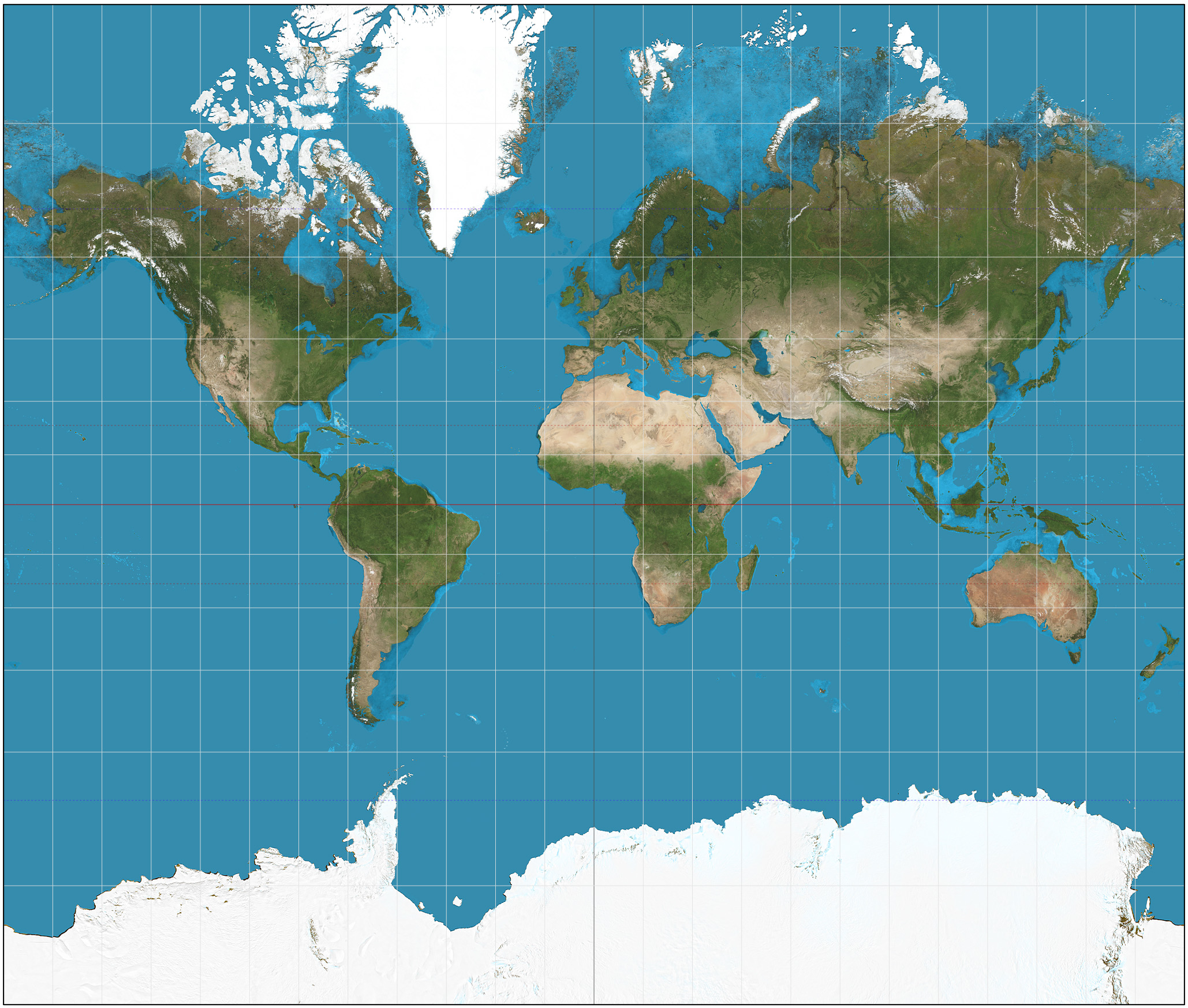
Gerardus Mercator (1512-94), which is Latin for Gerhard Kremer, is he who gave us the Mercator projection, those maps where Greenland seems as large as Africa.

From Mercator:

  • 1530s: using capital letters in ITALICS to name a region of a map;
  • 1538: the names “North America” and “South America”;
  • 1569: Mercator projection;
  • 1595: The word “atlas”.

His atlas, which came out a year after his death, had Atlas of Greek mythology holding up the world on the cover. The name stuck.

Mercator overthrew Ptolemy’s geography, just as Galileo later overthrew Ptolemy’s astronomy. Both were on the cutting edge of science. Both landed in trouble with Catholic authorities. It was a time when the West was being torn apart into Catholic and Protestant.

Queen Mary of Hungary ruled Flanders where Mercator lived, in Leuven, now in Belgium. She was in the habit of burning Protestants alive or, when feeling merciful, buried them alive. She threw Mercator in prison, probably because his map of the Holy Land, a bestseller, helped people read the Bible for themselves. His parish priest got him off. Mercator himself seems to have been more deeply affected by the Stoic philosophers he read at university than by Protestantism. He fled to Duisburg, now in Germany, to live under the more understanding Duke William of Jülich-Cleves-Berg.

Globes became all the rage after the voyage of Magellan’s crew round the world (1519-22). And Mercator was one of the foremost globe-makers. But globes were not very useful for ship captains: they were too curvy. It was hard to know the precise compass direction you should go to reach a given point. Mercator fixed that with his famous projection.

Mercator projection: The beauty of the Mercator projection is that you can draw a straight line from point A to point B and know which direction to go to hit point B and not be hundreds of kilometres off. Every point on the map is in the right direction from every other point. But it comes at a cost: the distances are wrong, and get wronger and wronger the closer you get to the North or South Pole.

That is why Greenland looks so huge. Antarctica and the Arctic Ocean are even worse: they are infinite, which is why you only ever see their edges and never see the North or South Pole.

The Mercator projection caught on in the 1600s after Edward Wright provided the useful calculations pilots needed in “Certaine Errors in Navigation” (1599). The Mercator projection was adopted by the British Navy, NASA, Google Earth – and by schoolteachers throughout the West. National Geographic did not start to move away from it till the 1960s.

Eurocentrism: Mercator himself was too much of a Stoic to be a card-carrying Eurocentrist, but the Mercator projection became a classic case of Eurocentrism parading as “accuracy” and “science”. The main White countries are at the top and look much bigger than they are. To this day most Westerners have no idea how huge Africa is.

– Abagond, 2018.

Source: mainly “A History of the World in Twelve Maps” (2012) by Jerry Brotton. 

See also:

537

Marisa Monte: A Sua

Remarks:

This came out in Brazil in 2001 and became part of the soundtrack of the telenovela “Desejos de Mulher” in 2002. It is one of her better known songs – and my current favourite of hers.

See also:

Lyrics:

Eu só quero que você saiba
Que estou pensando em você
Agora e sempre mais
Eu só quero que você ouça
A canção que eu fiz pra dizer
Que eu te adoro cada vez mais
E que eu te quero sempre em paz

Tô com sintomas de saudade
Tô pensando em você
E como eu te quero tanto bem
Aonde for não quero dor
Eu tomo conta de você
Mas te quero livre também
Como o tempo vai e o vento vem

Eu só quero que você caiba
No meu colo
Porque eu te adoro cada vez mais
Eu só quero que você siga
Para onde quiser
Que eu não vou ficar muito atrás

Tô com sintomas de saudade
Tô pensando em você
E como eu te quero tanto bem
Aonde for não quero dor
Eu tomo conta de você
Mas te quero livre também
Como o tempo vai e o vento vem

Eu só quero que você saiba
Que estou pensando em você
Mas te quero livre também
Como o tempo vai e o vento vem
E que eu te quero livre também
Como o tempo vai e o vento vem

Remarks:

By far my favourite Streisand song. I love the 1973 film of the same name. I watched the film because I loved the song. Then I loved the song even more.

This line in particular rings in my head at odd moments:

Can it be that it was all so simple then?
Or has time re-written every line?

It was the best selling song in the US for 1974, going to the top of the pop chart in February. It went to #6 across the Anglosphere as a whole, except for New Zealand where it did not chart at all.

See also:

Lyrics:

Mem’ries,
Light the corners of my mind
Misty water-colored memories
Of the way we were
Scattered pictures,
Of the smiles we left behind
Smiles we gave to one another
For the way we were
Can it be that it was all so simple then?
Or has time re-written every line?
If we had the chance to do it all again
Tell me, would we? Could we?
Mem’ries, may be beautiful and yet
What’s too painful to remember
We simply choose to forget
So it’s the laughter
We will remember
Whenever we remember…
The way we were…
The way we were…

“Head of Christ” (1941) by Warner Sallman is the best known picture of Jesus Christ, not just in the US but worldwide.

Just as the King James Bible is the most printed book ever, at a billion copies, so “Head of Christ” is the most printed painting ever, at over 500 million copies.

It started in 1924 in Chicago among White Evangelical Protestants. It was spread by Sunday schools, by US soldiers, by Billy Graham’s billboards, by Baptist Bookstore, by missionaries. It appeared on bookmarks, calendars, Bibles, plates, stickers, puzzles, clocks, buttons and lamps.

During the Second World War religious groups gave US soldiers a wallet-sized “Head of Christ”. It helped to keep them alive, at least some of the Christian ones.

Even Hollywood, that great image factory, feels it cannot stray too far from this image of Jesus which has been so firmly planted into so many heads – an excuse it uses to cast actors of northern European descent as Jesus.

Walter Sallman, himself of northern European descent (Finnish and Swedish), was brought up in the (Swedish) Evangelical Covenant Church. He was a commercial artist based in Chicago, working for both religious publishers and ad agencies. “Head of Christ” has been compared to a shampoo ad – which is not far wrong given his training.

Breck shampoo ad by Ralph William Williams, 1967.

At 2.30am one winter’s morning in 1924 Sallman woke up:

“suddenly there appeared to my mind’s eye a picture of the Christ just as if it were on my drawing board.”

He was working on an issue of the Covenant Companion. He completed a charcoal sketch just before the 4.30pm deadline. It made the cover.

But the picture did not become a hit till he painted it in 1940.

It was probably not a vision from God but from the Ladies Home Journal, which in December 1922 printed “The Friend of the Humble” (1892) by French painter Léon Lhermitte:

Not-so-fun fact: 1924 was also the year the US government passed a law meant to keep Jews and other “alien races” from flowing into the country.

Race: The picture shows Jesus looking like a White person from northern Europe with long, flowing brown hair, blue eyes, and a Nordic nose. You cannot tell where he is.

No Jewish nose: In Sallman’s time Jews were stereotyped as having large bulbous or hooked noses, black curly hair and swarthy skin. Sallman’s Jesus has none of that.

Racially Jesus probably looked more like this:

Short black hair, brown eyes, light brown skin, wide nose. That is based on someone from Jesus’s time and place who was dug up and forensically reconstructed by the BBC in 2001.

Towards a more manly Jesus: Before the 1960s the main criticism of the picture was not about Jesus’ race but his manliness. In 1924 Sallman was himself trying to make a more manly, less androgynous Jesus. In the early 1960s he made a yet more “manly” Jesus in “Lord and Master”, giving Jesus shorter hair and a macho expression. It never caught on.

– Abagond, 2018.

Sources: mainly Google Images and Pinterest (2018); “The Color of Christ” (2012) by Edward J. Blum and Paul Harvey; Christianity Today (2006); “The 20th Century” (1995) by David Wallechinsky.

See also:

559

The Jewish nose

The Jewish nose (c. 1250- ), called hoykedike or hooked in Yiddish, is the large or hooked nose that Jews are stereotyped as having. And, like all good stereotypes, it is grounded not in fact or reason but lives off of confirmation bias: “Just look at Barbra Streisand’s [statistically insignificant] nose!”

There are two ways we know it is a stereotype not a fact: science and art.

  1. Science: In 1911 Maurice Fishberg, a Jewish anthropologist, took it upon himself to measure 4,000 Jewish noses in New York. He laid out his findings in “The Jews: A Study of Race and Environment” (1911). Jews were then considered an “alien race”. He found that only 13% to 14% of Jews had hooked noses. Jewish noses were also measured in Russia, Poland, Lithuania, Galicia and elsewhere. Again, most Jews did not have hooked or “Semitic” noses. Most had the same sort of noses as everyone else.
  2. Art: The Jewish nose did show up in church art till the late 1200s. For over a thousand years church art showed plenty of Jews, but their noses looked like everyone else’s.

c. 985: Jews look like everyone else. Jesus before Pilate, priests and soldiers, from the Codex Egberti of Germany. (Stadbibliothek, Trier)

Until about 1100 Jews looked the same as everyone else. Not just their noses, but their hair, skin colour, faces, even clothing. By 1085 artists started putting pointed hats on Jews in pictures. Since the Three Wise Men wore the same sort of hats, it was probably not meant in an anti-Semitic way, even though this was when Western anti-Semitism began, with Jews starting to be pushed into ghettos or out of kingdoms.

c. 1155: Jews wear pointed hats, but their noses still look normal. From the Stavelot Triptych in Belgium. (Pierpont Morgan Library, New York)

Pointed hats: Jews did not commonly wear pointed hats at that time. It was an artistic convention. We know that because the Church had to force Jews to wear such hats in 1267, making the stereotype real. Which shows that people in Europe did not see Jews as looking racially different.

1170: Jews still wear hats but their noses are starting to become hooked. Look at the man on the left in front of the tree. The nose is not there to make him “look Jewish” but to show that he is looking away from Jesus. (Réunion des Musées Nationaux/Art Resource, New York)

In the late 1100s pictures of a humble and suffering Jesus became all the rage. To show how hard-hearted the Jews were they were shown as facing away from Jesus. This was done by showing their noses from the side and by making them larger than in real life. Some were hooked, but they came in plenty of other shapes too.

c. 1275: hooked noses are now standard. (British Museum)

In the late 1200s Jewish noses were standardized as hooked – whether they were looking away from Jesus or not. On top of that, faces were being drawn in a more true to life way. The large fleshy Jewish noses fit nicely with the Christian belief that Jews were too flesh-bound in their thinking – a fact underscored by Jesus and hammered home by St Paul in the New Testament.

Jesus and his Apostles were not shown with Jewish noses – because they were Christians, not Jews. The nose thing was an artistic convention, like the hats. Jews did not start being seen as a race till the 1400s in Spain. And it did not reach its heights till the 1800s and 1900s. By then the Jewish nose was just seen as a fact of nature, not of prejudice.

1911: “humorous” US postcard complete with Yiddish accent.

1937: Aryan and Jew compared. Germany.

1939: A Jewish woman in Poland three years before she was gassed at Chelmo.

– Abagond, 2018.

Source: mainly Sara Lipton in The New York Review of Books (2014); Harold Ticktin in Jewish Currents (2013); Huffington Post (2017).

See also:

673