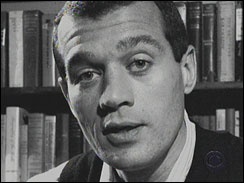
Anatole Broyard
Passing for white is where you get people to assume you are white even though you are not pure white.
Passing is a direct consequence of how race works in America. Because of the One Drop Rule if you look part black African you are seen as “Black” by “Whites” and suffer all the racism that goes with that.
The government does not keep records about your race – it is not on your passport or even birth certificates any more – so it comes down to how you look – and, to a degree, how you talk and dress and act.
 In the old days to pass you had to move away to some town where no one knew your family. Many were not willing to do that. These days, though, in big cities few people are ever going to meet your family, so it is much easier to pass, at least part of the time.
It was more important in the past when racism was worse, but it is still going on, some say at a rate of about 35,000 a year. Men seem to do it far more than women.
According to one study about one person in 500 who is born to Black parents looks white. If you are less than one-eighth black by blood you have a good chance of passing, but you can be as much as a fourth black and still pass. It all depends on how you look – and what likely story you can tell people who get curious about your background. Some say they are Sicilian, Arab or Native American.
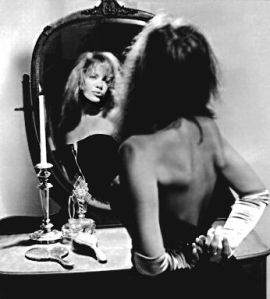
Carly Simon
Some people are part Black and do not even know it because they have been lied to or kept in the dark about their family history.
From looking at the DNA of White Americans we can tell that the mixing and passing has been going on all along for 400 years and not just in the 1600s or the late 1900s when mixed-race marriages were allowed by law throughout the country.
In 2014, 4% of White Americans, nearly 8 million, were at least 1% Black. That means they had at least one black ancestor over the past 200 years.
The census also tells us that passing is going on: Comparing it against immigration records shows that Blacks are disappearing without dying or leaving the country while Whites are appearing without being born or entering the country. A 1958 study done along these lines showed that 21% of Whites were part Black.
Terms:
- Tragic Mulatto: those who pass who come to a bad end, common in American fiction before 1960.The most famous example is “The Imitation of Life”, a book twice made into a Hollywood film.
- Voluntary Negro: what they used to call those who could pass for white but chose not to. Examples:
- Homer Plessey of Plessey v Ferguson,
- Walter White of the NAACP.
- Nella Larsen, author of “Passing” (1929), the story of a Tragic Mulatto.
- One Drop Rule
- Tragic Mulatto
- Imitation of Life
- Nella Larsen: Passing
- Danzy Senna: Caucasia – not tragic!
- Some who could pass:
- Sally Hemings
- biracial
- DNA ancestry test

 Abagond
Abagond,
In your life experiences, have you encountered a black person who was passing for white?
LikeLike
Also, realistically, if someone is 1/4 black or less, they are not seen as being black in particular in the U.S. unless they have some Negroid-influenced features or have known black family members.
LikeLike
well I have really light skin,and long brown hair and when I was little my classmates would always ask me if I’m white or if I was half white)…which got annoying after awhile! I just think its weird because I think I look more like a lot of other races around the world.white people are not the only people with long hair…
(and most of them wear weave that comes from India! ;] )
LikeLiked by 1 person
also,at school people(i live in Detroit) always accuse me of looking and acting white since I’m light skinned
which is weird also because their are puerto rican people in my school that look almost like me! so why do I have to be white?
LikeLiked by 1 person
I did know one person once, people assumed she was white. She looked Italian pretty much but the cast of her skin was not quite right if you sat and thought about it. I later found out her grandmother was black.
LikeLike
Hmm…interesting.
There were actually two girls who I went to high school with who were both 1/4 black. Intrestingly enough, one identified as black. I think a lot of that had to do with the fact that her white mother remarried another black man and she had a black stepbrother. She also lived in a predominately black neighborhood.
She looked like a white girl, with only her West African-influenced nose and super-curly hair suggesting her black heritage.
I don’t know if I ever known of a black person who actively passed for white. I’ve came across several black folks who could but that seemed to be the last thing on their mind.
I have, however, came across some Eurasians who “passed for white”. They would even go as far to deny their East Asian heritage. Even when it showed up on their face.
LikeLike
Wow.
LikeLike
http://www.marieclaire.com/world-reports/news/latest/black-white-skin
LikeLike
I remember reading that article a year or so ago. Like Lynette, it also perplexed me that anyone could see that girl for anything other black. She’s albino but everything else about her is distinctively West African-influenced. Stereotypically so, I must add.
If you read the article, that young lady’s story is not so much about passing for white (which I’m certain she never could pull off even if she tried) but more about the akward position that many white-skinned and/or racially ambigious black Americans find themselves in when living in such a color-conscious, racialized world.
LikeLike
All of the mixed-race people I’ve ever encountered IRL identified as black. In fact, I’ve never even heard of them saying that they are “mixed-race” (or blended, like a smoothie?), they just say they are black. Even if they look white. Same with me. If people ask what my white-looking kids are, I just say “black”. But I do choose “other” on forms.
I don’t think passing is going on much anymore. In fact, it seems to be the other way: more and more white-looking people are announcing publicly that they’re black, Native American, etc. I guess to make themselves sound more interesting?
If anything, I think the topic has turned around: black people are complaining about white-looking people claiming to be black or otherwise “exotic” and receiving scholarships, affirmative action preferences, etc.
LikeLike
B&G,
Interesting perspective. It’s always been a source of pride in Black America for white-appearing/racially ambigious blacks to proudly proclaim their blackness rather than “pass” or downplaying their heritage. Hence why Anatole Broyard, the man pictured above, wasn’t seen in a favorable light within black intellectual circles.
Do your children identify with black culture? Do they see themselves as mixed? Will they be similar to the girl I knew who saw herself as black despite being 3/4 white (probably more, considering that most black Americans have non-African blood)?
LikeLike
My children are also more than 3/4 white. My children are unaware of race; they are simply too young to notice it. They spend more time with their black relatives than with their white ones but we live in a predominately white area. So, I guess they’ll be truly interracial in that they feel equally comfortable with both groups.
However, being an international family, it’s more of a personal issue with us that they feel equally comfortable in Germany and America and are bilingual.
Truly, race doesn’t actually play that big of a part in our lives other than resulting in some awkward moments. I just find the topic interesting (as it does effect my relatives) and like to read about and discuss it. I guess you could say that I take an academic interest in it, since I’m a big history, economics, and sociology buff.
Have I just outed myself? LOL!
LikeLiked by 1 person
I also have to note that even our black family has more and more white, other, and mixed-race people in it. So even when we’re with our black relatives there are still a bunch of white people there. So I think our children will probably feel more comfortable there than in our hometown because of it’s diversity. I think that they would feel equally uncomfortable in a majority-white or a majority-black neighborhood. It’s the diverse environments that would feel the most “natural” to them.
I grew up a military brat and am also very used to diversity. It’s been very strange for me to move to such a mono-cultural place (nearly everyone has German ancestry here). It’s really sparked my interest in race-relations because for the first time in my life I feel truly different to the people around me and am adjusting to being stared at wherever I go. I’m not treated badly but I do feel “exotic”. Strangely, the areas I lived and worked in in Germany were MORE diverse than here.
LikeLike
my best friend mum is black her dad is black but a quater cast light skinned as his nan is full white spanish. therefore I class my frient as mixed. she has brown skin like her mum,straight nose beautiful features. i dont think she ls full black i say she is mixed, but she says she is simply black? what do you think?
LikeLike
That depends on what country you are in. In America there is the One Drop Rule: looking part black makes you all black. So from the sounds of it, she would be black in America. But maybe not in other places. In South Africa she might seen as coloured (mixed race) instead of black. It all depends on how you look and where the colour lines are drawn in your country.
A good example of this is Zoe Saldana: in America she is black but in the Dominican Republic, where she spent part of her girlhood, she is not. More about that here:
LikeLike
Sorry, but no. The census indicates that the population of people considering themselves to be white is getting smaller. This is a link to the Census Bureau:
http://www.census.gov/population/www/pop-profile/natproj.html
LikeLike
I;m half white half black, but noone has ever assumed I was anything but white. Ive told them I’m mixed. Im not ashamed of my black heritage but I’m also not ashamed of my white heritage.I don’t identify as black because I;m equally black and white, why should the black heritage over-rule. I;m so sick of this “one drop” stuff. I am HALF black and HALF white!
LikeLiked by 1 person
No one should ever be ashamed of their heritage. God did not give us choices before we were born. I am 100% African American, as far as I know. I don’t need to bleach my skin or my hair. I refuse to burn my scalp up with chemicals hoping to get my hair to look like white people’s hair. I refuse to do any of that stuff. Frankly, I think that is one of the biggest problem we, as black people. Many of us still suffer from that slave mentality to where we feel like we still have to try appeasing the white race. We don’t have to do that anymore. When we start loving ourselves and stop trying to be someone we are not, we will be happy and our lives will change for the better. Some black people like to say that the white man is holding us down. No. We are holding ourselves down. We either hold each other down through ridiculing and criticizing each other or we hold ourselves down by holding on to that slave mentality or thinking we are not as good or important as the next person. In the days of slavery and civil rights we weren’t given choices. Now we have them. Let’s do something with what we have.
LikeLiked by 1 person
“but you can be as much as a fourth black and still pass”
I would say even half black can still look Mediterranean, my cousin is half black and he looks just like a slightly tanned version of his white mother, he even has blue eyes.
LikeLike
O Dochartaigh –
How about a child born to white parents passing as Black? That has happened to me at certain points in my life. I’m no ‘Sandra Laing’ as I am repeatedly seen as white today. Between ages 13 – 27, I could “pass” as ‘bi-racial’.
Consider this: http://www.hoax-slayer.com/black-white-twins.html
LikeLike
Brazil is one of the most mixed countries anywhere. It is just fascinating to see how this mixture plays out .
Here is my son’s picture, I beleive he could pass for white or hispanic white ,but,he is very proud of his racial mix.And is a great example of how mixtures can play out
http://www.mrejackpotter.com
LikeLike
He is a great looking guy!
You’re right, he cannot be easily classified into one race. He doesn’t look like a mixture, per se but he could be any race you project onto him. Does that make sense?
He could fit in with almost any group based on appearance alone.
LikeLike
Thanks Islandgirl, and it does make sence what you say.
It certainly was an in house example for me how mix can play out.
So when I see people that have his features in Brazil, and there are a lot in Brazil, I understand they probably have some sub sahara African dna in there.
My wife is from a large family and her sisters run the gamat from dark skin to light skin .
We always wonder what if we had 9 or 10 kids, what they would look like…..but, we always are happey to have only one for now…hahah
LikeLike
…when he gets sun, he gets much darker
LikeLike
Your son looks nice, BR. He looks like that guy (always forget his name!) who was in the movie Seventeen again with the Mowry twins.
LikeLike
Thanks Jasmin
ha I dont know who that actor is.
He is very proud of his Afro roots.He would never try to pass for white.
I brought in his picture to show one example of how mixture can break down….What I have seen in Brazil are infinite ways these mixtures can play out.
LikeLike
Hi,
Thanks for this site. I’m looking for African Americans over 80-years-old who spent any amount of time in their lives passing for white. I’d like to find out if they are willing to be interviewed for a documentary that I am directing called “Jim Crow to Barack Obama.” Another demographic I am looking for are African Americans under 30-years-old who are passing or have direct experience with it.
LikeLike
Personally I think a huge part of it is what community you were raised. I remember in an english class we were having a class discussion on race and this guy who was pretty much half and half said that he identified more as white because he had been raised mostly by his white mother (and therefore socialized with the people she knew, who were likely white as well).
LikeLike
“In the old days to pass you had to move away to some town where no one knew your family. Many were not willing to do that. These days, though, in big cities few people are ever going to meet your family, so it is much easier to pass, at least part of the time.
It was more important in the past when racism was worse, but it is still going on, some say at a rate of about 35,000 a year. Men seem to do it far more than women.”
The term “passing” implies that the individuals who shift from the black to white social sphere actually think of themselves as blacks in the bodies of whites, but this is almost never the case. Rather, these people usually consider themselves as white with some African ancestry. Furthermore, in most cases they inform the white people who they interact with about their background. Anatole Broyard’s close associates, including his wife, knew about his ancestry the entire time. Despite the “Tragic Mulatto” myth, many whites aren’t so racist as to reject someone based on invisible ancestry.
An excellent essay on “passing” and the modern black-white color line can be found here:
LikeLike
Mat Jonhson gave a new twist to this whole passing thing in his graphic novel, Incognegro HC:
http://www.dccomics.com/vertigo/graphic_novels/?gn=8574
“In the early 20th Century, when lynchings were commonplace throughout the American South, a few courageous reporters from the North risked their lives to expose these atrocities. They were African-American men who, due to their light skin color, could “pass” among the white folks. They called this dangerous assignment going “incognegro.”
Zane Pinchback, a reporter for the New York-based New Holland Herald barely escapes with his life after his latest “incognegro” story goes bad. But when he returns to the sanctuary of Harlem, he’s sent to investigate the arrest of his own brother, charged with the brutal murder of a white woman in Mississippi.
With a lynch mob already swarming, Zane must stay “incognegro” long enough to uncover the truth behind the murder in order to save his brother — and himself. He finds that the answers are buried beneath layers of shifting identities, forbidden passions and secrets that run far deeper than skin color.”
2 sample pages, as an appetizer:
A great book. Check it out.
LikeLike
As I mentioned on previous occasions, the notion of “passing for white” is an ideological hoax designed to de-legitimize social interaction between predominantly white people and fully white people. Those who perpetuate this concept seek to prevent white-appearing mixed people from assimilating into white mainstream society, even though in many cases this represents the most nurturing and supportive social environment for such individuals. It’s kind of curious that some are still promoting this idea even though hundreds of thousands of actual blacks are currently in relationships with white Americans.
Note the third picture in the article of the woman in front of the mirror. Those sorts of images are common in anti-“passing” propaganda. Some women in the “multiracial movement” have argued that the one drop rule and opposition to “passing” is to a large extent a ploy to gain sexual control over mixed females.
LikeLike
In the beginning of article it says, “If you are less than one-eighth black by blood you have a good chance of passing, but you can be as much as a fourth black and still pass.” This is actually an incorrect statement. One can be ANY degree of mixture and still physically run the “color” spectrum from lily white to brown.
For example, Jennifer Beals is the product of a black father/white mother (50/50) and can “pass” for white. I know she, personally, never tried to “pass” and has always claimed to be biracial, but she COULD HAVE “passed” if she had wanted based on her phenotype.
Just wanted to clear up that fallacy because genetics are a trip and do not follow any smooth delineation when it comes to inheritance of traits.
LikeLiked by 1 person
Jennifer Beals probably isn’t 50/50. Her dad is likely mixed but looks “plain black” to the average American. Ancestry does correlate with physical appearance though the relationship is far from perfect. Studies indicate that those less than 25-30% African ancestry are unlikely to be percieved as black by Americans.
LikeLiked by 1 person
i came upon this page because i am trying to find the black part of my family. i was born with bright red hair and light features, but i have found out that my father left arkansaw with 2 cousins back in the early 40s and they all passed for white. they claimed to be french. all went to seperate states after arriving in mississippi, except for my father who stayed there. my father met and married my mother , probably because of her light compextion. and red hair. i only found out about this when i was in my 50s i can understand why my father would want to pass for white , because times were so bad back then for black people. but i feel like i have been cheated out of half of my family. and have been trying to find them every since
LikeLiked by 1 person
“Passing” is certainly still going on today, and I suspect it has been going on for millenia. The pressure to pass as a particular something is present in many societies.
The USA has its own special case. Because, for one thing, it focuses on passing for white. It requires the person to conceal his non-white ancestry. To pass for black does not require anyone to conceal his non-black ancestry.
To PASS is a bit different as to BEING ACCEPTED. Being black does not require so much as needing to pass, but to be accepted as such. But being white requires one to pass.
LikeLiked by 1 person
I strongly suspect that back in the day, passing was a matter of surviving economically and avoiding the pain of the stigma that whites pressed upon us. I do think that we no longer feel that pressure to pass – generations have taught us that we can survive under most circumstances, especially the ones that try to make us feel badly about ourselves.
LikeLike
This whole topic and quite frankly the idea of “passing” still being a viable “offense” in today’s rapidly diversifying culture is problematic in my opinion. Until we stop making skin color/tone and hair texture barometers for societal acceptance nationality (not race…there’s only one…human…that I identify with), we will continue to progress through time with one toe stuck in the noose of ancestral history.
I, for all intents and purposes look black to most people who meet me. However, my straighter textured curly hair often inspires questions and the shape of my eyes only add to the confusion some people insist on feeling. My husband is white (in the most generic of terms) and our kids have been considered black/mixed (mostly by african americans) and Puerto Rican…my daughter has also been thought to be Israli and Arabian. I refuse to put my kids in a category because the are the sum total of a lot of parts. This doesn’t seem to be a problem for anyone but other african americans who are quick to make comments like, “girl, you know she black…one drop is all it takes”. Those kind of comments infuriate me because not only do they show ignorance, they also depict a die hard insistance upon holding on to Jim Crow mentality that was used to oppress an entire people! When the black community got their bloomers bunched about Tiger Woods claiming all of his heritage I wanted to start slapping people. I think that to deny any part of your heritage is a sign of self hatred and I refuse to put my children’s feet on that path of emotional self destruction. They are who they are and I won’t let the insecurities or ideologies of others make them feel that they need to hide their multifaceted existence.
As far as I’m concerned, if a person doesn’t want to publically remind the masses at every turn about what runs through his/her bloodline, they shouldn’t have to; they can be who ever they want to be as long as they aren’t hurting anyone. I dont’ think any less of someone who, despite possessing character traits that might put him/her in a particular nationaility box, doesn’t identify with the people of that particular nationality. We aren’t defined by our skin color unless we allow ourselves to be. I grew up in Hawaii and I’ve spent probably a total of 6 of my 42 years around my southern based family…I don’t identify very well with my own family because of the environment I grew up in, needless to say, I’m always made to feel like an outsider when I come to visit (is it any wonder that those trips are few and far between?).
In order to hold firm to the belief that by not proclaiming those drops of black blood a person is trying to pass for white (or simply not black) and is implying that their “blackness” is inferior, the accuser is just as guilty of that implication on a subconscious level and they are masking their own subconsious form or loathing behind a facade of “pride” or “awareness”. I’d rather save my pride for something that I personally accomplished (and since i had no say in who my parents were I won’t be joining any pride ralleys in the near future) and my awareness for issues that can affect the human race on a global scale. We are so much more than our skin color/hair texture and many of our ancestors fought to bring this truth to fruition. It just saddens me to see so many of us picking up where our ancestors’ oppressors left of…
LikeLike
Jhayded, that was so well put – it says everything I have always believed in.
LikeLike
@Jhayded
Thank you for this.
I agree with everything you said and it is indeed problematic, but some of the commenters on this blog and at times, the blogger himself has vilified certain people as being in denial of what they “really” are, when actually, I think it is the vilifiers who are in denial. I encounter them in real life also, in the USA and in dozens of other countries. So even if it is problematic, we have to find ways of dealing with those people.
I am glad I found Maria Root’s “Bill of Rights for People of Mixed Heritage”. http://www.drmariaroot.com/
I am sure that, even if you have some trouble identifying with your southern extended family members, it does not mean that you are in some type of denial by not proclaiming daily your intimate connection with their identity or culture. You simply don’t feel the same kind of connection that they do.
I have never had any problem with anyone who chooses their ethnic and racial and cultural identities; it is not in my place to condemn them. Indeed, they are free to change them as well. I don’t know why anyone feels that others need to proclaim certain identities, and deny others just to fit their concept of what is acceptable and not.
LikeLike
@Jefe
If someone is half-black, they’re half. It’s 2013, Why are so-called biracials still whining about their racial background? They need to identify themselves as mixed-race, enuf already! Obviously, the black parent didn’t want a black child. If they’re so offended by their paleness, they need to have a deep convo with their black fathers and mothers. Honestly, i’m tired of non-black people bitching about blackness who aren’t black anyway. They can’t put themselves in the shoes of real black people, you know that Jefe?
Tyrone
LikeLike
Or, the parent just fell in love regardless of race, and they can put themselves in the shoes of anyone they please.
LikeLike
Commenter FG said:
“These people usually consider themselves white…” Really?
How does anyone truly know that?
The USA operates a racial binary, but is there such a thing as a “black” mind, for example? Is there such a thing as one, general “black” character sucking a nearly white person under? That sounds more like a belief in racist stereotyping rather than the highly varied, deeply personal experiences of complex individuals born into real families living in challenging times.
The presupposition in such thinking is the individual only GAINS by passing for white, and that nothing is lost or even could be lost by rejecting a black racial identity.
It’s as though passing into White happens in much the way an old skin is shed. Or like the way a sinner is symbolically “cleansed” during the act of baptismal immersion from the accumulated dirt and muck of their black sins.
Real life doesn’t work that way for every person of racially ambiguous appearance. There’s loss, fragmentation, loneliness, grief, the burden of secrets, untold longing, the pressure of keeping secrets and lying…because, sure, everyone wants to be White! so it’s a lucky bunny who gets to capitalize on their good fortune! Was it ever so simple?
The loss of black racial identity in the US’s history has become a subject of study, and the first book about it is by Allyson Hobbs:
(A Chosen Exile: A History of Racial Passing)
(http://www.youtube.com/watch?v=3PR9aJ2ZNTc)
LikeLike
A Phil Donahue show on passing from 1990:
(https://www.youtube.com/watch?v=X_tO7Q5RvIg)
LikeLike
Thanks Abagond. I remember watching this clip years ago. I think Kathleen Cross is the one most likely to pass. She looks “white” to me.
LikeLike
I saw that clip several years ago too.
@Leigh
Do you mean the one who is most likely to get away with (ie, succeed at) passing, or more likely to choose to pass. For Kathleen Cross, I doubt she could really do either very well, except for the most superficial of contacts (eg, from an eyewitness stranger at a crime scene or from a surveillance tape, or maybe from a cashier in a store who does not know her). I think she might be able to get away with it for a few minutes, but she won’t be able to conceal her identity for too long (not that she would ever want to).
Now, I do know that people will sometimes pass for this or pass for that – that was necessary during Jim Crow and some time afterwards (eg, stopping at a bus station that had no colored washroom or getting an apartment or a hotel room or to get a job).
LikeLike
@ jefe:
The former. At first glance, I would think she was white. She reminds me of my cousin’s daughter except her daughter is light skinned with light brown/dark blonde hair and hazel eyes. My cousin, who has darker colouring than mine, would always tell me stories of white and Asian people looking surprised when she revealed the “white-looking” child is hers. Her child could definitely pass as white. The interesting thing is, her daughter always tells people she’s Filipino.
LikeLike
It’s funny you have picture of Carly Simon i have always wondered about her.
LikeLike
My mother told me-There’s a special way to tell people apart.Her old neighbor (creole blood) pass as white. Pay my mother and some people with hushup money and erase everything about her. That how the increase of the white population in US-mix children,honorable white and cherrypicking whiteness.(Cherrypicking whiteness is a offer to become full white. The passer must contains A+ talent to blend within the group to make the race look divine.)Some people refuse to pass for opulence like Charles R. Drew.
LikeLike
Also check out the novel “Country of Origin” about a part Asian part Black woman whose phenotype changes from childhood to adulthood.
LikeLike
I just found out about Carol Channing having a Black grandmother:
http://en.wikipedia.org/wiki/Carol_Channing
“According to Channing’s 2002 memoir, when she left home to attend Bennington College in Vermont, her mother informed her that her father George, who Channing had believed was born in Rhode Island, had actually been born in Augusta, Georgia. Adelaide claimed her husband’s father was German-American and his mother was African-American. Channing’s grandmother had moved with George to Providence, Rhode Island for his opportunities. According to Channing’s account, her mother reportedly did not want Channing to be surprised “if she had a black baby”.[5][6] Channing’s mother’s family was of German descent.[7]
As she was of majority European-American ancestry, Channing continued to identify as white as a performer on Broadway and in Hollywood. She made her claim to African-American ancestry in her autobiography, Just Lucky I Guess (2002), which contains a photograph of her mother, but has no photos of her father or son.[8] The book says her father’s birth certificate was destroyed in a fire.[9]”
LikeLike
Article discussing how for ethnically ambiguous people “passing” is often just people projecting their own racial baggage onto them.
“Twitter Recap: What Does ‘Passing’ Look Like Today?”
http://www.npr.org/blogs/codeswitch/2014/10/10/354811360/twitter-recap-what-does-passing-look-like-today
LikeLike
Technically speaking, the vast majority of Afrikaners would be considered to be “passing” by Americans
For example, Transvaal President Paul Kruger was 1/32 black. In the Jim Crow South, that would have made him legally black.
I wonder if Kruger was aware that he had black ancestry. He was 10 or 11 when his great-grandfather, who was 1/16 black (and also 1/16 Indonesian) died. (He also had black ancestry from other family lines)
LikeLike
Abagond: You should read Britt Bennett’s The Vanishing Half. This book is fiction but it very apropos for this subject matter of this thread. Also Nella Larson’s Passing. I really enjoyed The Vanishing Half as a Summer read last month.
LikeLike
@ Mary
I liked Larsen’s “Passing” way better than Brit Bennett’s “The Vanishing Half”.
LikeLiked by 1 person
Nella Larsen didn’t look passable as White.
LikeLike
The American One-Drop Rule is so stupid. Andries Pretorius, the great Boer leader, was the great-great-grandson of Nantsana van Madagascar, an African slave who had a daughter with the White man Jan Vosloo. The idea that a small amount of black ancestry makes you black is ridiculous. Malcolm X had a White grandfather, yet no one would ever say Malcolm was White.
LikeLike